The choice between a Tesla Wall Connector vs a universal Level 2 charger in a KC garage comes down to what you actually drive, whether that will change, and how each option affects your panel and permit. Both installs fall under Residential Electrical Services, handled by licensed KC electricians who lay out every real tradeoff below.
By Veteran Electric Team, KC Licensed Electricians
Picking the right home EV charger starts with matching the connector to your car. A Tesla Wall Connector is Tesla's own hardwired home charging unit, built with a NACS connector that matches Tesla vehicles natively and syncs with the Tesla app for scheduling, energy usage, and cost tracking. A universal Level 2 charger is any hardwired or plug-in unit built by a company other than a vehicle manufacturer, made to work with any electric car or electric vehicle regardless of brand. Most universal chargers ship with a J1772 handle, the industry-standard connector non-Tesla EVs have used for years, and many now offer their own app for tracking energy use. Both charger types carry the same core safety features required by code, including ground fault protection and thermal monitoring, regardless of brand. The real difference isn't raw charging speed, it's which vehicles the connector fits on day one and how much brand-specific software you want managing your home charging setup, so it's worth a careful read of the specifics below before you buy.
Is a Tesla Wall Connector Faster Than a Universal Charger for a Tesla
For a Tesla specifically, whether it's a Model 3, a Model Y, or another Tesla vehicle, speed comes down to amperage, not the badge on the box. A Tesla Wall Connector can deliver up to 48 amps on a properly sized circuit, and a universal Level 2 charger set to the same amperage charges a Tesla at essentially the same rate, since the car's onboard charger is what actually caps the intake. Charging speed also depends on the vehicle's kWh battery size: a larger battery takes longer to fill at any given amperage, Tesla or otherwise. Where the Tesla Wall Connector pulls ahead is integration: live charging status, scheduled off-peak charging, and energy reporting inside the Tesla app without a separate tool. If your household is Tesla-only and app integration matters to your daily charging routine, the Wall Connector earns its keep. If range added per hour of driving is the only question, a correctly sized universal charger does the same job.
Choosing Between a Tesla Wall Connector and a Universal Charger for a Multi-EV Household
Households with more than one EV brand run into this decision fastest. A universal Level 2 charger with a native J1772 handle plugs directly into most non-Tesla vehicles and into a Tesla using the J1772 adapter Tesla includes with every car, so one charger genuinely serves both. A Tesla Wall Connector can also charge a non-Tesla EV with a J1772 adapter, but only one vehicle charges at a time and someone has to keep track of the adapter. Neither setup lets two cars charge at once from one charger, so households that need to charge multiple EVs each night often want two chargers, not one better brand. For a single flexible unit that favors whichever vehicles come and go, a universal charger has the edge for homes whose daily driving needs keep changing.
Can a Universal Level 2 Charger Plug Into a Tesla Using NACS or an Adapter
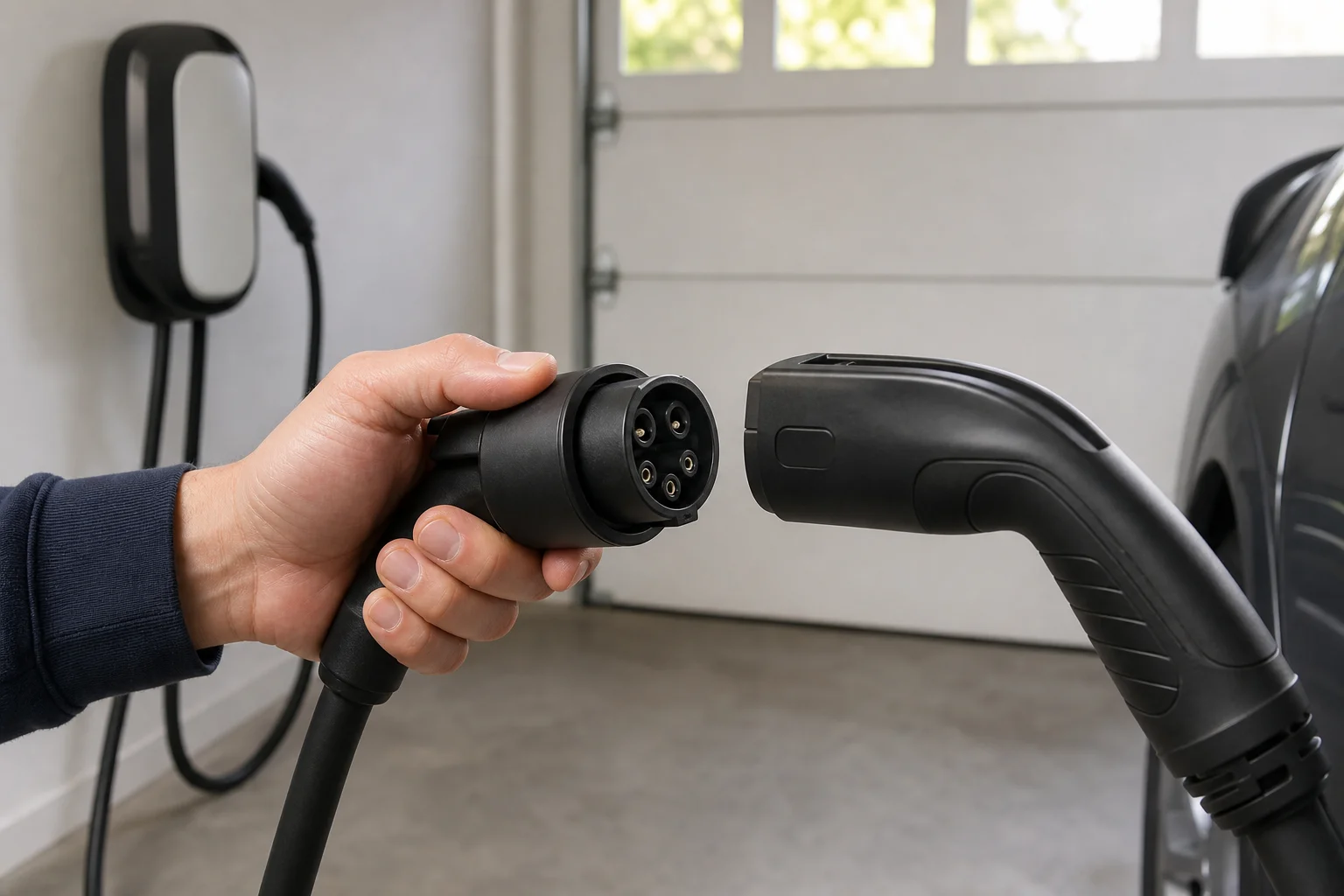
Yes, in one of two ways. If the universal Level 2 charger has a native NACS handle, a NACS-equipped Tesla plugs straight in with no adapter needed. If the charger instead ends in the more common J1772 handle, every Tesla comes with a J1772 adapter that fits over the car's charging port, and that small tool is the only thing standing between a Tesla and any universal charger built for the broader EV market. This matters more as automakers outside Tesla move toward NACS ports on new electric vehicles: a universal charger bought today with a J1772 handle will likely need the reverse adapter down the road as newer non-Tesla vehicles arrive with NACS built in.
Tesla Wall Connector vs a Universal Level 2 Charger in a KC Garage: What It Costs to Install
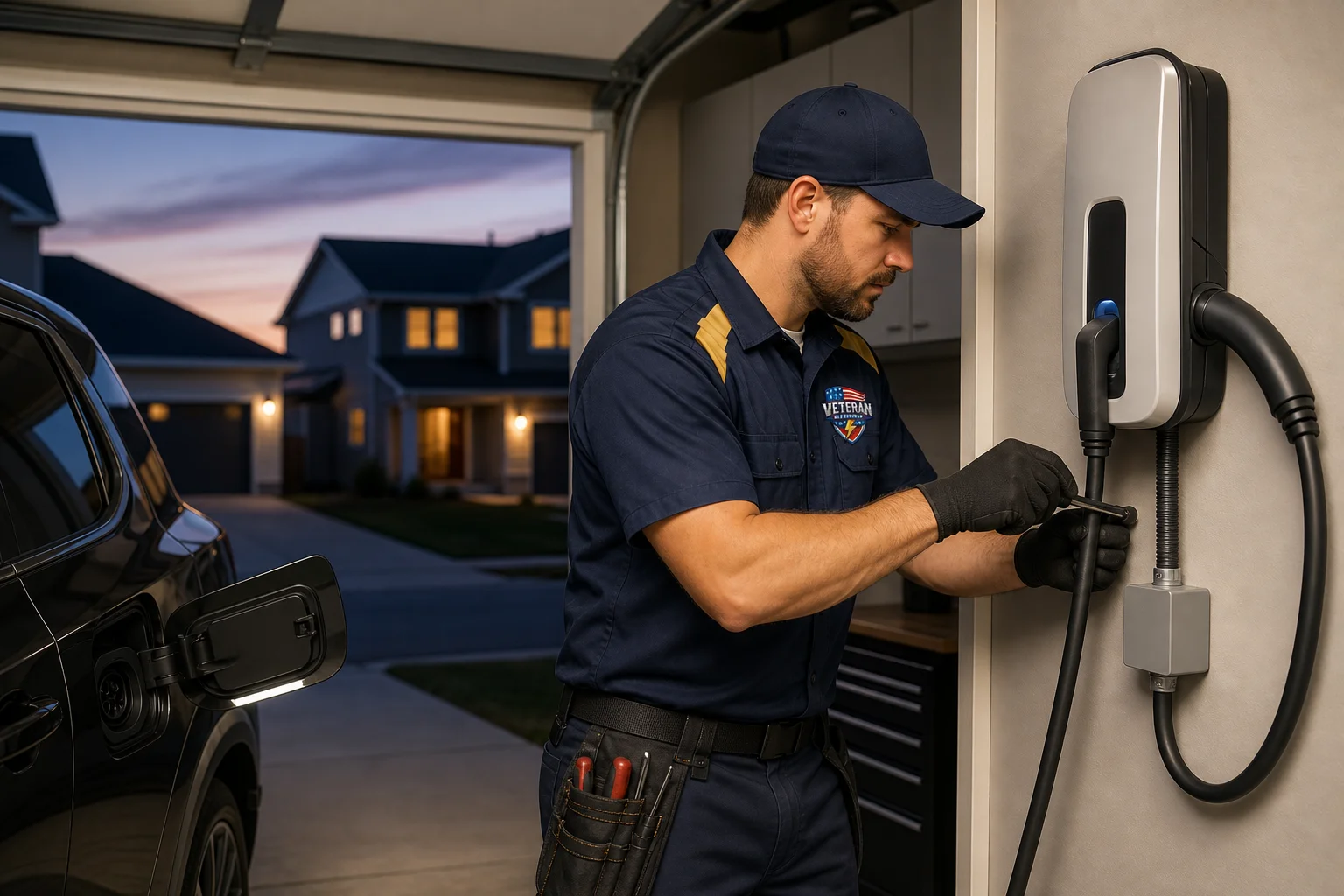
Installing an EV charger in a KC garage always starts with a load calculation on your panel. When you're comparing a Tesla Wall Connector vs a universal Level 2 charger in a KC garage, the sticker price on the charger itself is rarely the biggest line item. Installation cost is driven by how far the garage wall sits from your electrical panel, whether your panel has room for a new circuit or needs an upgrade, and whether the work requires a subpanel. Kansas City homeowners weighing EV charger installation costs typically find labor and panel condition, not the charger brand, drive most of the final bill. Whether you land on a hardwired charger installation or a plug-in setup on a dedicated outlet also changes the permit scope and the price, since each is inspected differently under Kansas City code. A licensed electrician should walk your specific garage and panel before you commit to either charger.
Which Charger Is the Smarter Long-Term Choice for Your KC Home
Resale changes the math on both ends. If you plan to sell your Tesla for a non-Tesla EV, a universal Level 2 charger with a J1772 handle keeps working without buying new hardware, and if you sell the house, a universal charger reads as a neutral amenity to any buyer's electric vehicle rather than a Tesla-specific perk. A Tesla Wall Connector still charges non-Tesla vehicles with an adapter, so it isn't a dead end if your household adds a different EV brand, but it does read as Tesla branded equipment to a future home buyer who drives something else. If you're confident you'll stay in Tesla vehicles for years, the Wall Connector's app integration is worth keeping. If your driving future or your home's next owner is uncertain, the universal charger is the safer long-term bet.
Frequently Asked Questions
Can a Tesla Wall Connector charge a non-Tesla EV?
Yes. A Tesla Wall Connector can charge a non-Tesla EV as long as the vehicle uses a J1772 adapter to connect to the connector's NACS handle. Charging speed depends on the non-Tesla vehicle's onboard charger and the amperage the Wall Connector is set to, not the Tesla brand name. Only one car charges at a time, so households with two non-Tesla drivers charging nightly may still want a second charging point.
Do I need an electrical permit to install a Level 2 charger in my KC garage?
In most cases, yes. Adding a dedicated circuit for either a Tesla Wall Connector or a universal Level 2 charger usually requires a permit and inspection in the Kansas City area, since it's new electrical work tied to your panel. Requirements vary by municipality, so a licensed electrician pulling the permit on your behalf is the safest way to confirm what your specific city requires before installation day.
What breaker size and amperage does a Tesla Wall Connector vs a universal charger need?
Both typically run on a 240 volt circuit with a breaker sized to the charger's maximum amperage, commonly a 60 amp breaker for a Tesla Wall Connector set to 48 amps, or a 40 to 60 amp breaker for a universal charger depending on its rated output. Your electrician sizes the breaker and wire gauge to the specific unit and your panel's available capacity, not a one size answer.
How long does professional installation take for either charger in a Kansas City home?
A straightforward installation close to the electrical panel typically takes a few hours in a single visit for either a Tesla Wall Connector or a universal Level 2 charger. Jobs that need a new circuit run across the garage, a panel upgrade, or a separately scheduled permit inspection usually take longer and may span more than one visit, so timelines vary by home.
Is a universal Level 2 charger the safer bet if I plan to switch EV brands later?
Generally, yes. A universal Level 2 charger with a J1772 handle keeps working no matter which electric vehicle you drive next, while a Tesla Wall Connector still needs a J1772 adapter to serve a non-Tesla EV. If you're fairly certain you'll stay in Tesla vehicles, that tradeoff may not matter much, but if brand loyalty is uncertain, the universal charger removes one variable.
Get Your KC Garage Wired for Either Charger
Whether you land on a Tesla Wall Connector vs a universal Level 2 charger in a KC garage, our licensed team handles the panel check, the permit, and the install. Contact us to schedule a walkthrough of your garage and panel.


