Kansas City homeowners installing an EV charger in 2026 typically see final pricing shaped by three factors: charger hardware, electrical panel work, and licensed labor. If your home needs panel upgrades before a Residential Electrical Services team can safely connect a Level 2 unit, your ev charger installation cost climbs. Here's what actually drives that number.
By Veteran Electric Team, KC Licensed Electricians
Every ev charger installation cost estimate starts with the same walkthrough: what does your electrical panel look like today, how far is it from where you park, and does the job require a permit from the city. A licensed electrician will check your panel capacity before quoting anything, because a 100 amp panel that's already near its load limit usually needs an upgrade before it can support a new circuit. Homes with a detached garage add distance and conduit work, which adds to labor rates. None of this is guesswork, it's the same checklist our team runs on every residential visit, and it's the reason two houses on the same street can get different quotes for what looks like the same job. Code compliance gets checked as part of that same walkthrough, so any issues surface before installation day rather than during it.
Level 2 Home Charger Pricing: What You're Actually Paying For
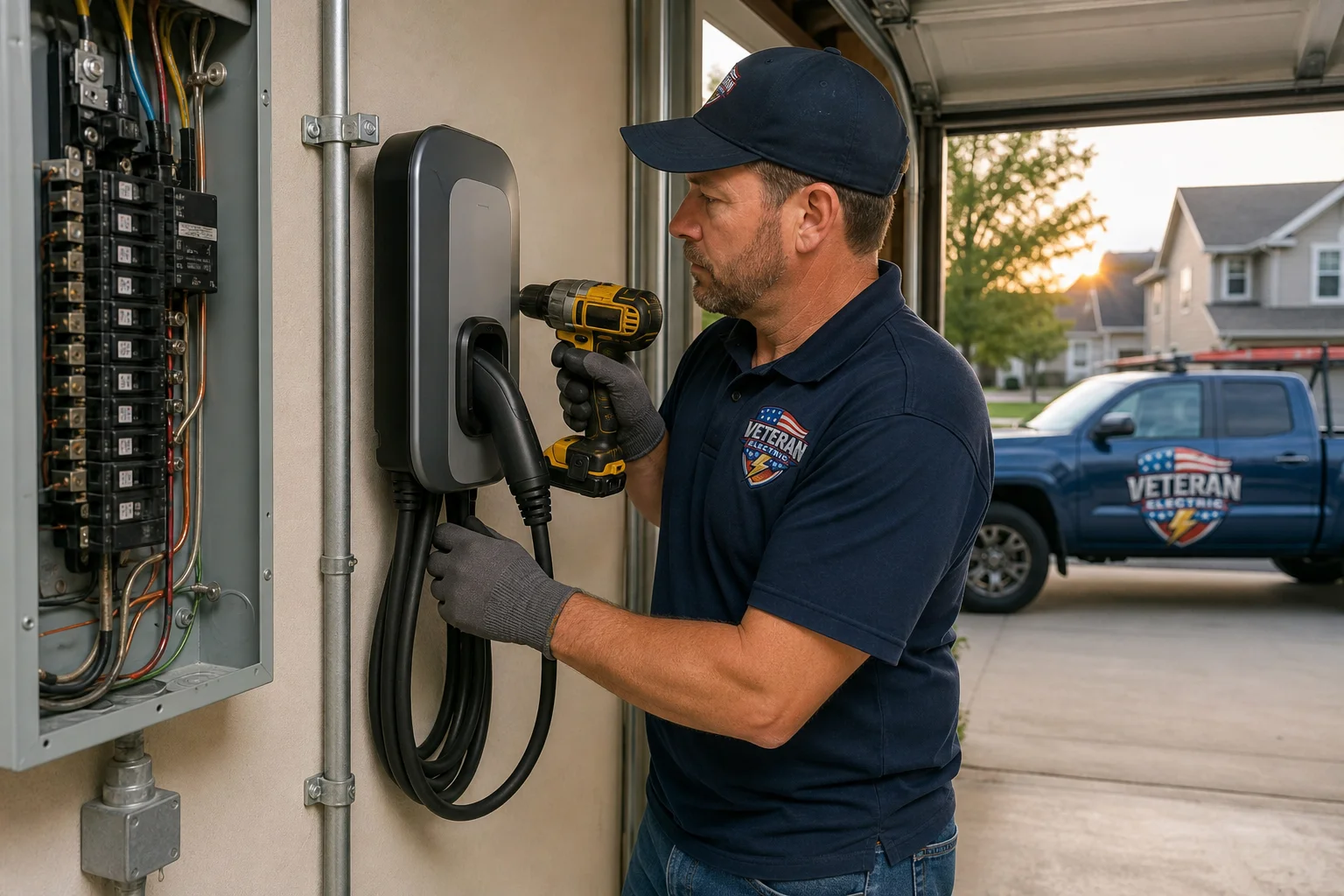
Most homeowners choosing a home charger for daily use land on a Level 2 unit rather than the slower cord that comes in the trunk. A level charger runs on a dedicated 240 volt circuit, which is what actually cuts charging time down from a full day to a few hours overnight. When people compare level charging speeds, they're really comparing amperage: a 32 amp level ev charger can add roughly 20 to 30 miles range hour, while a 48 amp unit adds more range per hour of run time for owners who drive further. Installing an EV charger at this level means the electrician is not just mounting a box on the wall, they're running new wire, installing a breaker sized for the load, and testing the full circuit before it's ever plugged into your electric vehicle. Getting a straight cost install quote in writing matters just as much as the equipment itself, which is why comparing bids from different electricians is worth doing before you sign anything. Our post on choosing the right electrician covers what to look for.
Electrical Panel Upgrades and Amp Capacity: The Hidden Cost Driver
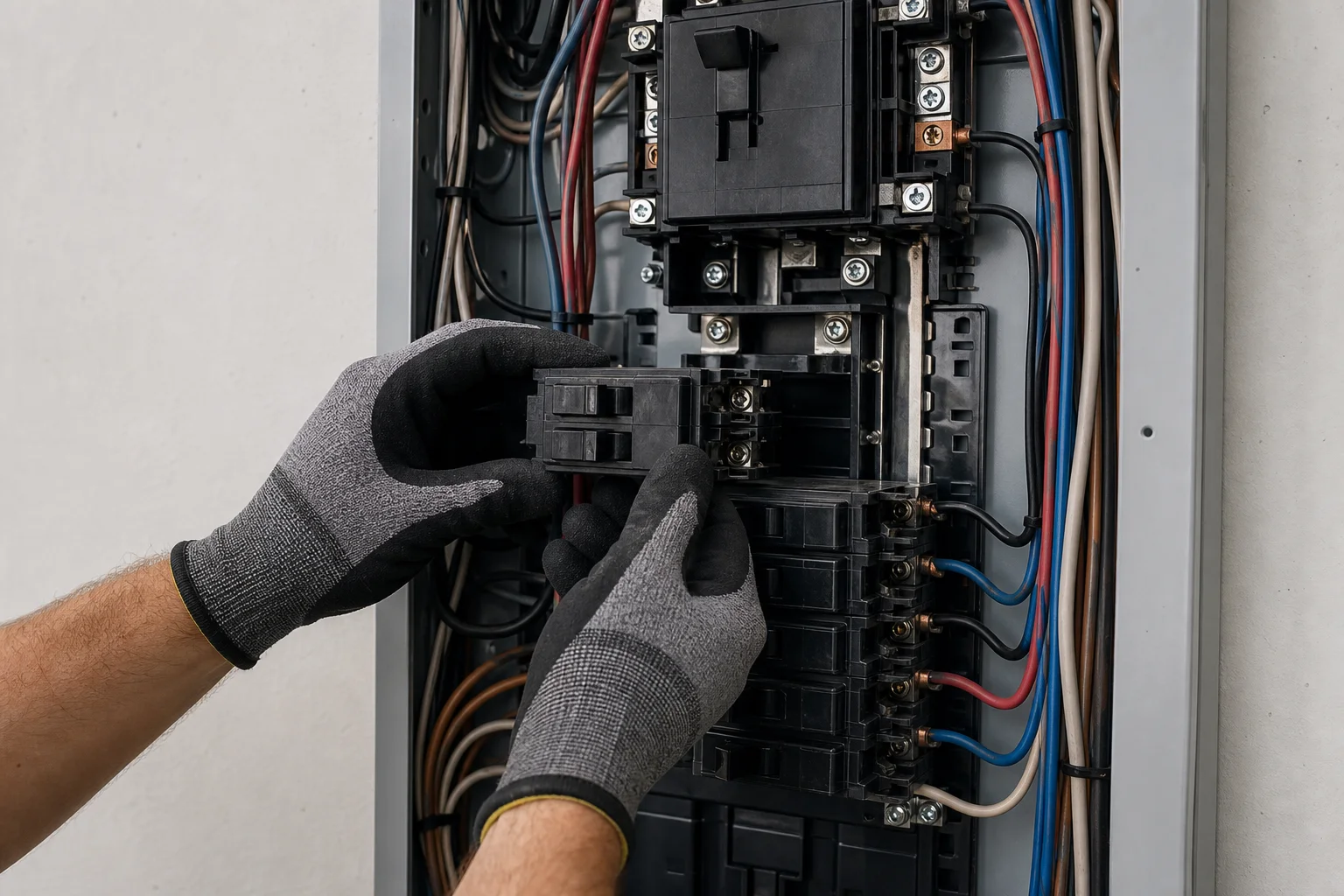
The single biggest swing in any ev charger installation cost estimate is whether your electrical panel needs an upgrade before it can carry the new circuit. Older Kansas City homes often have 100 amp service, and once you add central air, an electric range, and a home charger, there may not be enough amp capacity left to run a dedicated circuit safely. When that's the case, the electrician has to install a larger panel, sometimes 200 amp, before the charger itself ever gets mounted. That panel upgrade needed for the charger is also the upgrade that protects the rest of your home's wiring from being overloaded, which is why we treat it as a safety step, not an upsell. Homes built before the 1980s often need more than a charger circuit, and if your panel is original to the house, a full rewire may end up being part of the conversation. Our post on house rewiring timelines walks through what that looks like.
Permits, Federal Tax Credit, and Other Ways to Offset the Cost
A permit isn't optional for panel work or new circuits in Kansas City, and skipping one can void your homeowner's insurance if there's ever an electrical fire. The good news is a federal tax credit is available for qualified home EV charging equipment under the Alternative Fuel Vehicle Refueling Property Credit, sometimes called the Vehicle Refueling Property Credit, which can offset a meaningful share of your installation costs. Eligibility and the exact refueling property credit amount depend on where you live, since some states pair the federal fuel vehicle refueling property credit with their own rebate, and a state program in New York looks nothing like what Missouri offers. Always confirm current IRS eligibility rules and any state program details with a tax professional before you count on a specific credit amount.
Home Charging vs Public Charging Station: Which Costs Less Long Term
Relying on a public charging station near your office might feel like it avoids installation costs altogether, but the math rarely holds up for daily drivers. Home charging means your electric vehicle is topped off every morning without a detour, and once a home ev charger is installed, the cost per charge is usually lower than what you'd pay at a commercial charging station. For Kansas City business owners weighing the same decision for a fleet or customer lot, our Commercial Electrical Services team handles multi unit charging station installs the same way we handle residential work: panel assessment first, install second. If you're still deciding between home charging and public charging as your primary routine, keep in mind that any new circuit adds to your home's overall electrical demand, especially during high usage months when AC and other big draws are already running. That's one more reason the panel capacity check matters before a charger goes in, since it accounts for what the rest of the house is already pulling.
Frequently Asked Questions
What is the average ev charger installation cost in Kansas City?
Pricing depends heavily on whether your electrical panel needs an upgrade before the charger circuit can be added. A home with adequate amp capacity and a charger location close to the panel costs less than a detached garage install that needs new panel capacity, permits, and longer wire runs. A licensed electrician can only give you an accurate number after seeing your panel in person.
Do I need a permit to install a home EV charger?
Yes. Kansas City requires a permit for any new electrical circuit, including EV chargers, and skipping this step can affect your homeowner's insurance and resale inspection. A licensed electrician handles the permit and inspection as part of the installation, so it's built into your quote rather than an extra step you manage yourself.
Does a federal tax credit cover EV charger installation costs?
A federal tax credit is available for qualifying home charging equipment through the Alternative Fuel Vehicle Refueling Property Credit, though the exact amount depends on your equipment and when it's installed. Confirm current eligibility with a tax professional, since IRS rules and state incentives change and installation costs vary by household.
Can I install a Level 2 home charger without upgrading my panel?
Sometimes. If your electrical panel already has enough amp capacity and an open breaker slot, a level charger can often be added without a full panel upgrade. If capacity is tight, the electrician will recommend the panel upgrade needed to run the circuit safely rather than overloading your existing service.
Is home charging cheaper than using a public charging station?
For most daily drivers, yes. Home charging lets you plug in overnight at a lower cost per mile than relying on a public charging station, and it removes the detour to a commercial location. The tradeoff is the upfront installation cost, which pays for itself over time for most electric vehicle owners.
Get an Accurate EV Charger Installation Cost Estimate
Skip the guesswork and get a straight answer from a licensed, veteran-owned electrician who inspects your panel before quoting a number. Contact our team today to schedule your EV charger installation cost estimate.


