
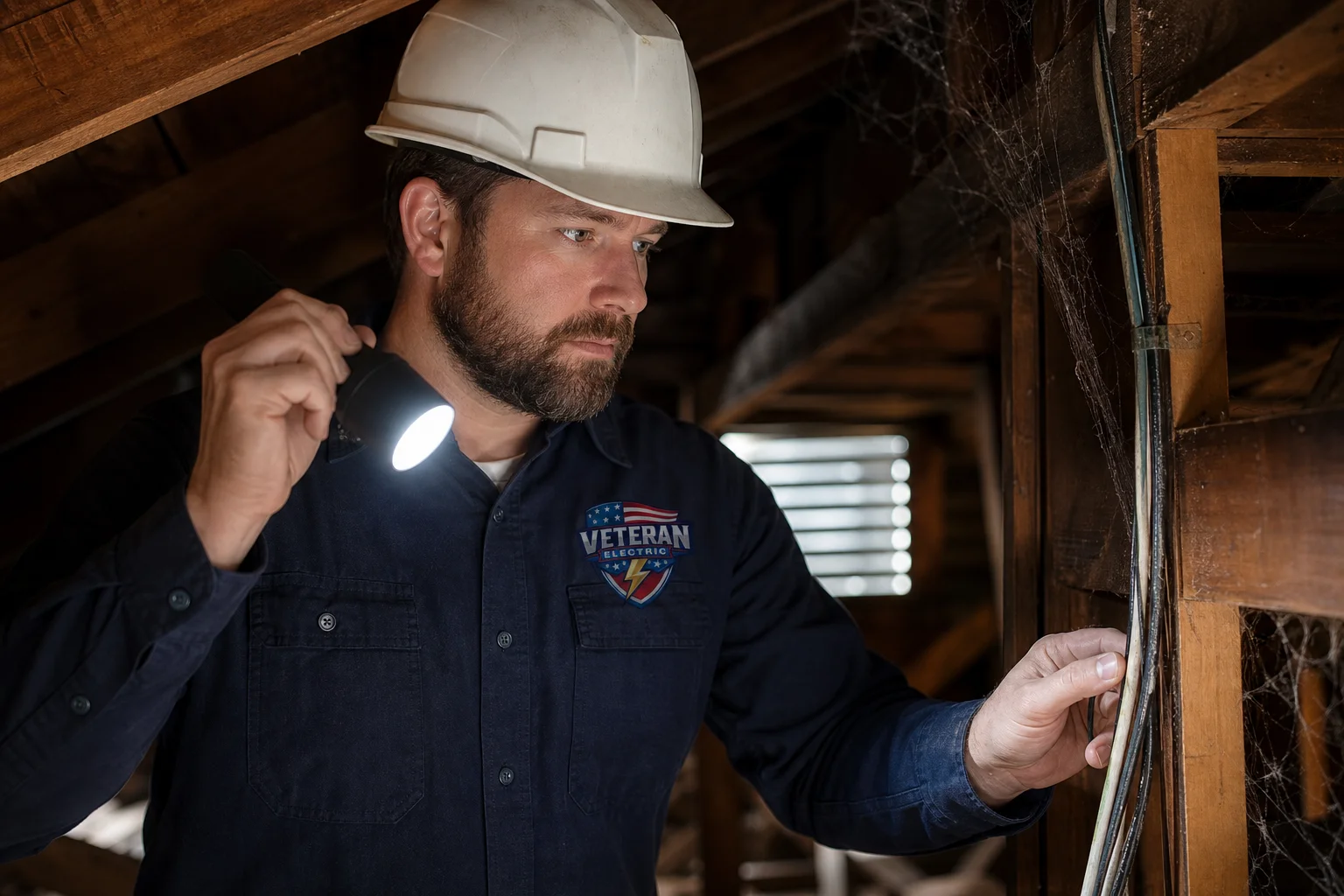
If your home was built before 1950, there is a real chance it still has knob and tube wiring running through the walls. Knowing how to tell if your home has knob and tube wiring, and why it matters for safety and insurance, is one of the most important steps a Kansas City homeowner can take to protect their family and their property.
What Knob and Tube Wiring Actually Is
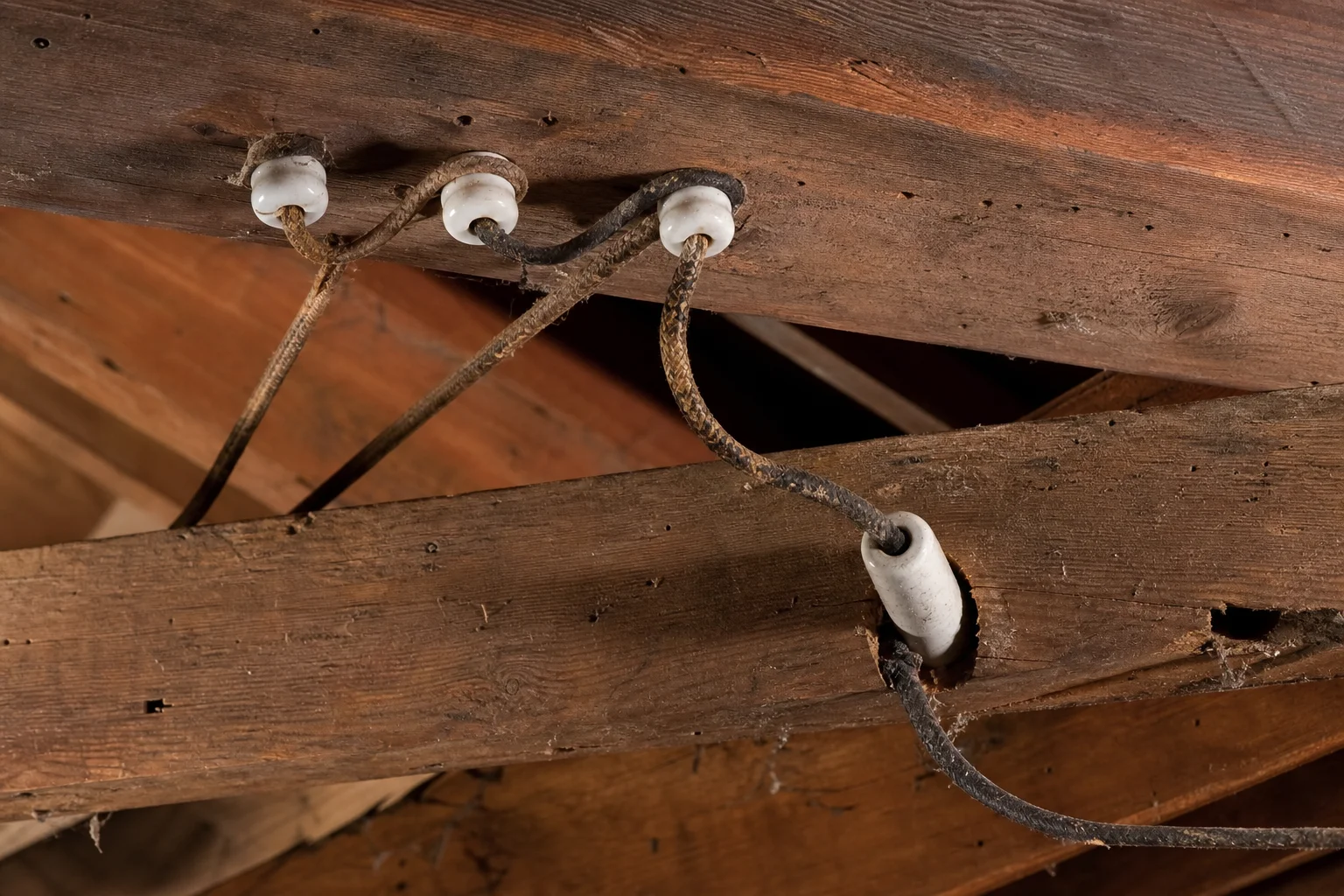
Knob and tube wiring was the standard electrical wiring system installed in American homes from roughly the 1880s through the 1940s. The system gets its name from two components: ceramic knobs that anchor wires to structural framing and ceramic tubes that guide wires through holes drilled in joists and studs.
The tube wiring was an engineering solution for its era. Individual conductors run separately, with no ground wire, relying on open air around the wires for heat dissipation. For the electrical loads of that time, knob tube wiring performed adequately. The problem is that most homes built with this system are now being asked to carry far more electrical current than the original design ever anticipated.
Knob tube wiring uses rubber insulation that dries, cracks, and becomes brittle over 80 or more years. What was code-compliant in 1930 is wiring not suited for modern appliances, HVAC systems, or the electrical demands of a current household.
How to Identify Knob and Tube Wiring in Your Home
The most accessible places to check are your attic and unfinished basement. Here is what to look for:
Ceramic Knobs and Tubes
The clearest sign is visible ceramic knobs and ceramic tubes. Ceramic knobs look like small white or cream-colored spools nailed directly to joists or rafters, with wires looping around them. Ceramic tubes are short cylinders inserted into drilled holes in the framing, and the wires pass through them to protect against abrasion.
Cloth-Wrapped or Rubber-Insulated Single Conductors
Knob and tube wiring runs individual wires rather than bundled cable. If you see separate wires with cloth or rubber insulation running independently along framing members, that is a strong indicator. Modern wiring typically runs in plastic-sheathed cable with multiple conductors grouped together.
Two-Prong Ungrounded Outlets
Knob and tube wiring has no ground wire. A home with original knob and tube wiring not yet updated will commonly have two-prong outlets throughout, especially in older areas of the house.
Your Panel and Permit History
Check your electrical panel for older fuse boxes rather than circuit breakers. Pull the permit history on your home if you can. Any home knob-and-tube inspection by a licensed electrician includes a panel review to determine how much of the original wiring home runs remain active versus already decommissioned.
Why Knob and Tube Wiring Raises Serious Safety Concerns
Knob tube wiring presents three specific hazards in older homes:
Insulation contact. The original design depended on open air to dissipate heat. When insulation was blown into attics and walls decades after installation, it buried knob tube wiring in material that traps heat. The Consumer Product Safety Commission has documented fire risks associated with insulated knob-and-tube wiring in residential attics.
Degraded insulation. The rubber and cloth insulation on this wiring not only ages, it fails. Brittle insulation cracks under vibration or temperature cycling, exposing bare conductors in a dangerous state. Bare wire contact with wood framing creates a direct ignition risk.
No ground path. Modern devices and appliances expect a ground wire for fault protection. Without one, electrical faults have no safe return path, and surge protection devices cannot function as designed.
The National Fire Protection Association (NFPA), in its Home Structure Fires report series, has consistently identified aging wiring systems as a leading cause of residential electrical fires. Electrical wiring installed more than 60 years ago should be inspected by a licensed electrician to determine whether it is safe or requires replacement. This is not a cosmetic issue.
What Knob and Tube Wiring Means for Insurance and Home Sales
Many homeowners insurance carriers in Missouri and Kansas either refuse to underwrite a home knob-and-tube wiring situation or require significant premium increases. When you go to sell, buyers and their inspectors will tell you knob tube wiring in a disclosure will complicate closing. Lenders financing buyers may require full remediation before they fund.
It is a wiring home buyers and sellers need to address proactively, not at the negotiating table where leverage disappears. The earlier you get an inspection through residential electrical services, the more options you have before a transaction forces your hand.
When Replacement Is the Right Call
Partial remediation is sometimes possible but rarely sufficient. If knob tube wiring is active in circuits connected to modern load demands, especially kitchens, bathrooms, or HVAC, replacement is the correct answer. A complete rewire replaces the old system with modern grounded circuits that meet current NEC (National Electrical Code) standards.
A licensed electrician can assess what is active, what is already decommissioned, and what a full or partial rewire requires for your specific home. Acting before a fault, a failed inspection, or an insurance non-renewal gives you control over cost and scheduling.
Frequently Asked Questions
Is knob and tube wiring illegal?
Knob and tube wiring is not automatically illegal, but it does not meet current electrical code requirements for new installations. If you are doing permitted renovation work, affected circuits will need to be brought up to current NEC standards. A licensed electrician can clarify what is active and what compliance requires for your specific home and permit scope.
Can I add more circuits and leave the old wiring alone?
Not safely. Adding load to a panel that still feeds knob tube wiring through the house puts additional current through conductors sized for 1930s electrical demand. The circuits can overheat. A licensed electrician should evaluate the full system before any panel or service upgrade is installed.
Does homeowners insurance cover knob and tube wiring damage?
Most policies specifically exclude fire damage caused by known wiring hazards the homeowner failed to disclose or remediate. If your insurer is aware you have active knob and tube wiring and you have not updated it, you may face a denied claim after a loss. Confirm your coverage status with your carrier directly.
How long does a knob and tube wiring inspection take?
A thorough inspection of a typical Kansas City home takes two to four hours, depending on attic access, basement layout, and how much of the electrical system is still original. Your electrician will trace active circuits, review the panel, and document what replacement work is needed for a full picture.
Is knob and tube wiring the same as aluminum wiring?
No. They are separate systems from different eras with different hazards. Knob and tube wiring uses copper conductors with degraded rubber insulation and no ground path. Aluminum wiring, commonly installed in the 1960s and 1970s, has distinct expansion and connection hazards. Both warrant a professional inspection.
Schedule Your Inspection Today
If you have spotted ceramic knobs or ceramic tubes in your attic, or if your home was built before 1950 and has never had a full electrical inspection, do not wait for a problem to show you what the wiring already knows. Contact Veteran Electric KC to schedule your inspection with a Kansas City licensed electrician today.


