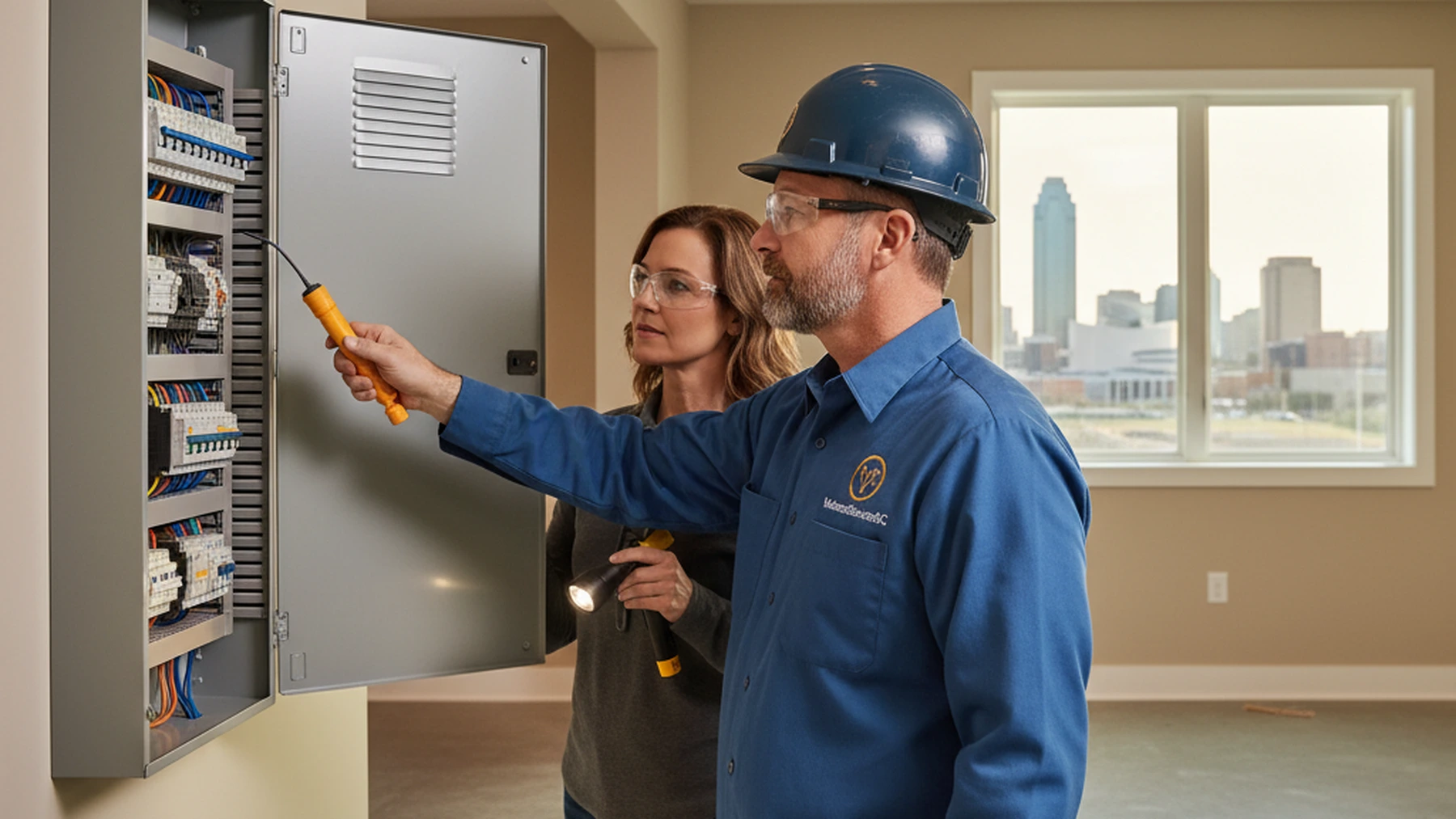
Knowing the right electrical safety tips for homeowners can prevent fires, shocks, and costly repairs. As a licensed electrician serving Kansas City, the most common electrical hazards at home come down to a short list: overloaded circuits, improper extension cord use, outdated wiring, and missing ground fault protection. Address those, and you've eliminated the majority of residential electrical risk.
Why Electrical Safety Matters in Kansas City Homes
Electrical fires account for thousands of house fires across the country each year. Older Kansas City homes — many built in the 1950s through 1980s — carry wiring systems that weren't designed for today's electrical load. Modern homes run dishwashers, EV chargers, smart home systems, HVAC units, and dozens of devices simultaneously. That gap between old infrastructure and modern demand is where problems start.
Military service teaches one thing above all else: prevention beats reaction. The same principle applies to home electrical safety. Identifying hazards before they become emergencies is cheaper, safer, and smarter.
Your Home Electrical Safety Checklist
Work through this checklist room by room. If you find a problem, stop using that circuit or outlet until a licensed electrician inspects it.
Outlets and Receptacles
- Test GFCI outlets monthly. Ground fault circuit interrupters are required in bathrooms, kitchens, garages, and outdoor areas. Press the "Test" button — the outlet should lose power. Press "Reset" to restore it. If it doesn't respond, it needs replacement.
- Replace two-prong outlets. Ungrounded two-prong outlets offer no shock protection. In an older Kansas City home, these should be upgraded to properly grounded three-prong receptacles.
- Inspect for scorch marks or discoloration. Black marks around an outlet face indicate arcing. Stop using that outlet immediately and schedule an inspection.
- Never force a three-prong plug into a two-prong outlet. Cutting the ground prong off a plug is equally dangerous — it eliminates the protection that prong provides.
Extension Cords
Extension cords are one of the leading causes of electrical hazards at home. They're designed for temporary use, not permanent wiring solutions.
- Match the cord rating to the device load. Every extension cord has an amperage rating. Running a space heater or refrigerator through an undersized cord generates heat and creates a fire risk.
- Never run cords under rugs or through walls. Hidden cords can overheat without any visible warning.
- Replace cords with frayed insulation or cracked jackets. Damaged insulation exposes live wires. No amount of electrical tape makes a damaged cord safe.
- Use surge protectors, not power strips, for electronics. A basic power strip adds outlets — it does not protect your devices from voltage spikes. Surge protectors absorb excess voltage before it reaches your appliances.
Circuit Breakers and Electrical Panels
Your panel is the backbone of your home's electrical system. It deserves regular attention.
- Know your panel layout. Label every breaker clearly. If a breaker trips, you should know exactly which circuit it controls before resetting it.
- Investigate every tripped breaker. A breaker trips because the circuit hit its amperage limit. Resetting it without understanding why is guesswork. Find and remove the overload first.
- Look for double-tapped breakers. A double-tapped breaker has two wires connected to a single terminal designed for one. This is a code violation in most cases and a real fire hazard. Have it corrected.
- Replace panels with recalled brands. Federal Pacific and Zinsco panels, common in older Kansas City homes, have documented failure rates. If your home has one, replacement is strongly recommended.
Wiring and Electrical Work
- Don't DIY electrical work beyond the basics. Replacing a light fixture or outlet cover is one thing. Wiring a new circuit, moving a panel, or adding a subpanel is licensed electrician work. Unpermitted electrical work creates safety hazards and can cause serious problems when you sell the home.
- Watch for signs of outdated wiring. Aluminum wiring (common in homes built from the mid-1960s through the 1970s) requires specific devices and connections. Knob-and-tube wiring has no ground conductor at all. Both warrant a professional evaluation.
- Flickering lights are not normal. Occasional flickering tied to a large appliance starting up can indicate a loose connection or undersized wiring. Persistent or widespread flickering is a sign that something in the circuit or panel needs attention.
Wet Areas and Outdoor Safety
Water and electricity don't negotiate. They simply react.
- Ground fault circuit protection is non-negotiable near water. Kitchen counters within six feet of a sink, all bathroom outlets, garage outlets, outdoor receptacles, and pool equipment areas all require GFCI protection. If yours don't have it, this is a priority upgrade.
- Keep all electrical devices away from standing water. A hair dryer or phone charger that falls into a sink or tub can be fatal.
- Use weatherproof covers on outdoor outlets. Kansas City weather swings from ice storms to summer storms. Covers rated "in-use" keep moisture out even with a cord plugged in.
- Never use indoor extension cords outside. Outdoor cords are rated for moisture exposure and temperature variation. Indoor cords are not.
Electrical Hazards at Home: The Most Overlooked Risks
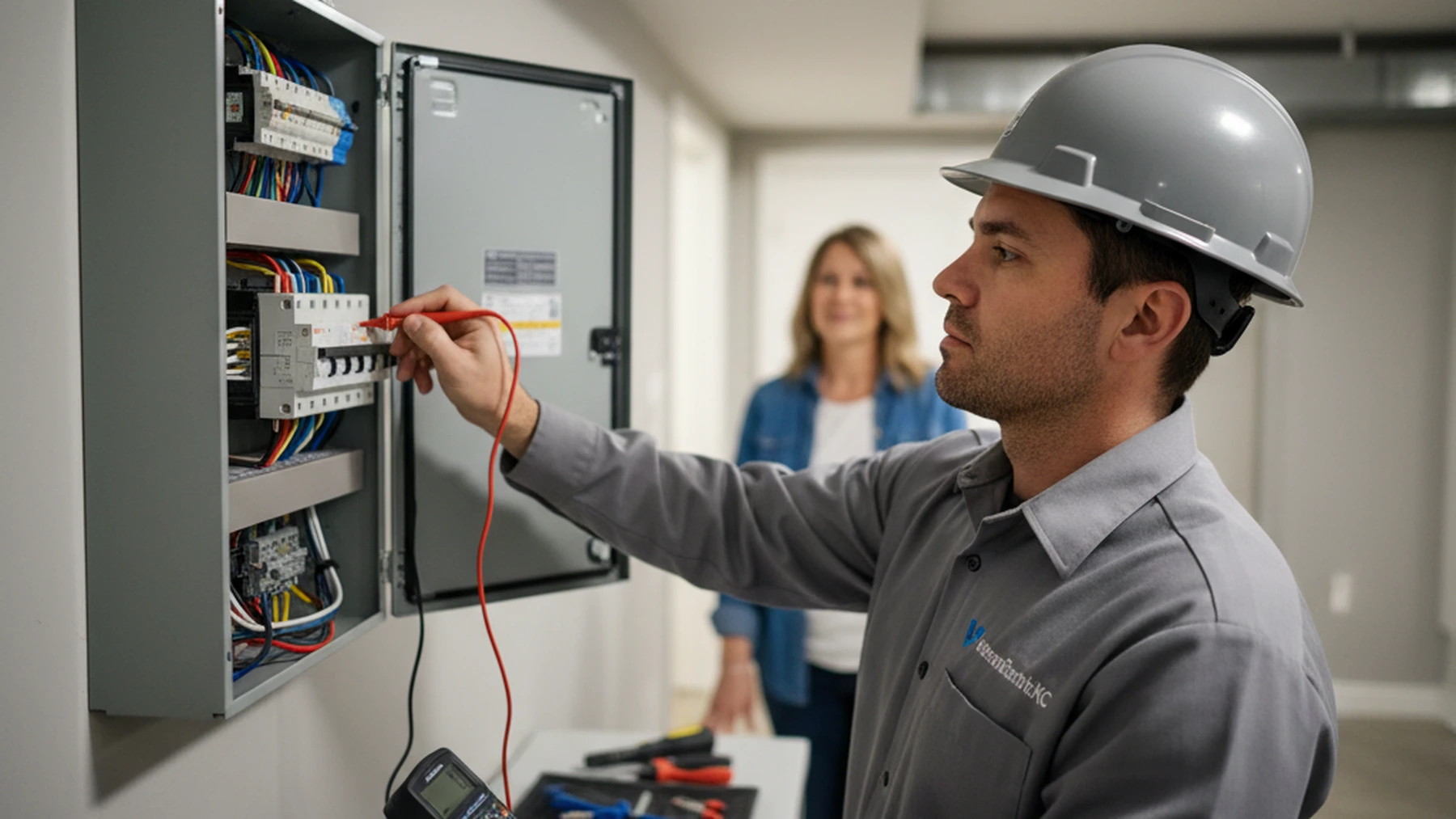
Most homeowners think about fire when they think about electrical hazards. But there are several risks that don't get the attention they deserve.
Overloaded circuits. Every circuit in your home is rated for a specific amperage — typically 15 or 20 amps for standard household circuits. Plug too many appliances into the same circuit and you've created a persistent overload. Signs include warm outlets, frequently tripping breakers, or lights that dim when a large appliance starts.
Arc faults. An arc fault is an unintended electrical discharge — often inside walls, behind outlets, or at connection points. Arc fault circuit interrupters (AFCIs) detect this type of discharge and cut power before it ignites material. Modern electrical codes require them in bedrooms and living areas. If your home doesn't have them, it's worth adding.
Improper outdoor electrical work. Patio string lights, landscape lighting, and EV charger installation all involve outdoor wiring. These installations need to meet code, use proper weatherproof materials, and be on dedicated circuits where required. Shortcuts outdoors tend to go unnoticed until something fails.
Old smoke detectors. Smoke detectors have a service life of ten years. After that, the sensor degrades. Pair them with a working carbon monoxide detector on every floor — especially near attached garages.
When to Call a Licensed Electrician
Some electrical work is appropriate for a handy homeowner. A lot of it isn't. Call a licensed electrician when you're dealing with:
- Repeated circuit breaker trips on the same circuit
- Outlets that don't work even after resetting GFCI protection
- Warm or discolored outlet and switch covers
- Burning smell near outlets, the panel, or any fixture
- Flickering lights throughout the home (not just one fixture)
- Planning any addition, major renovation, or new appliance installation that draws significant load
- EV charger installation — this requires a dedicated 240V circuit and proper weatherproof installation
At Veteran Electric KC, our team brings military-level precision to every service call. We're not guessing — we're diagnosing, testing, and fixing it right the first time.
Contact Veteran Electric KC to schedule a safety inspection or talk through what you're seeing at home. Our residential electrical services cover everything from outlet upgrades to full panel replacements.
Frequently Asked Questions
How often should I have my home's electrical system inspected?
For homes over 25 years old, a professional electrical inspection every five to seven years is a reasonable baseline. If you're buying a home, renovating, adding major appliances, or noticing any warning signs — flickering lights, tripping breakers, warm outlets — schedule an inspection regardless of when the last one was done.
What is a GFCI outlet and where do I need them?
A GFCI (ground fault circuit interrupter) outlet monitors the flow of electricity through a circuit and cuts power within milliseconds if it detects an imbalance — which typically means current is flowing through a person or toward water. They're required by code in bathrooms, kitchens within six feet of a sink, garages, outdoors, and near pools or wet bars. If your home lacks them in these areas, installation is a priority.
Is it safe to use extension cords as permanent wiring?
No. Extension cords are designed for temporary use. Running appliances from extension cords long-term creates fire risk, especially if the cord is undersized for the load. The right solution is additional outlets installed by a licensed electrician.
What are the warning signs of an electrical problem in my home?
The main warning signs include: breakers that trip repeatedly on the same circuit, outlets or switches that are warm to the touch, a burning or fishy smell near electrical components, discoloration or scorch marks around outlets, flickering lights across multiple rooms, and outlets that produce sparks when you plug something in.
Can I do my own electrical work in Kansas City?
Kansas City homeowners can legally perform certain electrical work on their own property, but permits are required for most projects beyond simple fixture swaps. More importantly, wiring errors that aren't caught during inspection create ongoing safety risks. For anything beyond replacing a light switch or outlet cover, working with a licensed electrician protects your family and your investment.
Published April 10, 2026 | Author: Veteran Electric KC Team | Licensed Electricians


