
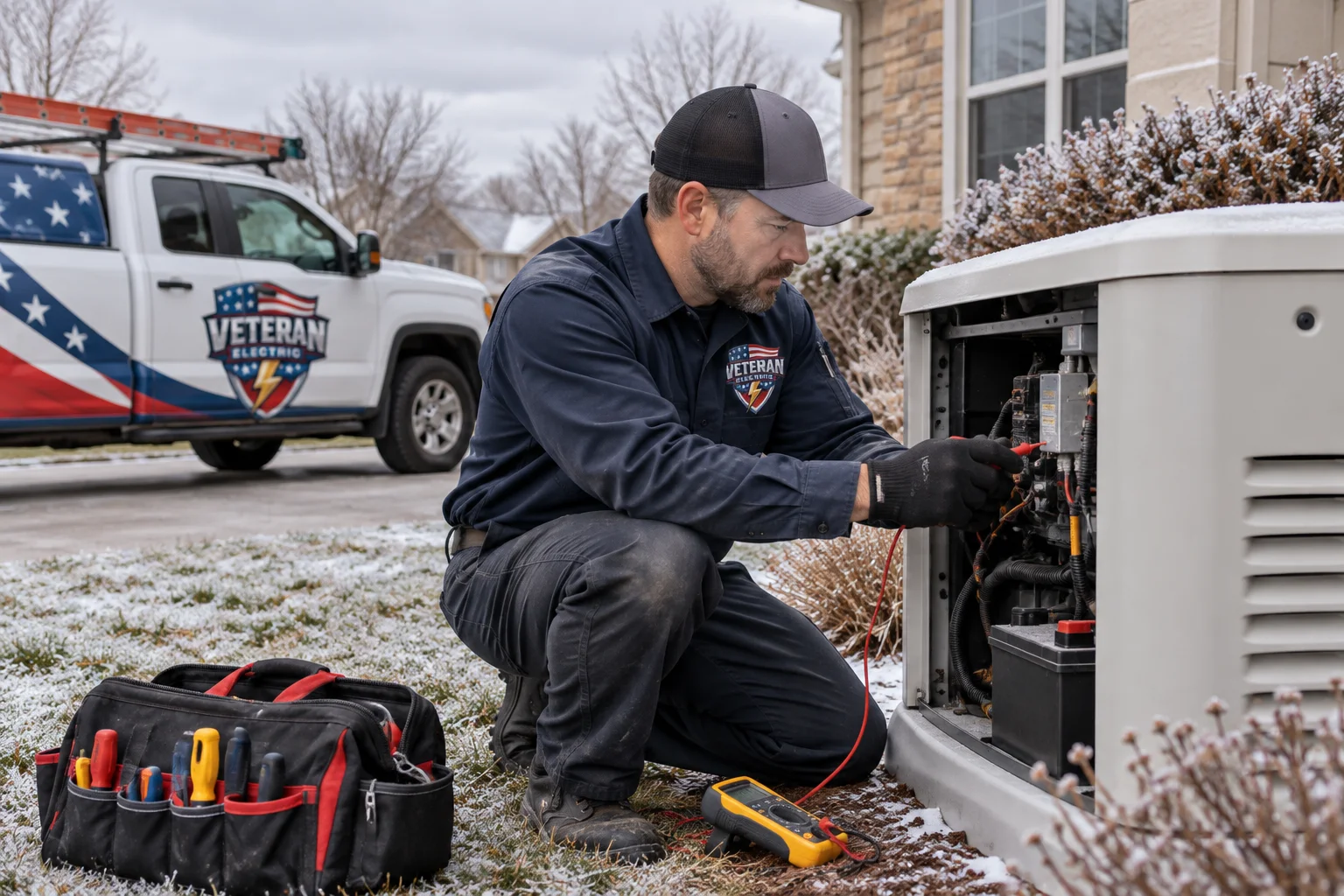
Winter generator prep in Kansas City means checking fuel, battery, and cold-start readiness weeks before the first ice storm knocks out power. Homeowners who wait until a freeze warning to test their unit often find a dead battery or clogged fuel line, which our Residential Electrical Services team sees every winter.
By Veteran Electric Team, KC Licensed Electricians
When Should You Start Winter Generator Prep in Kansas City Before Ice Storms Hit?
Kansas City's ice storm season typically arrives between late November and February, but the smart window for winter generator prep is September through mid-October, before temperatures drop and demand for electricians spikes. Waiting until a winter storm warning is posted means every licensed shop in the metro is booked, and a generator that hasn't run since spring is the worst time to discover a dead battery or stale fuel. Starting early gives you time to order parts, schedule a professional check, and run the unit through a full test cycle while the weather is still mild enough to work outside comfortably. It also gives you room to address anything the test uncovers, corrosion on battery terminals, a clogged air filter, or exhaust issues, without racing a forecast. In many cases, a generator that sat idle over a mild Kansas City summer needs more attention than one that runs monthly, so don't assume good weather all year means good condition now.
What Belongs on a Pre-Winter Generator Maintenance Checklist?
Scheduling generator maintenance in Kansas City each fall, rather than after the first outage, catches most problems before they matter. A pre-winter generator maintenance checklist should cover everything that changes performance in cold weather, not just an oil change. At minimum:
- Oil and filter: Switch to a winter-weight oil if your manufacturer recommends one for temperatures below freezing, and replace the filter if it's due.
- Air filter: A dirty air filter restricts airflow and makes cold starting harder; clean or replace it.
- Battery and terminals: Cold weather drops battery output significantly, so check the charge, clean off corrosion, and confirm connections are tight.
- Fuel system: Old gasoline degrades and can gum up carburetors; add a fuel stabilizer or drain and replace fuel that's been sitting more than a few months.
- Exhaust and ventilation: Confirm the exhaust path is clear of debris, leaves, and nesting material before the unit ever starts.
- Load test: Run the generator under an actual electrical load, not just idling, to confirm it can carry your home or business.
- Transfer switch check: For standby units, verify the automatic transfer switch engages correctly during a simulated outage.
Working through this list once in early fall, then again in December if the unit hasn't run, catches most issues before an ice storm forces the question.
How Does Cold Weather Affect Standby and Portable Generator Performance?
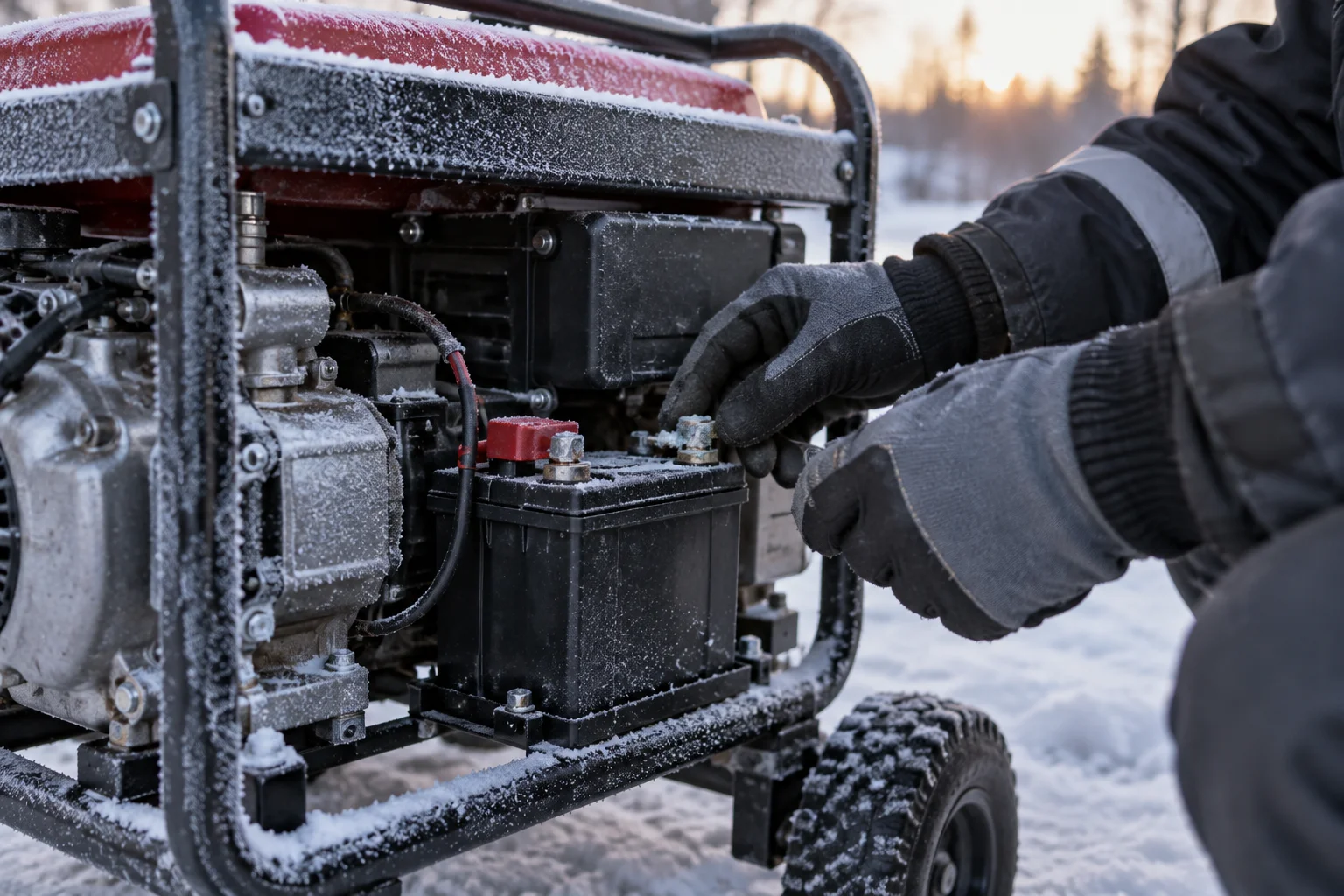
Cold weather changes how a generator's engine, battery, and fuel behave, and Kansas City's swings between mild days and sudden freezes make this worse than a steady winter climate. Engine oil thickens as outdoor temperature drops, which makes the starter work harder and can slow or prevent a cold start entirely. Batteries lose a meaningful percentage of their cranking capacity in freezing conditions, so a battery that tested fine in October can fail to turn the engine over in January. Gasoline is especially prone to condensation buildup in cold, humid conditions, which introduces moisture into the fuel system and leads to corrosion inside carburetors and fuel lines. Propane and natural gas don't have this problem the same way, which is one reason standby units often run on one of those fuels. Snow and ice on an outdoor enclosure can also block air intake and exhaust vents, and prolonged ice buildup can damage enclosure seals and hinges over a winter. None of this means a generator can't be trusted in winter, it means the check that mattered in October matters again once temperatures start dropping toward freezing.
How Do You Test a Generator Before the First Ice Storm?
Testing means more than pressing the start button and listening for the engine to catch. Run the generator under a real load for at least 20 to 30 minutes, using actual appliances or a load bank, so you can confirm it holds voltage and doesn't stall as demand increases. Watch the exhaust while it runs: thick white or black smoke, sputtering, or a rough idle are all signs of issues that should get diagnosed before an outage, not during one. For standby systems, simulate a power loss, following the manufacturer's process at the main breaker, and confirm the automatic transfer switch engages within its rated time and that the unit picks up your home's load cleanly. Check that batteries hold a charge through a full start-and-run cycle rather than just cranking once. If a generator hesitates to start, runs unevenly, or trips a breaker under load, that's worth a professional look before the first ice storm. If your test turns up something you can't resolve on your own, our Emergency Electrical Services team can inspect and repair a generator or its wiring before the next storm rolls in, not just after one already has.
Which Fuel Holds Up Best in Kansas City Winters, and How Do You Protect the Enclosure From Ice and Snow?
Propane, Natural Gas, or Gasoline in Cold Temperatures
Of the three common fuel types, propane and natural gas generally hold up best through a Kansas City winter because they don't degrade in storage or corrode fuel systems the way gasoline does. Propane also stores indefinitely in its sealed tank, so there's no stale fuel to worry about heading into ice storm season. Natural gas has the added advantage of an uninterrupted supply line for standby units, as long as the gas utility itself stays in service. Gasoline works fine for a portable unit used occasionally, but it needs fresh fuel and a stabilizer each season, and it's the fuel most likely to cause starting issues if it's been sitting since last winter.
Protecting a Generator Enclosure or Pad From Ice and Snow Buildup
A generator's concrete or composite pad should sit level and, in many cases, slightly elevated so meltwater and ice don't pool underneath and undermine it over a freeze-thaw cycle. Clear snow away from the enclosure's air intake and exhaust vents before every run, since a blocked vent on a portable unit creates a carbon monoxide risk. The CDC advises running portable generators well away from windows, doors, and vents, generally at least 20 feet from the home, to prevent carbon monoxide from entering living spaces, and never in a garage or enclosed space even with the door open. For standby units in a weatherproof housing, check the enclosure's door seals and drainage each fall so ice can't lock a service panel shut when you need it most.
Frequently Asked Questions
How often should you run a generator in winter to keep it ready?
Most manufacturers recommend an exercise cycle of about 20 to 30 minutes every one to two weeks, ideally under some load, to keep the engine, battery, and internal seals in working condition. Standby units usually have a built-in self-test schedule; portable units need a manual run. Skipping this through a mild winter is a common reason generators fail when an ice storm finally arrives.
Can a portable generator run safely in snow or freezing rain?
Only if it's protected from direct moisture and kept clear of snow buildup around the engine and vents; running one in open rain or with snow packed against the exhaust risks electrical shorts and carbon monoxide buildup. Use a generator tent or open-sided cover rated for the unit, and never run it in a garage or under a tarp that traps exhaust.
How much does winter generator prep or maintenance cost in Kansas City?
Cost depends on generator size, fuel type, and how much work the unit needs, since a simple oil and filter service costs far less than diagnosing a starting issue or replacing a battery. It also depends on your home's electrical setup: older Kansas City homes with a 100-amp panel often need more electrical panel capacity before a whole-house standby unit can be added. A licensed electrician can give you a firm number after inspecting the unit.
How long can a standby generator run during a multi-day ice storm outage?
Most home standby units can run for as long as fuel supply allows, which means indefinitely on natural gas or for as long as a propane tank lasts, though manufacturers still recommend periodic cool-down and oil checks during extended runs of several days. Portable generators are more limited, usually running 8 to 20 hours per tank, so multi-day outages require refueling and closer monitoring.
Is it too late to get a generator installed before winter hits?
Usually not, though lead time shrinks as ice storm season gets closer and licensed installers get busier. A whole-house standby unit still needs a correctly sized transfer switch installed to isolate your home from the utility line safely, and that work, along with any panel changes, takes longer to schedule once cold weather arrives. The sooner you call, the more likely installation happens before the first freeze.
Schedule Your Winter Generator Inspection with Veteran Electric
Ice storm season doesn't wait for a generator that's ready by accident. Contact our veteran-owned, licensed electricians today to schedule a winter generator inspection before the next freeze warning goes up.


