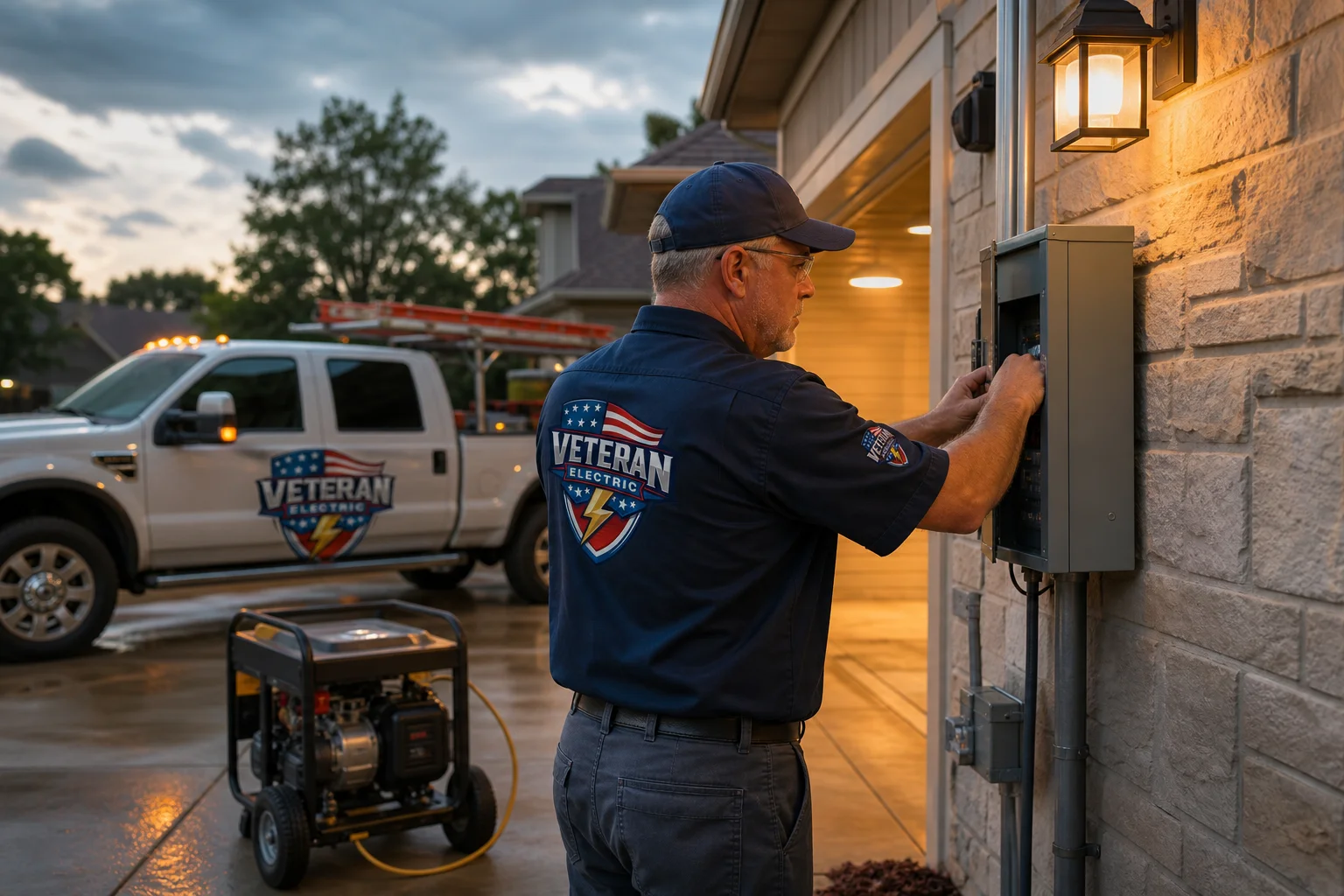
When Kansas City storms knock out power for hours, a transfer switch is the piece of equipment that lets your generator take over safely, without overloading circuits or putting utility workers at risk. Understanding what is a transfer switch and why does your generator need one starts with how it isolates your home's wiring from the grid. Our Emergency Electrical Services team installs and inspects these switches across the metro.
By Veteran Electric Team, KC Licensed Electricians
A transfer switch is a device installed between your generator, your main electrical panel, and the utility line. It makes sure only one power source, either the grid or your generator, can feed your home's circuits at any given moment. Without one, a generator connected directly to your wiring can send generator power backward through the same lines the utility company uses to restore service, a hazard known as backfeed.
That single function is the honest answer to what is a transfer switch and why does your generator need one: it protects people and equipment by keeping two power sources from ever meeting on the same circuit. The National Electrical Code, NFPA 70, requires a transfer switch for any generator that is permanently wired into a home or business electrical system. It is required, not just recommended.
Most transfer switches also need a permit and a local inspection before they go into service, since the installation ties directly into your main panel and your service entrance. That inspection step matters. It confirms the switch is wired to fully break the connection to the grid before generator power is ever allowed onto your circuits, which is the entire safety principle the device is built around.
How a Transfer Switch Works With Portable Generators
Portable generators are common in Kansas City because they are affordable and easy to store between storms. But plugging appliances directly into a portable generator with extension cords limits you to whatever you can reach, and it does nothing to protect your permanent wiring.
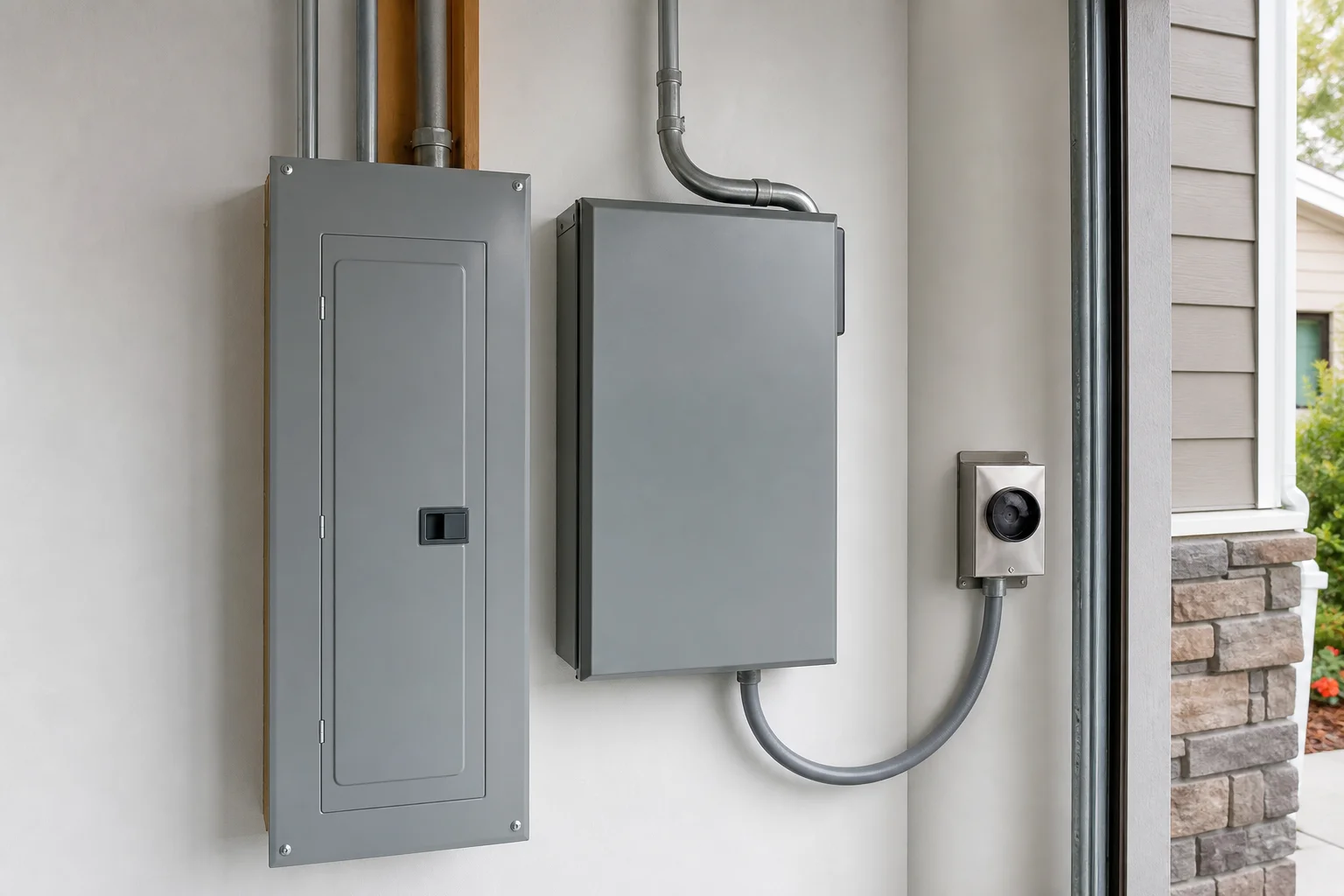
A transfer switch changes that. Licensed electricians install an inlet box on the exterior of your home, wired through the transfer switch to a selected set of circuits, usually your furnace, refrigerator, well pump, and a few lights and outlets. When the power goes out, you start the generator, plug it into the inlet, and the switch routes generator power directly to those circuits. The rest of your home's wiring stays completely disconnected from the generator, and the generator stays disconnected from the grid. This is the setup we recommend most often through our Residential Electrical Services, since it gives homeowners real, safe backup power without a full standby system.
Automatic Transfer Switch vs. Manual Transfer Switch
There are two main types, and the difference comes down to who does the work when the lights go out.
Manual Transfer Switch
With a manual transfer switch, you flip the switch power selector yourself once your portable generator is running. It is a lower cost option and works well for homeowners who are comfortable stepping outside during a storm to start the unit and throw the switch.
Automatic Transfer Switch
An automatic transfer switch monitors utility power around the clock. The moment it detects an outage, it starts a standby generator on its own, waits for the engine to stabilize, then switches power to your home automatically, often within seconds. When the grid comes back, the automatic transfer switch shifts everything back to utility power and shuts the generator down. For businesses, medical equipment, sump pumps, or anyone who travels often, an automatic transfer switch removes the guesswork entirely. Kansas City summers put their own strain on home electrical systems even without a storm involved, and understanding summer electrical safety helps you plan backup power alongside the rest of your system's needs.
Why Utility Workers Need Your Transfer Switch Installed Correctly
This is the part homeowners rarely think about, but it is the reason transfer switches are code required rather than optional. When a storm takes down power lines, utility workers assume every line is dead unless proven otherwise before they touch it. A generator wired directly into a home's electrical system, with no transfer switch, can push power generator current back out onto those dead lines. That backfeed can seriously injure or kill a lineworker who has no way of knowing your generator is running.
A correctly installed transfer switch prevents that scenario completely by physically isolating your generator from the utility line. It is one of the clearest examples of how a small piece of equipment protects people well outside your own property. Utility companies and the Occupational Safety and Health Administration both treat backfeed as a serious hazard for line crews, which is exactly why local jurisdictions require inspection before a generator setup is approved for use. A whole-home surge protector works at the panel level rather than at a single outlet, which matters if you are also thinking about protecting your system from the electrical swings that come with storms and outages.
Frequently Asked Questions
Do I legally need a transfer switch with a portable generator?
If your generator is only ever plugged into individual appliances with cords, code does not require a transfer switch. The moment you want it to power any part of your home's fixed wiring, even a single circuit, a transfer switch is required by the National Electrical Code to prevent backfeed into utility lines.
Can I install a transfer switch myself?
No. Installing a transfer switch involves working inside your main electrical panel and tying into your home's wiring and the utility service. It should always be done by a licensed electrician who can verify the work meets code and passes inspection.
How much power can a transfer switch handle?
Transfer switches are rated by amperage and circuit count. A licensed electrician sizes yours to match your generator's output and the specific circuits you want backed up, whether that is a handful of essentials or your entire panel.
What is the difference between a transfer switch and an interlock kit?
An interlock kit is a mechanical device that prevents your main breaker and a generator breaker from being on at the same time, offering similar backfeed protection at a lower cost, but it still requires you to manually manage the switch power process. A dedicated transfer switch, especially an automatic transfer switch, offers more flexibility in which circuits stay backed up.
Get Your Transfer Switch Installed by Veteran Electric
Whether you run one of many portable generators during storm season or want a fully automatic transfer switch for year round peace of mind, our licensed team can size, install, and inspect the setup correctly the first time. Contact Veteran Electric to schedule your transfer switch installation.


