
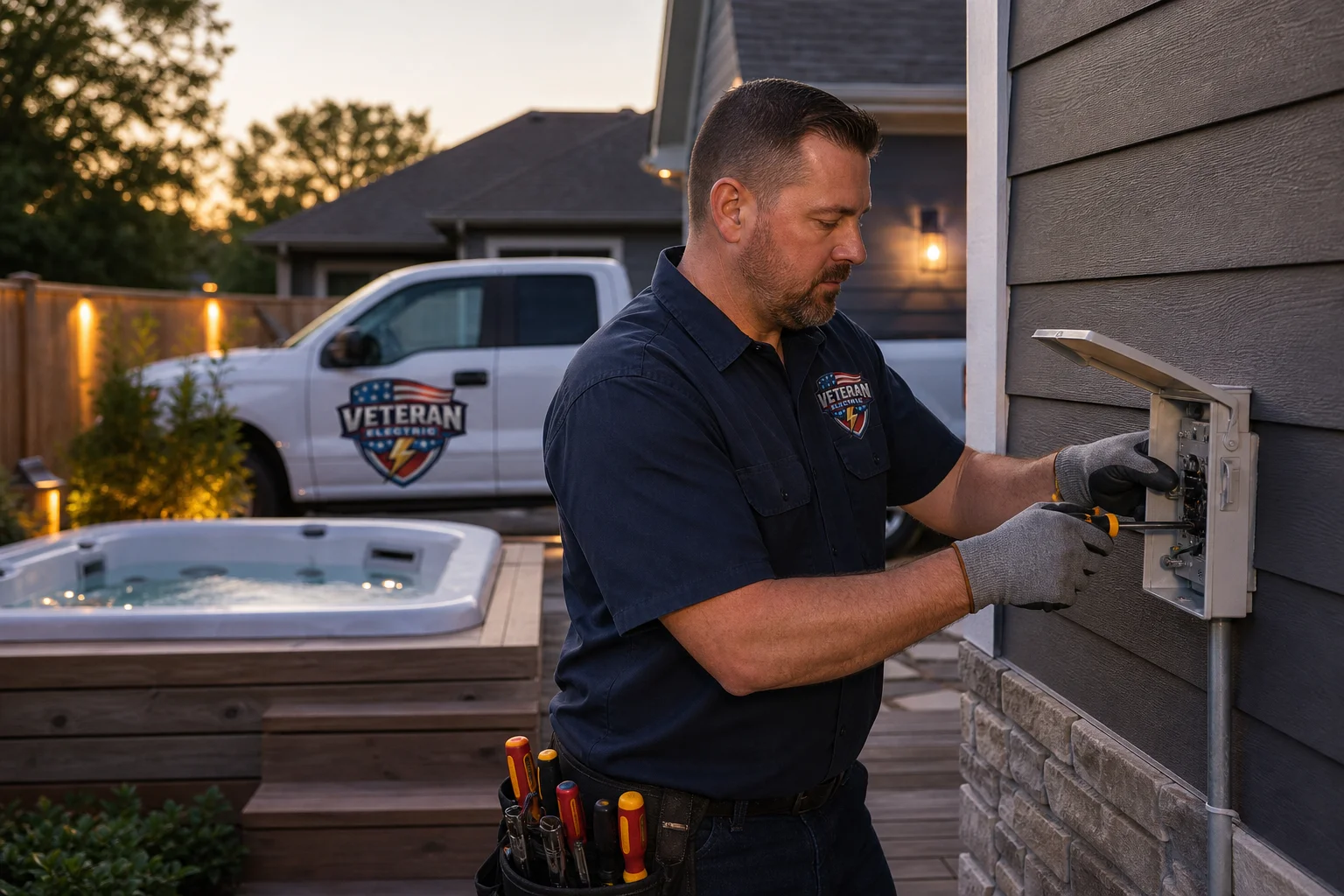
How much does hot tub wiring cost in Kansas City? The honest answer is it depends on your panel capacity, the distance from your panel to the tub, and whether trenching or a permit is required, not a flat number any electrician should quote sight unseen. Our Residential Electrical Services team walks through every cost driver below.
By Veteran Electric Team, KC Licensed Electricians
What Drives Hot Tub Electrical Costs in Kansas City
Every hot tub installation in the Kansas City area involves the same core cost drivers: your home's existing panel capacity, the type of circuit required, how far the tub sits from your electrical panel, and local labor rates for licensed electricians. A 240 volt hot tub draws far more power than a standard outlet can handle, so the wiring, breaker, and disconnect all have to be sized correctly the first time. Homeowners who skip this step often pay twice, once for the rushed install and again to fix it.
Panel capacity is usually the biggest swing factor. If your home already has room on the panel for a dedicated circuit, the electrical work is straightforward: run wire, install a GFCI disconnect, and connect the tub. If your panel is older, undersized, or already maxed out with other circuits, you may need a panel upgrade before any hot tub wiring can happen. Kansas City homes built before the 1970s are especially likely to need this step, and if your home still has aluminum branch wiring, that adds another layer of scrutiny. Aluminum wiring changes the math on any electrical project, hot tubs included. Aluminum connections loosen and overheat more easily than copper ones as the metal expands and contracts with use, which is why many aluminum wired homes need copper rated connectors or a full pigtail repair at the panel before a new 240 volt circuit can be added safely. That's a real cost driver, not a formality, so it pays to understand the aluminum wiring risks in your home before budgeting for the hot tub install.
Hot Tub Electrical Requirements: Panel, Circuit, and GFCI
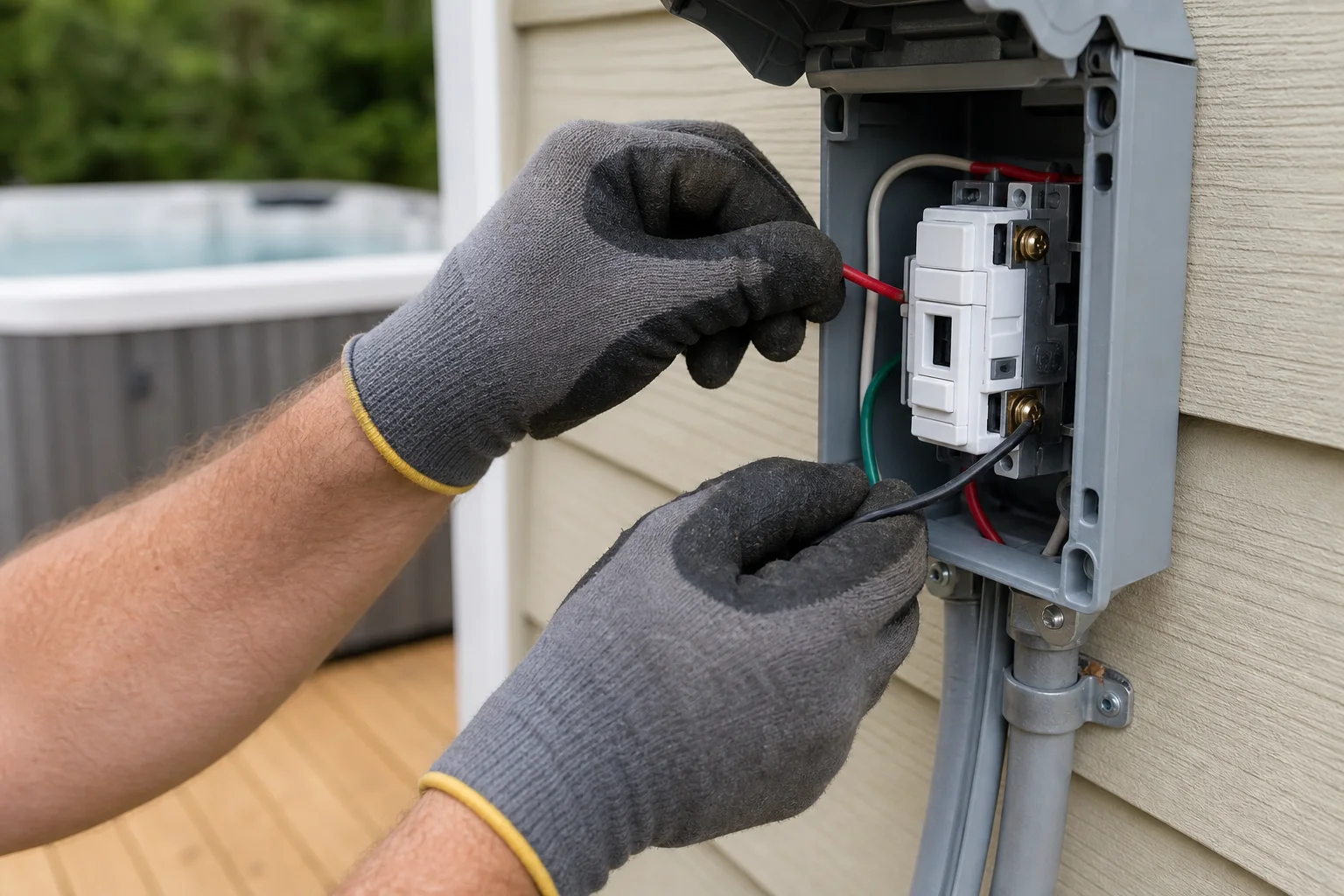
Hot tub electrical work follows strict rules under the National Electrical Code, and Kansas City inspectors enforce them closely. Every hot tub needs its own dedicated circuit, sized for the tub's amperage draw, never shared with another appliance. A GFCI protected disconnect must sit within sight of the tub, at a code required safe distance, and never directly beside the water. The wire gauge and conduit type depend on distance and whether the run is buried, exposed, or routed through a wall.
These requirements exist because hot tubs combine water, electricity, and constant use, a combination the National Electrical Code treats seriously for good reason. A GFCI disconnect trips instantly if it senses current leaking to ground, which is what protects the people inside the tub. Homeowners sometimes assume any electrician can handle this, but hot tub electrical work requires knowing the specific code sections that apply to wet locations. That same GFCI protection applies anywhere water and electricity meet in a home, kitchens, bathrooms, garages, and exterior outlets included, so a hot tub install is a good reminder to check that those circuits are properly protected too.
Permits, Code, and Trenching: The Hidden Factors in Installation Cost
Most Kansas City municipalities require a permit before you install hot tub wiring, and skipping that step can cause problems at resale or with your homeowners insurance if something goes wrong later. The permit process usually involves an inspector checking the dedicated circuit, the GFCI disconnect, and the bonding around the tub itself before it's approved for use. Factor permit fees and inspection scheduling into your installation cost from the start, not as an afterthought.
Trenching is the other cost factor homeowners underestimate. If your hot tub sits any real distance from the panel, especially outside on a patio or deck, the wire has to run underground through conduit rated for direct burial or through a protective sleeve. Additional trenching means additional labor and materials, and rocky Kansas City soil can slow that work down further. Electrical work gone wrong here, a nicked line, a disconnect that trips constantly, exposed wire near the water, isn't something to wait on. That's exactly the kind of situation our Emergency Electrical Services team handles, day or night.
So How Much Does Hot Tub Wiring Cost in Kansas City? A Full Breakdown
So how much does hot tub wiring cost in Kansas City? There's no honest flat number, because every home's starting point is different, but the line items are consistent: labor for a licensed electrician, materials including wire, conduit, and a GFCI disconnect, permit fees set by your local municipality, and trenching if the tub sits away from the house. These costs vary based on your home's starting point, not a one size fits all number. Homes with an already sized panel and a short run to the tub sit at the lower end. Homes needing a panel upgrade, a long trench, or extra conduit through concrete sit at the higher end.
Local business owners installing a spa for guests or employees face a different cost structure entirely, since commercial panels, occupancy codes, and inspection requirements differ from residential jobs. Commercial panels typically carry higher capacity along with stricter occupancy and inspection standards than a home panel, so a business install often means a longer permit process and a different scope of work than a residential estimate would suggest. If that describes your business, it's worth getting a quote scoped specifically for commercial work rather than assuming residential pricing applies.
DIY vs Licensed Electrician: Why You Shouldn't Install Hot Tub Electrical Wiring Yourself
It's tempting to treat hot tub wiring as a weekend project, especially if you're comfortable with basic tools. But this is one of the few areas of residential electrical work where getting it wrong doesn't just mean a tripped breaker, it means a real shock hazard in standing water. A licensed electrician carries the liability, the code knowledge, and the inspection relationships to get it approved the first time. It's common for Kansas City permit offices to reject owner wired spa installations over GFCI placement, bonding, or wire gauge issues, which means paying for a redo on top of the original labor and materials.
If you're still comparing bids, licensing and insurance are what actually separate a qualified electrician from the rest. Before anyone touches your panel, run through the same electrician selection criteria that applies to any panel work: an active electrical license, current liability insurance, and a track record of permitted jobs similar to yours. Hesitation on any of those three points is reason enough to keep shopping. As a veteran owned company, we bring the same discipline to a spa circuit that we'd bring to any mission critical electrical work, no shortcuts, no guesswork.
Frequently Asked Questions
Does a hot tub need its own dedicated circuit?
Yes. Every hot tub requires a dedicated circuit sized specifically for its amperage draw, never shared with another appliance or outlet. This is a National Electrical Code requirement, not optional local preference, and Kansas City inspectors check for it during permit approval. Sharing a circuit overloads the wiring and defeats the GFCI protection the tub depends on.
How far can a hot tub be from the electrical panel?
There's no fixed maximum distance, but distance directly affects installation cost since longer runs need thicker wire, more conduit, and often trenching. A GFCI disconnect also needs to sit within sight of the tub, at a code required safe distance, which shapes where the tub itself can practically go.
Do I need a permit to install hot tub wiring in Kansas City?
Yes, most Kansas City municipalities require a permit and inspection for hot tub electrical work. This protects you at resale and with your insurance carrier if an issue comes up later. A licensed electrician typically handles the permit application and schedules the required inspection as part of the job.
Can I install hot tub electrical wiring myself?
Kansas City code technically allows homeowner permits in some jurisdictions, but the inspection standards are strict and unforgiving of small mistakes. Given that water and electricity are involved, most homeowners are better served hiring a licensed electrician who already knows the GFCI, bonding, and wire gauge requirements inspectors check for.
What's included in a typical hot tub installation cost?
A typical installation cost covers labor for a licensed electrician, materials like wire, conduit, and a GFCI disconnect, local permit fees, and trenching if the tub is any distance from the panel. Panel upgrades, when needed, are usually the largest additional line item beyond the base wiring work.
Get a Straight Answer on Your Hot Tub Wiring Cost
You deserve a clear answer on cost before any wire gets run, not a surprise invoice after the work is done. Contact our team for a straightforward assessment of your panel, your distance to the tub, and what the job actually requires.


