
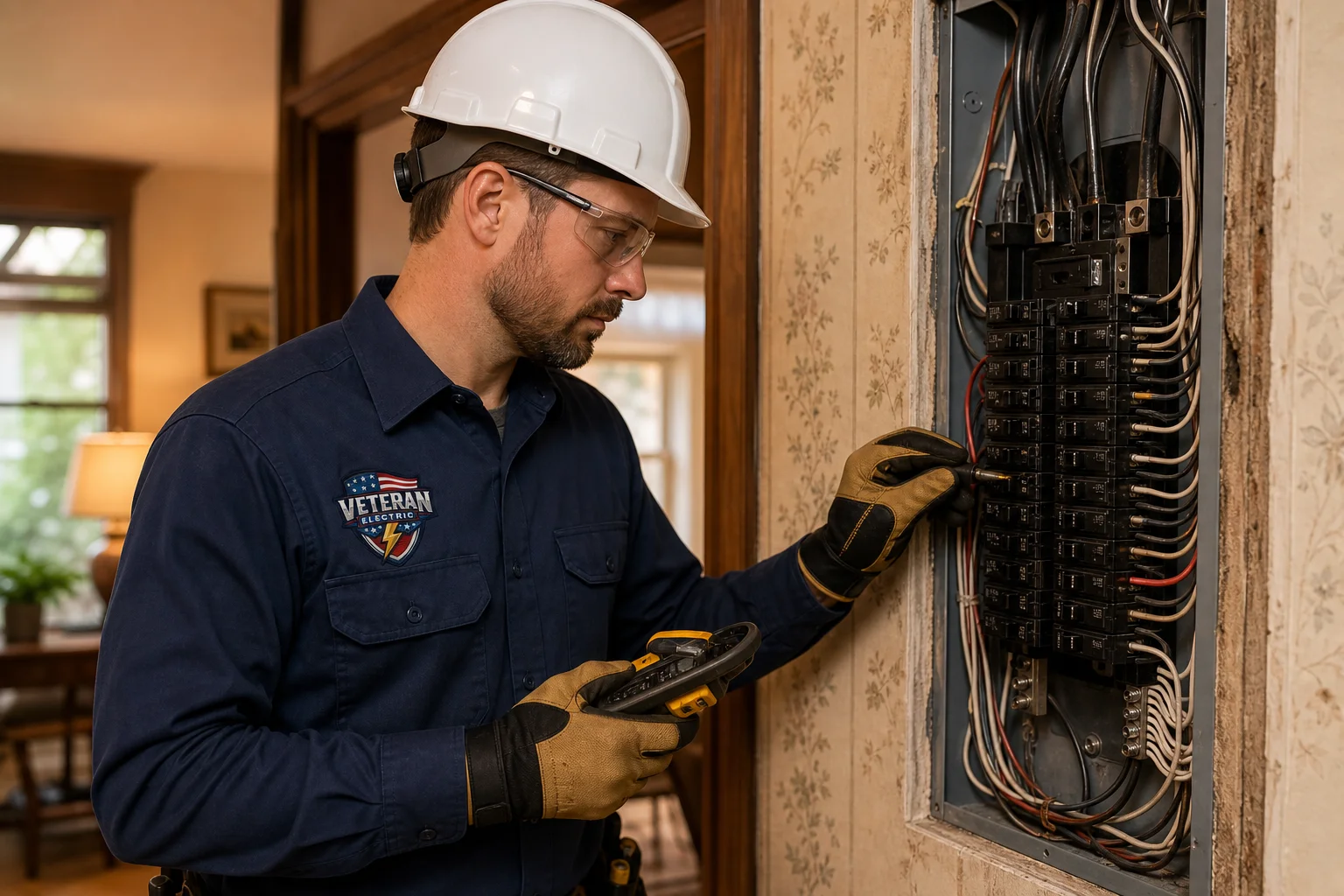
Is aluminum wiring dangerous? Yes, and Kansas City homeowners in houses built between 1965 and 1973 should take it seriously. Home aluminum wiring carries documented fire hazards that homes wired with copper do not face to the same degree. Residential Electrical Services from a licensed electrician is the right first step toward understanding your risk.
By Veteran Electric Team, KC Licensed Electricians
Why Aluminum Wiring Became Common in American Homes
During the mid-1960s, copper prices surged and American home builders needed a cheaper alternative. Aluminium (also written as aluminum in American English) is one of the most versatile metals known to modern industry. From beverage cans and kitchen foil to cast automotive parts, rolled sheet aluminum for construction, and high-voltage transmission lines, this material is valued across applications for its light weight, corrosion resistance, and lower cost compared to steel copper. Industries from aerospace to food packaging rely on aluminium used in everything from thin sheet products to heavy cast components.
That industrial value translated into a building trend. Builders ran aluminum wire through millions of American homes, including many still standing in Kansas City today. The process was straightforward: manufacturers supplied single-strand aluminum wire that met electrical code of the time, and electricians installed it the same way they would copper wire.
The trouble came when single-strand aluminum wire was used for the small-gauge branch circuits inside homes, connecting outlets switches, fixtures, and appliances through thousands of connection points that would heat and cool over decades.
How Aluminum Wire Behaves Differently Than Copper Wire
Aluminum wire and copper wire respond to electrical current differently at connection points, and that difference is where the danger lives.
When electricity flows through a conductor, it generates heat. Aluminum expands more than copper under that heat and contracts more when it cools. Over years of heating and cooling cycles, aluminum wire connections loosen at outlets switches, junction boxes, and panel terminals. A loose connection arcs. An arcing connection can ignite nearby materials.
There is a second problem: oxidation. With aluminum, aluminum oxide forms at every connection point, creating a resistance pathway that generates dangerous heat. Aluminum oxide is a poor conductor. As corrosion builds at these points, resistance increases further and fire risk grows. Copper wire forms an oxide too, but copper oxide conducts electricity well enough that it does not significantly increase resistance. This difference in corrosion resistance between the two metals explains why home aluminum wiring poses a greater risk than copper wire in residential branch circuits.
A third issue is that aluminum wire is softer and more brittle after repeated bending. Installers sometimes nicked or kinked wiring aluminum during installation, creating weak points that degrade over time.
Is Aluminum Wiring Dangerous? What the Consumer Product Safety Commission Found
The Consumer Product Safety Commission studied home aluminum wiring extensively and published findings that remain the clearest information available to American homeowners. According to CPSC research, homes wired with single-strand aluminum wire are 55 times more likely to have one or more connections reach "fire hazard condition" than homes wired with copper. That number, 55 times more, is the figure every Kansas City homeowner in a house from the 1960s or 1970s needs to understand.
The Consumer Product Safety Commission does not treat home aluminum wiring as a theoretical concern. It classifies wiring aluminum as a documented fire hazard and recommends that homeowners either replace the aluminum wire with copper wire or have a licensed electrician install approved remediation at every connection in the home.
The CPSC's wiring aluminum research covers single-strand wire used for branch circuits, not the large-gauge aluminum wire used for dryer circuits, service entrance cables, or main panels. Those large-gauge parts of the system use aluminum safely with proper connectors. The danger is specific to the small-gauge, single-strand home aluminum wiring used at outlets switches and light fixtures in residential construction.
Homeowners often ask: is aluminum wiring dangerous enough to act on even if there have been no visible incidents? The CPSC's answer is yes, because connection failure develops silently before it becomes visible.
If your Kansas City home was built before 1980, it could also have knob and tube wiring alongside or instead of aluminum wiring. Knob and tube is an older system with its own separate fire risks, and the surest way to know which wiring systems are actually present is a panel and attic inspection by a licensed electrician.
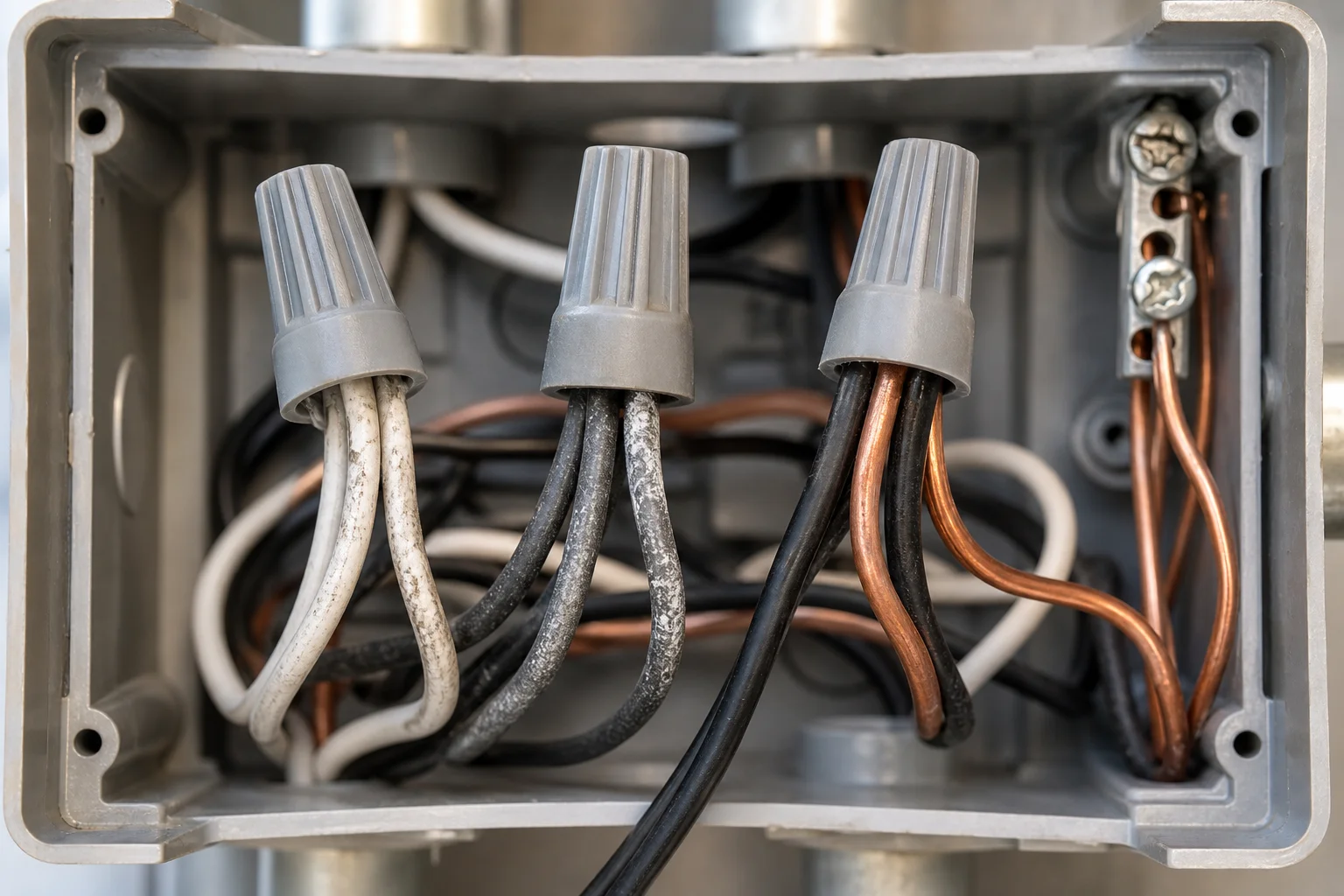
Signs Your Kansas City Home Has Aluminum Wiring
Aluminum wiring does not announce itself. Most homeowners find out through an inspection rather than a visible problem. That said, there are signals worth knowing.
Age of the home: If your house was built between 1965 and 1973, there is a meaningful chance it has aluminum wiring in the branch circuits. Some homes built into the mid-1970s may also have it.
Labels on the wire jacket: Inside an electrical panel or junction box, look for wire with "AL" or "ALUMINUM" printed on the jacket. That identifies aluminum wire.
Warm outlets or switches: Outlets switches or cover plates that feel warm, even when nothing is plugged in, can signal a loose or corroding connection.
Flickering lights: Lights that flicker without obvious cause, especially near a loaded outlet, can indicate loose wiring aluminum connections.
Burning smell near outlets: Any smell of burning plastic near outlets, switches, or the panel is an emergency. Contact our Emergency Electrical Services team right away.
What to Do If Your Home Has Aluminum Wiring
There are three CPSC-recognized approaches to home aluminum wiring remediation. The right choice depends on your budget, your plans for the home, and the specific wiring configuration.
Full rewire with copper wire: A licensed electrician replaces all aluminum wiring with copper wire from the panel to every outlet, switch, fixture, and junction box. This is the only method that eliminates fire hazards at every connection point in the home. A full rewire takes longer and typically costs more upfront than either connector-based repair, but it is the only method that removes aluminum wiring from the home entirely rather than treating it connection by connection. The full rewire timeline depends on the size of the home and how accessible the wiring is.
COPALUM crimp connectors: The CPSC endorses COPALUM connectors as a reliable repair. A certified electrician splices a short length of copper wire onto the existing aluminum wire at every connection point using a special crimping tool and a listed connector. The result is a copper-to-device connection at every outlets switches and fixture throughout the home.
AlumiConn connectors: The CPSC also recognizes AlumiConn push-in connectors as an acceptable repair when installed correctly by a licensed electrician at every connection point.
What is not acceptable: ignoring the issue or applying a partial repair at a few outlets and calling it done. Home aluminum wiring problems exist at every connection, not just visible ones. A partial fix leaves fire hazards throughout the house.
Not every electrician has training in COPALUM crimping or CPSC-approved aluminum wiring remediation methods, so verifying credentials matters more here than for routine electrical work. A closer look at choosing the right electrician covers the specific questions worth asking before hiring.
Frequently Asked Questions
Is aluminum wiring illegal in Kansas City homes?
Aluminum wiring installed before 1974 is not illegal to have in your home, but it presents documented fire hazards. Kansas City building codes do not require retroactive removal, but insurers may require remediation, and any new work added to the system must use listed materials compatible with aluminum. A licensed inspection is the right starting point.
Is aluminum wiring dangerous even if my home has been fine for 40 years?
Yes. The Consumer Product Safety Commission is clear: connection failure develops silently over decades. A connection can be degrading for years before reaching failure. The absence of visible incidents does not confirm that wiring aluminum connections are safe. Have the home assessed by a licensed electrician who knows what to look for.
Can I sell a Kansas City home with aluminum wiring?
Yes, but disclosure is typically required under Missouri real estate law. Buyers and their inspectors will flag it, and it may affect your sale price or require repairs before closing. Many buyers request a full remediation assessment before proceeding with purchase.
How do I know if my home has aluminum wiring?
The most reliable method is a panel inspection by a licensed electrician. You can also check for "AL" printed on wire jackets inside your panel or junction boxes. Homes built between 1965 and 1973 are the highest-risk group for home aluminum wiring in the Kansas City area.
Does homeowner's insurance cover homes with aluminum wiring?
Some insurers refuse coverage or charge higher premiums for homes with aluminum wiring. Others require documented remediation before issuing or renewing a policy. Check with your insurer directly. If remediation is required, completing it before renewal avoids a coverage gap and confirms your home is protected.
Schedule Your Aluminum Wiring Inspection in Kansas City
If your Kansas City home was built in the 1960s or early 1970s, aluminum wiring is a real safety priority worth addressing now. The Veteran Electric team brings licensed expertise and the precision that comes from military-trained service to every inspection and remediation project. Contact us today to schedule your assessment.


