If you are comparing a hardwired vs plug-in ev charger for your Kansas City garage, the answer depends on your panel, your daily mileage, and whether you plan to stay. For most property owners, a hardwired setup delivers better performance and long-term reliability. Our Residential Electrical Services team installs both.
By Veteran Electric Team, KC Licensed Electricians
How Hardwired and Plug-In EV Chargers Actually Work
Both options charge your electric vehicle using 240-volt power, but the connection method shapes performance, permanence, and flexibility.
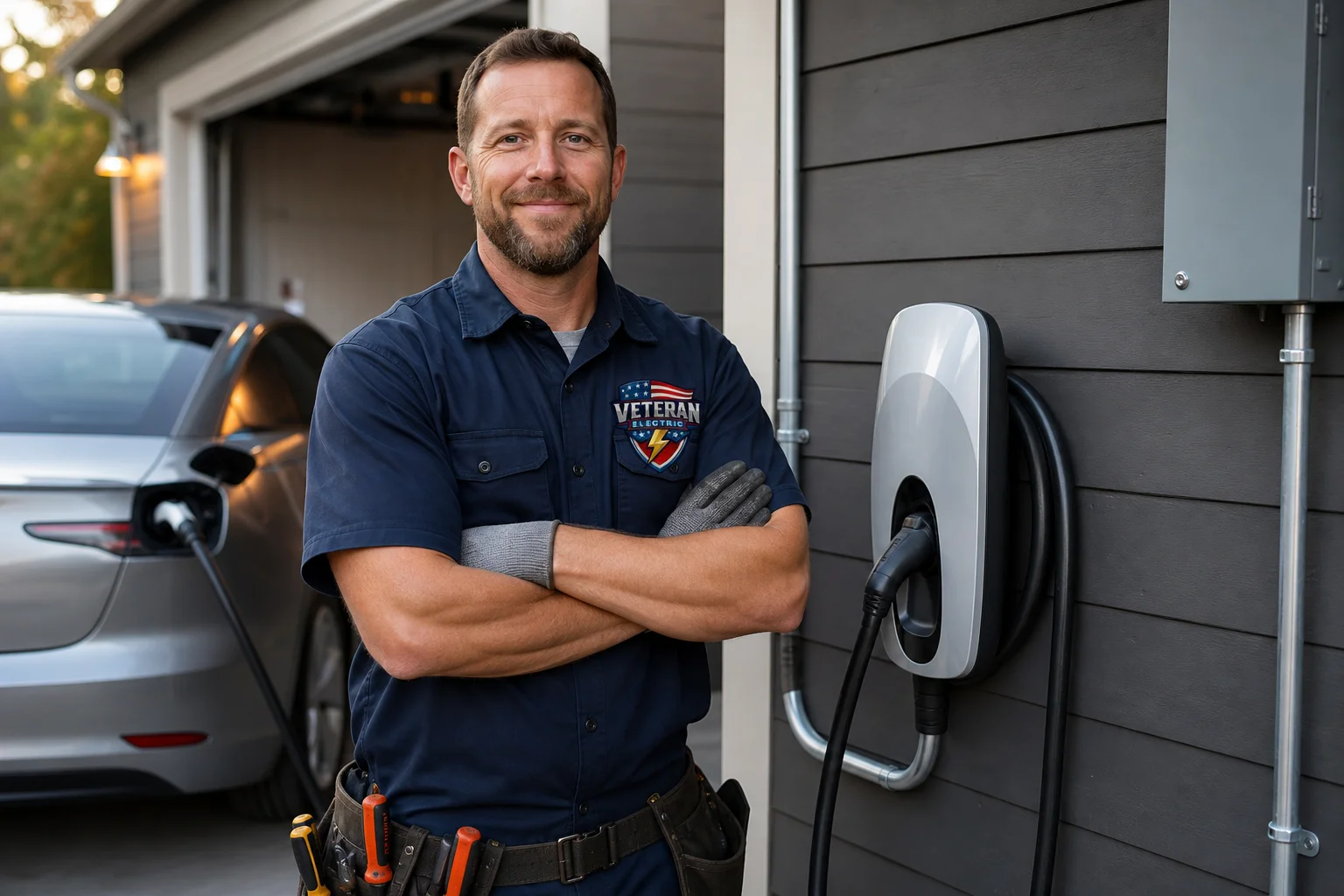
A hardwired charger connects directly to a dedicated circuit in your electrical panel, with no plug involved. A licensed electrician runs conduit from the panel to the charger unit and terminates the wires at the device. Because there is no connection point that can loosen, arc, or wear, hardwired installations carry a lower long-term risk of heat buildup, making them the preferred option for sustained home charging.
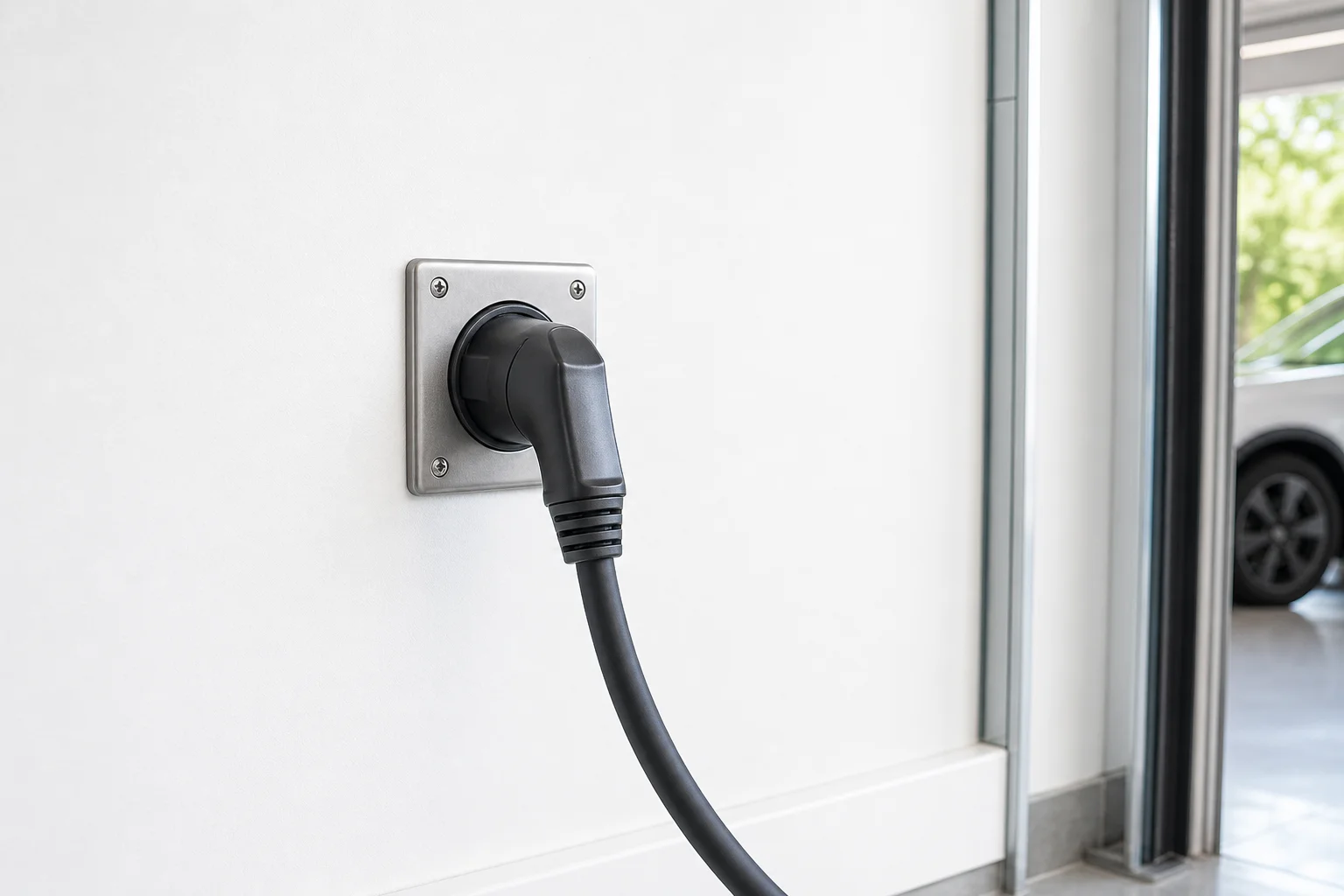
A plug-in charger connects to a NEMA outlet on your wall, most commonly a NEMA 14-50 (a 240-volt, 50-amp receptacle used for electric ranges and RV hookups) or a NEMA 6-50 (a 240-volt outlet without a neutral). The plug-in charger works like a large appliance cord: you plug it in and it delivers power. This also means you can take it with you when you move.
Both function as a Level 2 charger at 240 volts, which provides dramatically higher charging speeds than the 120-volt Level 1 outlet in a standard wall plug. The difference between hardwired and plug-in at this tier comes down to circuit capacity and connection stability.
Why a Hardwired Charger Delivers More for Daily Kansas City Drivers
When Kansas City homeowners work through the hardwired vs plug-in ev charger decision, daily charging needs usually tip the scales toward hardwired.
A hardwired level charger can be sized for 48, 60, or even 80 amps, depending on what your home electrical panel supports and what wire gauge the electrician installs. Plug-in chargers are limited by the NEMA outlet rating, typically 40 or 50 amps. That difference in amperage directly affects charging speeds: a 48-amp hardwired Level 2 charger adds roughly 30 to 40 miles of range per hour, while a 32-amp plug-in unit adds closer to 20 to 25 miles per hour.
Over a single overnight charge, that gap can mean the difference between a full battery and an 80 percent charge.
Hardwired connections also hold up better under daily use. A plug-in charger cycles through hundreds of connection events each year. Each plug-in cycle introduces minor stress to the NEMA outlet contacts. Combined with the heat generated by sustained high-current charging, outlets can show meaningful wear after several years of nightly home charging use. A hardwired connection carries no such vulnerability.
When Plug-In Chargers Are the Smarter Call
The plug-in EV charger is not a lesser option. It is the right answer for specific situations.
Renters and homeowners who expect to relocate within a few years should consider a plug-in charger first. The NEMA outlet stays with the property. The charger goes with you. A quality Level 2 plug-in charger can cost several hundred dollars, and portability protects that investment across multiple homes or vehicles.
Plug-in chargers also make sense when a homeowner already has a compatible NEMA outlet from a prior appliance or RV hookup. If the outlet is properly rated, the cost to start home charging drops to the charger itself. An electrician should still verify the existing circuit handles sustained EV load before you plug in, because EV charging draws roughly 80 percent of a circuit's rated amperage for hours at a time.
Some homeowners start with plug-in chargers and upgrade to a hardwired setup once they understand their usage patterns and garage layout better.
Sustained high-current loads, whether from EV charging or another major appliance, put real stress on wiring and panels. If your home already shows signs of strain under everyday use, such as flickering lights or breakers that trip, that is worth addressing before you add an EV circuit.
Hardwired vs Plug-In EV Charger: Four Factors That Decide It
The choice usually comes down to four factors: performance, permanence, portability, and cost.
Performance. A hardwired charger runs at the full capacity your circuit allows, potentially up to 80 amps on newer installations. A plug-in EV charger tops out at the NEMA outlet rating. In practice, most homeowners see a 10 to 15-mile-per-hour difference in range added per hour of home charging.
Permanence. A hardwired charger stays with the home and becomes a property feature. A plug-in charger stays with the owner. Both are legitimate selling points depending on your situation and how long you plan to stay.
Portability. Plug-in chargers travel. Hardwired chargers do not. If you move homes or charge at multiple locations regularly, a plug-in unit offers flexibility a hardwired installation cannot match.
Cost. The installed cost difference between a NEMA outlet and a hardwired circuit run is usually modest, often a few hundred dollars in added labor. The charger hardware cost varies by brand and amperage, independent of the installation method.
What Your Home Electrical Panel Needs for EV Charging
Any ev charger installation, whether plug-in or hardwired, requires a dedicated 240-volt circuit. Dedicated means the circuit serves no other load. Your home electrical panel must have an open double-pole breaker slot and enough remaining capacity to absorb the added amperage.
Many Kansas City homes built before 1990 carry 100-amp main service. If that panel is already loaded with HVAC, electric water heating, and kitchen appliances, adding a 40 to 60-amp EV circuit may require a panel upgrade before any charger home install can proceed. That is a separate cost, but often the right investment: a new panel supports future loads like backup generators, workshop equipment, and additional HVAC units.
If your panel is near capacity and you are already seeing flickering lights or frequently tripped breakers, address that first. Our Emergency Electrical Services team can assess and resolve panel problems before any new circuit work begins.
Any new 240-volt circuit in Kansas City requires a permit and inspection, whether you choose a NEMA outlet or a hardwired charger home run. Do not hire a contractor who proposes to skip permitting. Unpermitted electrical work creates insurance exposure and can complicate a future home sale.
Older wiring and undersized panels can struggle once a new circuit adds sustained high-amperage draw on top of everyday use, so it is worth knowing the warning signs of strain before you commit to an EV circuit. Any electrician you hire for this project should pull permits, size the circuit correctly, and stand behind the work, and if you are still comparing options, here is guidance on picking the right electrician for the job.
Frequently Asked Questions
Is a hardwired EV charger faster than a plug-in charger?
At the same amperage, the difference in charging speeds is minimal. The performance advantage of a hardwired charger comes from the ability to run higher amperage circuits than most NEMA outlets support. A 48-amp hardwired setup adds 30 to 40 miles of range per hour for home charging, versus 20 to 25 miles for a standard 32-amp plug-in unit. That difference compounds over a week of daily driving.
Do I need a permit to install an EV charger in Kansas City?
Yes. Any new 240-volt circuit, whether for a hardwired charger or a new NEMA outlet for plug-in chargers, requires a permit and inspection in Kansas City. Your licensed electrician pulls the permit. Skipping this step creates insurance liability and can delay or block a future home sale.
What is a NEMA 14-50 outlet and why does it matter for EV charging?
A NEMA 14-50 is a 240-volt, 50-amp outlet commonly used for electric ranges and RV hookups. It is the most common receptacle for plug-in EV chargers. If your garage already has one and the circuit passes inspection for sustained EV load, you may be able to start home charging without additional electrical work beyond purchasing the charger.
Can I install a hardwired EV charger myself?
No. Kansas City code requires that 240-volt circuit work be performed by a licensed electrician. A self-installed circuit will not pass inspection and creates real fire risk. This applies to both hardwired charger installations and new NEMA outlet additions for plug-in chargers.
Which option adds more value when selling my Kansas City home?
A properly permitted hardwired charger is a stronger listing feature because it signals a permanent, professional installation. A permitted NEMA outlet for plug-in chargers is also a positive. Both add measurable value compared to a garage with no EV infrastructure, particularly as electric vehicle ownership grows across the Kansas City metro.
Get Your EV Charger Installed Right the First Time
Whether a hardwired charger or a plug-in setup fits your garage and goals, Veteran Electric KC handles the full project: panel assessment, permitting, circuit installation, and final inspection. Contact us to schedule a site visit and get a straight answer on which option works for your home.


