
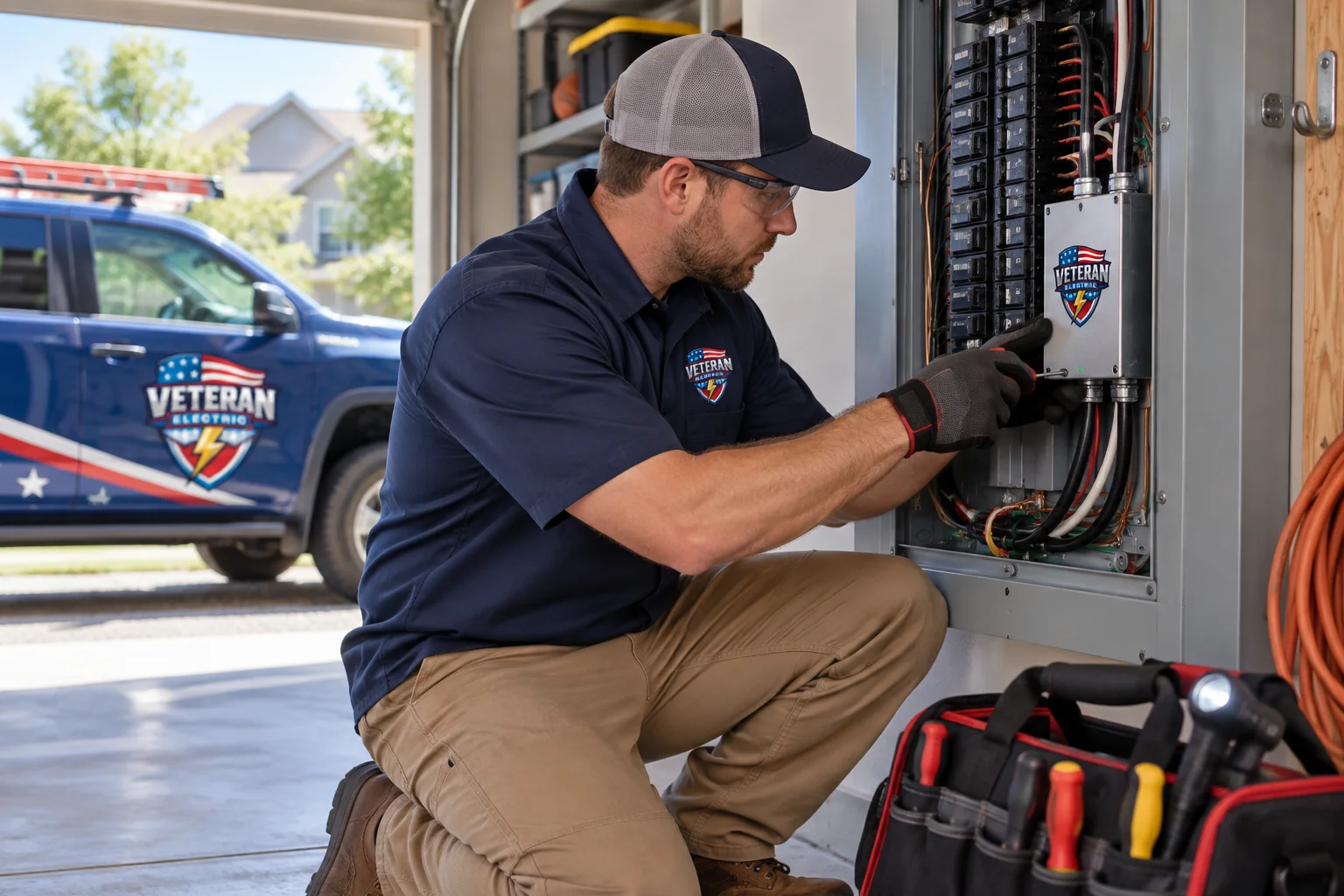
Understanding whole house surge protector installation cost in Kansas City starts with knowing what's actually being priced, not chasing a single number. Through Residential Electrical Services, a licensed electrician evaluates your electrical panel, your device load, and your electrical system before quoting the job, since each factor moves the final bill up or down.
By Veteran Electric Team, KC Licensed Electricians
How Much Does Whole House Surge Protector Installation Cost in Kansas City?
Whole house surge protector installation cost breaks into a handful of predictable line items rather than one flat number: the surge protective device itself, the labor to mount and wire it into your electrical panel, and any permit or inspection fee make up the bulk of most quotes. On a straightforward panel with room to spare, the device and labor together usually account for the majority of the invoice, while a panel that needs prep work, like added breaker space or grounding upgrades, can push the labor portion up by half again or more. Kansas City homeowners often ask why one quote comes in higher than another for what looks like the same job: the answer is almost always panel condition, not vendor markup. Older homes with fuse boxes or panels near capacity carry more prep work, and that prep is what moves the total.
Getting an accurate quote starts with a home visit rather than a phone estimate, since panel amperage, grounding condition, and available breaker space aren't things a homeowner can reliably self-report. Before that visit, it helps to know your panel's amperage rating, roughly how old the panel is, and whether you've had a home electrical inspection recently, since electricians often start there when quoting a whole-house surge protector on an older system.
What Does a Whole House Surge Protector Installation Include?
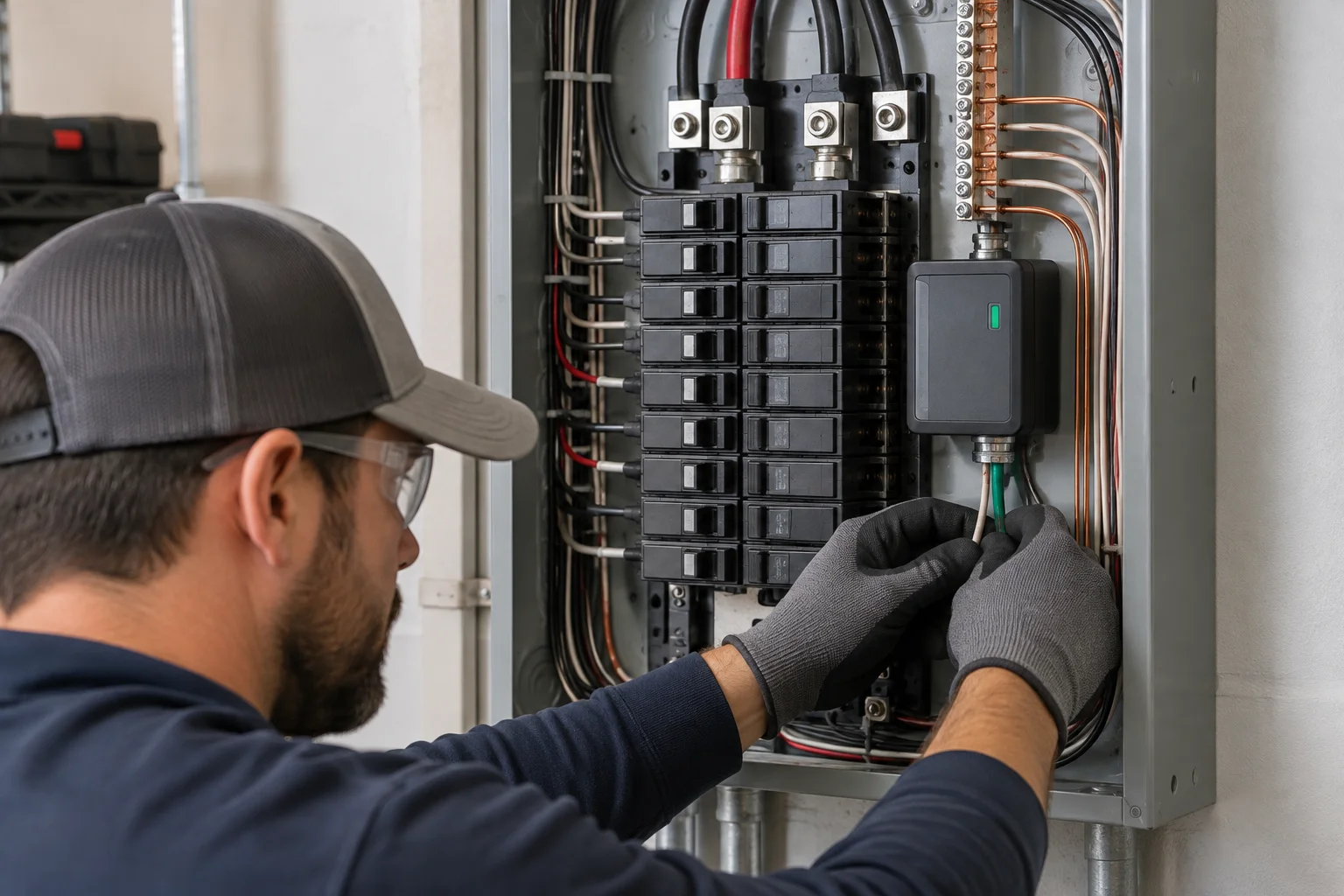
A complete whole house surge protector installation covers more than bolting a device to the panel. Your electrician inspects the electrical panel's condition and grounding path first, since a whole-home surge protector only works as well as the ground it's tied to. From there, the installation includes selecting the right surge protective device for your panel type and home size, wiring it to a dedicated breaker, connecting the ground and neutral leads, and testing the unit under load before calling the job done. Most installers also walk you through what the indicator light means and when to replace the device after a major strike, since it absorbs the hit so your outlets, panel, and electronics don't have to.
What Factors Affect the Price of a Whole House Surge Protector Installation?
Several variables move whole house surge protector installation cost in Kansas City up or down before labor even starts. Panel amperage matters: a 200-amp service generally handles a whole-home surge protector without modification, while a 100-amp panel at capacity may need a subpanel or upgrade first, roughly doubling the scope of the job. Device type matters too: a Type 1 SPD installed ahead of the meter costs more in materials than a Type 2 device installed inside the panel, though Type 2 is the more common choice for most Kansas City homes. Multiple panels or detached structures like a shop or garage each need their own protector, adding materials and labor proportionally. Warranty length and device brand shift price too: a longer connected-equipment warranty typically costs more upfront but reduces what you'd otherwise pay out of pocket after a storm.
How Long Does It Take to Install a Whole House Surge Protector?
Most whole house surge protector installations take a single electrician a few hours from arrival to final test: mounting the device, running the breaker connection, and verifying the ground typically wraps up in an afternoon when the panel doesn't need extra prep work. Add a panel upgrade, a second sub-panel, or an older fuse box that needs rework first, and the timeline stretches to a full day or, in some cases, a follow-up visit once a permit inspection is scheduled. Emergency Electrical Services can usually get a device installed faster when a home has already taken storm damage and is sitting exposed to another surge in the meantime.
Is Whole House Surge Protection Worth the Cost?
Whole house surge protection earns its cost by sitting between the grid and every circuit in your home, catching the surge before it ever reaches an outlet. Power surges from utility switching, lightning strikes, or a large appliance cycling on and off send voltage spikes through your electrical system dozens of times a year, most too small to notice until they've quietly shortened the life of a furnace board or refrigerator compressor. A single significant spike can take out multiple devices at once, and replacing a furnace control board or an HVAC compressor costs far more than the surge protector that would have stopped it. For most Kansas City homes, especially anything with a generator installation, smart thermostats, or a house full of networked devices, whole-home surge protection is one of the few upgrades that pays for itself by simply not happening again.
How Does Whole House Surge Protection Differ From Plug-In Surge Protectors?
Plug-in power strips and surge protectors only guard whatever is plugged into them, doing nothing for hardwired equipment like your furnace, water heater, or the electrical panel itself. A whole-house surge protector installs at the panel and protects the entire electrical system at once, hardwired appliances included. The two aren't competitors so much as layers: many electricians recommend keeping power strips on sensitive electronics even after a whole-home surge protector is installed, since the whole-house device knocks down the bulk of a spike while point-of-use protection handles what's left.
Can You Install a Whole House Surge Protector Yourself, or Do You Need a Licensed Electrician?
A whole house surge protector ties directly into your main electrical panel's live bus, which makes this a licensed electrician's job, not a weekend project. Miswiring a surge protective device at the panel can create a fire risk or leave it unable to trip properly during an actual surge, defeating the purpose of installing one. Kansas City also requires panel work to be performed, and in most cases permitted, by a licensed electrician, so a DIY install can create problems at resale or insurance claim time even if the wiring turns out fine.
What Size or Type of Surge Protector Do You Need for Your Home?
Sizing depends on your electrical panel's amperage, the number of circuits it feeds, and how many sensitive devices are in the house, think HVAC control boards, security systems, and a generator installation transfer switch. Most residential installations use a Type 2 surge protective device rated to match the panel's amperage, with a surge current rating chosen to reflect the home's overall device load. A larger home with a workshop, EV charger, or extensive smart-home devices generally calls for a higher-rated protector than a smaller home with a handful of basic circuits. An electrician can confirm the right size after seeing the panel in person, and if the panel is older or near capacity, that visit is also when they'll flag whether an electrical panel upgrade needs to happen first.
Frequently Asked Questions
Do you need a permit to install a whole house surge protector in Kansas City?
In most Kansas City jurisdictions, yes, work at the electrical panel requires a permit and inspection, even for a device as small as a surge protector. A licensed electrician typically pulls the permit as part of the job and schedules the inspection, so it usually doesn't add extra steps on your end. Requirements vary slightly by city and county, so confirm with your electrician before work starts.
How much does it cost to install a whole-house surge protector on a breaker panel?
Installing a whole-house surge protector on a breaker panel is priced around the device, the labor to wire it to a dedicated breaker, and any grounding or panel prep the inspection turns up. A panel with open breaker space and solid grounding keeps the job simple; a panel that's full, ungrounded, or outdated adds meaningful labor. The clearest way to know your number is a panel walkthrough with a licensed electrician.
Does homeowners insurance cover whole house surge protector installation?
Coverage varies by policy and insurer. Some homeowners insurance plans cover surge protection installation as a proactive upgrade, others only reimburse surge-related damage after the fact, and a few offer a premium discount once a whole-home surge protector is installed and documented. Check with your insurance provider directly and keep the electrician's invoice and device documentation on file.
How much does whole house surge protection cost compared to repairing storm damage?
A single storm-related claim, covering a fried HVAC board, a damaged panel, and a handful of ruined appliances, typically costs many times more than a whole-house surge protector installation, before factoring in deductibles and lost time without a working furnace or refrigerator. Surge protection is a one-time installation cost; storm damage is a recurring risk every time lightning or a grid event hits the area.
Talk to a Licensed Electrician About Your Panel
The clearest way to know your whole house surge protector installation cost in Kansas City is a panel walkthrough with a licensed electrician who can see your amperage, grounding, and breaker space in person. Contact our team to schedule a whole-house surge protection assessment for your Kansas City home.


