
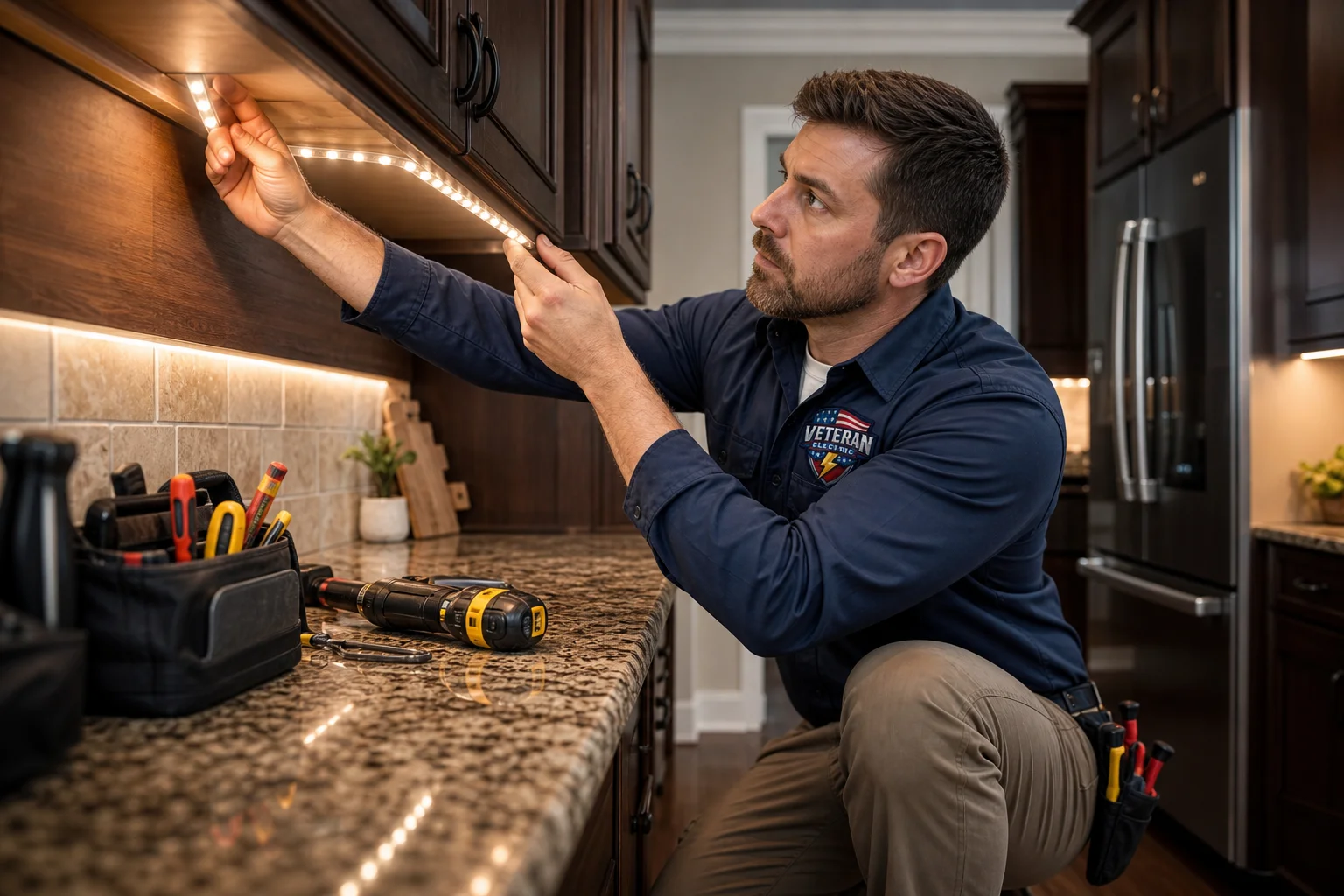
Whether you need an electrician for under-cabinet lighting in Kansas City depends on one factor: the type of system you install. Plug-in cabinet lights are a genuine DIY option, but hardwired under-cabinet lighting requires a licensed electrician for safe, code-compliant results. Our Residential Electrical Services cover every installation type.
By Veteran Electric Team, KC Licensed Electricians
The Case for Under-Cabinet Lighting in Kansas City Kitchens
Under-cabinet lighting is one of the most impactful upgrades a Kansas City homeowner can make in the kitchen. Cabinet lights mounted on the underside of your wall cabinets eliminate the shadow your body casts when overhead fixtures are the only light source. The result is direct, focused illumination exactly where food prep happens.
LED lights have made this upgrade practical for almost any budget. They run cool, draw a fraction of the power older fluorescent strips required, and last for years without replacement. For lighting kitchen work surfaces, LEDs also offer better color accuracy than incandescent alternatives, which matters when you are checking produce, cooking meat, or plating food.
Beyond function, well-placed cabinet lighting adds a polished, layered look to the kitchen. Buyers notice it, designers specify it, and homeowners who upgrade almost always say they wish they had done it sooner. For homeowners getting ready to sell, cabinet lighting in the kitchen is one of the details buyers remember. It signals that the space was designed with intention, and it photographs well in an era where most buyers start their search online.
Do You Need an Electrician for Under-Cabinet Lighting in Kansas City?
The answer depends entirely on the installation type.
Plug-in under-cabinet lighting draws power from a standard outlet through a visible cord. These systems mount beneath the cabinet and require no wiring work beyond plugging into a nearby receptacle. A homeowner can install plug-in cabinet lights without an electrician, a permit, or specialized tools. The limitation is visible cords and potential difficulty positioning them cleanly relative to your outlet locations.
Hardwired under-cabinet lighting connects directly to your home's electrical system with no visible cords. A dedicated switch or dimmer controls the circuit, and the finished look is seamless. This is the professional standard for kitchen remodels and new construction. It also requires a licensed electrician in Kansas City because the work involves running new wiring through walls and ceilings, making panel connections, and meeting National Electrical Code requirements.
If you want the cleanest possible result without exposed cords, you need an electrician for under-cabinet lighting in Kansas City. Full stop.
What a Licensed Electrician Does During the Installation
Hiring a licensed electrician for cabinet lighting installation is not simply paying someone to mount fixtures. The job involves a sequence of technical steps that determine whether your installation is safe, code-compliant, and built to last.
The electrician starts with a panel assessment. LED lights draw very little current, but your kitchen circuit may already be feeding a refrigerator, microwave, dishwasher, and multiple receptacles. Adding a lighting circuit to an overloaded run creates both a code violation and a fire risk. The electrician checks load capacity and determines whether a new dedicated circuit is needed.
Next comes wire routing. In finished Kansas City homes, this means fishing wire through walls without tearing out drywall, a technique that requires specialized tools and experience. The wire terminates at properly installed junction boxes, not loose inside the wall. All connections are made to code with appropriate wire gauge and box fill calculations.
The electrician then installs the fixtures, mounts the switch or dimmer, and tests the full circuit. Dimmer compatibility is critical with LED lights. An incompatible dimmer causes flickering, buzzing, or premature failure of your fixtures, and a professional selects components rated for the specific LED load.
Before you hire anyone for this work, verify their license, insurance, and permit history. Our tips on choosing the right electrician cover the key questions to ask.
Choosing LED Lights for Your Kitchen Cabinets
The fixture you select determines how your kitchen looks and how the system performs over time. Three specifications matter most for under-cabinet applications.
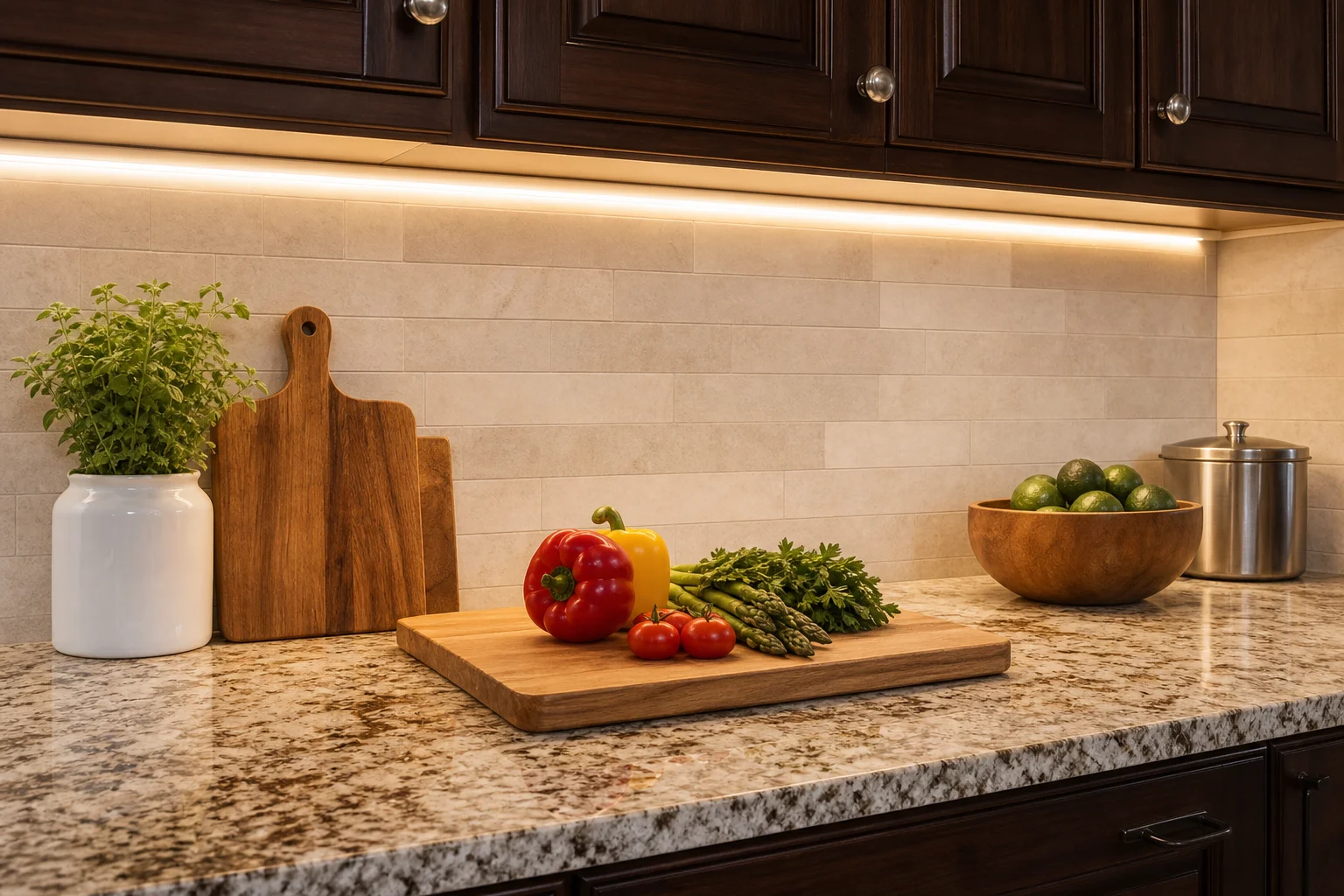
Color temperature sets the character of the light. For lighting kitchen countertops in most homes, 2700K to 3000K (warm white) creates a comfortable, inviting atmosphere that pairs well with wood tones and warm finishes. A range of 3500K to 4000K (neutral white) suits modern kitchens where the design emphasizes clean lines and brighter surfaces. Temperatures above 5000K feel clinical in most residential kitchens and are best reserved for commercial settings.
CRI (Color Rendering Index) measures how accurately the light source renders color. For kitchen use, a CRI of 90 or above is the practical standard. Cabinet lights with lower CRI make food, countertops, and surfaces look washed out or slightly off, which affects both the cooking experience and the overall look of the space.
Fixture format determines coverage. LED strip lights provide continuous, even output across the full underside of a cabinet run, making them the best option for task lighting. Puck lights create focused circles of brighter output suited to accent use rather than covering a counter. Linear bar fixtures are rigid and deliver uniform output in a more structured housing that some kitchen designers prefer.
Your electrician can factor your design preferences and panel capacity into a fixture recommendation that fits your specific kitchen layout.
Electrical Safety and Code Requirements to Know
Under-cabinet lighting sits close to countertops, and in a kitchen that means proximity to water, steam, and grease. These are not abstract risks, and the code requirements for kitchen electrical work reflect them.
GFCI protection is required by National Electrical Code for circuits within six feet of a kitchen sink. If your under-cabinet lighting runs near the sink, your licensed electrician will ensure GFCI protection is properly integrated into the circuit. These outlets work by monitoring the circuit for current imbalances and cutting power before a shock can occur, a safeguard our GFCI outlet guide covers in full detail.
Moisture ratings apply to fixtures near the sink. Units installed in a damp location must carry the appropriate rating. Indoor-only fixtures used near the sink are a code violation and a safety issue.
Permits matter. Hardwired electrical work in Kansas City typically requires a permit and inspection. Unpermitted work can complicate home sales and insurance claims, and inspectors who find it during a transaction may require correction at your expense. A licensed electrician pulls the permit and manages the inspection process.
To request a safety evaluation or schedule a kitchen lighting consultation, use the Contact form on our site. We assess your panel, confirm circuit capacity, and identify any code gaps before the first fixture goes up.
Frequently Asked Questions
Do plug-in cabinet lights require an electrician?
No. Plug-in under-cabinet lighting connects to an existing outlet and requires no new wiring, no permit, and no licensed electrician. Any homeowner can install a plug-in system. The trade-off is visible cords and limited positioning flexibility compared to hardwired options. For households that rent or want a temporary solution, plug-in cabinet lights are a practical choice.
Is hardwired under-cabinet lighting worth the cost in Kansas City?
For most kitchen remodels, yes. Hardwired cabinet lighting eliminates visible cords, integrates with your home's electrical system, and produces a professional result that adds long-term value to the property. Plug-in solutions work for renters or temporary setups, but homeowners planning to stay in the home typically find hardwired installation the better investment over time.
What color LED lights are best for under-cabinet kitchen lighting?
For most Kansas City kitchens, a color temperature of 2700K to 3000K provides warm, accurate task lighting that works well with a wide range of cabinet finishes and countertop materials. Cooler temperatures in the 3500K to 4000K range suit modern kitchens with lighter cabinetry and a brighter design aesthetic. CRI of 90 or above is the standard for kitchen use.
Can my existing kitchen circuit handle under-cabinet lighting?
Most LED under-cabinet systems draw very little power, but whether your existing circuit has the capacity depends on what else is running on it. A licensed electrician checks your panel load before installation and recommends adding a dedicated circuit if the existing one is at or near capacity. Skipping this step risks tripped breakers and code violations.
What happens if hardwired under-cabinet lighting is installed without a permit?
Unpermitted electrical work can void portions of your homeowner's insurance, create liability in a real estate transaction, and require correction at your cost when discovered during an inspection. It also bypasses the inspection step that catches installation errors before they become safety hazards. A licensed electrician ensures the permit is in place and the work passes final inspection.
Get Your Kansas City Kitchen Lighting Done Right
The team at Veteran Electric installs under-cabinet lighting throughout Kansas City with the same precision and accountability we brought to military service. From panel assessment to final inspection, we handle every step of your kitchen lighting project. Explore our Commercial Electrical Services for business kitchen projects, or reach out today to schedule your residential kitchen lighting consultation.


