
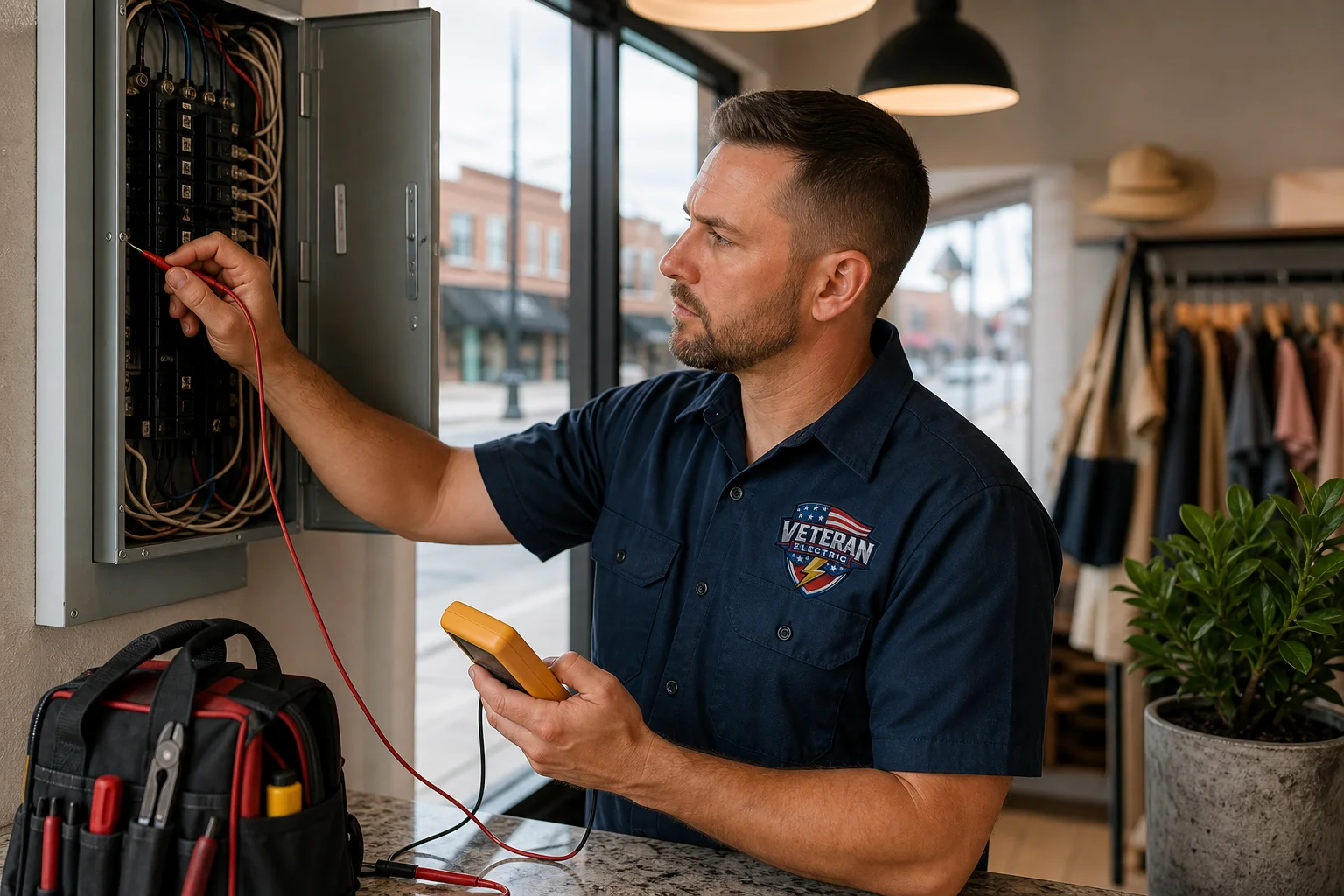
What a fire marshal and code inspector look for in a small KC commercial space comes down to the same short list: clear exits, working alarms, sound wiring, and no violations hiding behind the walls. The electrical panel is usually where a Commercial Electrical Services review catches problems before the inspector does.
By Veteran Electric Team, KC Licensed Electricians
A fire marshal and a code inspector are not the same visit, even though small business owners often lump them together. One checks life safety, the other checks the electrical and building systems behind the walls. Knowing the split ahead of time keeps a walkthrough from turning into a list of surprises.
What the Fire Marshal Checks
The fire marshal's job is life safety first. That means clear exit paths with nothing blocking a doorway, exit signs that are lit and visible, fire extinguishers mounted, charged, and within their service date, and a working alarm system that is tested on schedule. In multi-tenant buildings, a sprinkler system, where required, gets checked for pressure and access, and storage areas get checked for clearance so nothing is stacked against a panel or a sprinkler head. Many local fire codes are built on NFPA standards, so a marshal is often working from a checklist that traces back to national fire protection guidance, not a local guess.
What the Code Inspector Checks
The code inspector's focus sits closer to the wiring itself: is the electrical panel labeled correctly, are outlets and switches installed to code, is grounding intact, and was the work pulled under a permit with records on file. A code inspector is less concerned with whether your extinguisher is charged and more concerned with whether the circuit feeding your break room was installed by a licensed electrician or patched together by whoever was available that week.
Electrical Code Violations KC Inspectors Flag Most Often
In small commercial spaces around Kansas City, the same handful of electrical code violations show up again and again. Overloaded panels are common in retail buildouts and small offices that added equipment over the years without upgrading the service. Missing GFCI protection in break rooms, bathrooms, and near any water source is another frequent flag, since that protection requirement has tightened over recent code cycles. Open junction boxes, exposed wiring, and DIY work done without a permit round out the list, along with extension cords used as permanent wiring, which almost every inspector calls out on sight.
None of these violations are complicated to fix, but they are the kind of thing that gets missed because the space "worked fine" for years before an inspector ever walked through. A short inspection checklist run before the official one usually catches all of them.
How to Prepare Your Small Business for a Fire Marshal Inspection in Kansas City
Preparation starts with the same list the fire marshal will use. Walk the space and confirm every exit is clear, every exit sign lights up, and every fire extinguisher is charged and tagged within its service date. Test the alarm system rather than assuming it works, and check that any required sprinkler heads have clearance from stock, shelving, or signage. Pull your maintenance records together, extinguisher tags, alarm test logs, and any prior inspection reports, so they are ready if asked for.
On the electrical side, a walkthrough with a licensed electrician before the marshal arrives will catch the wiring issues a fire inspection alone will not: an overloaded panel, missing GFCI protection, or a breaker that trips under load. Training your staff on what the exits and extinguishers are for, and who is responsible for keeping them clear, closes the gap between passing and barely passing.
The Difference Between a Fire Marshal Inspection and a Building Code Inspection
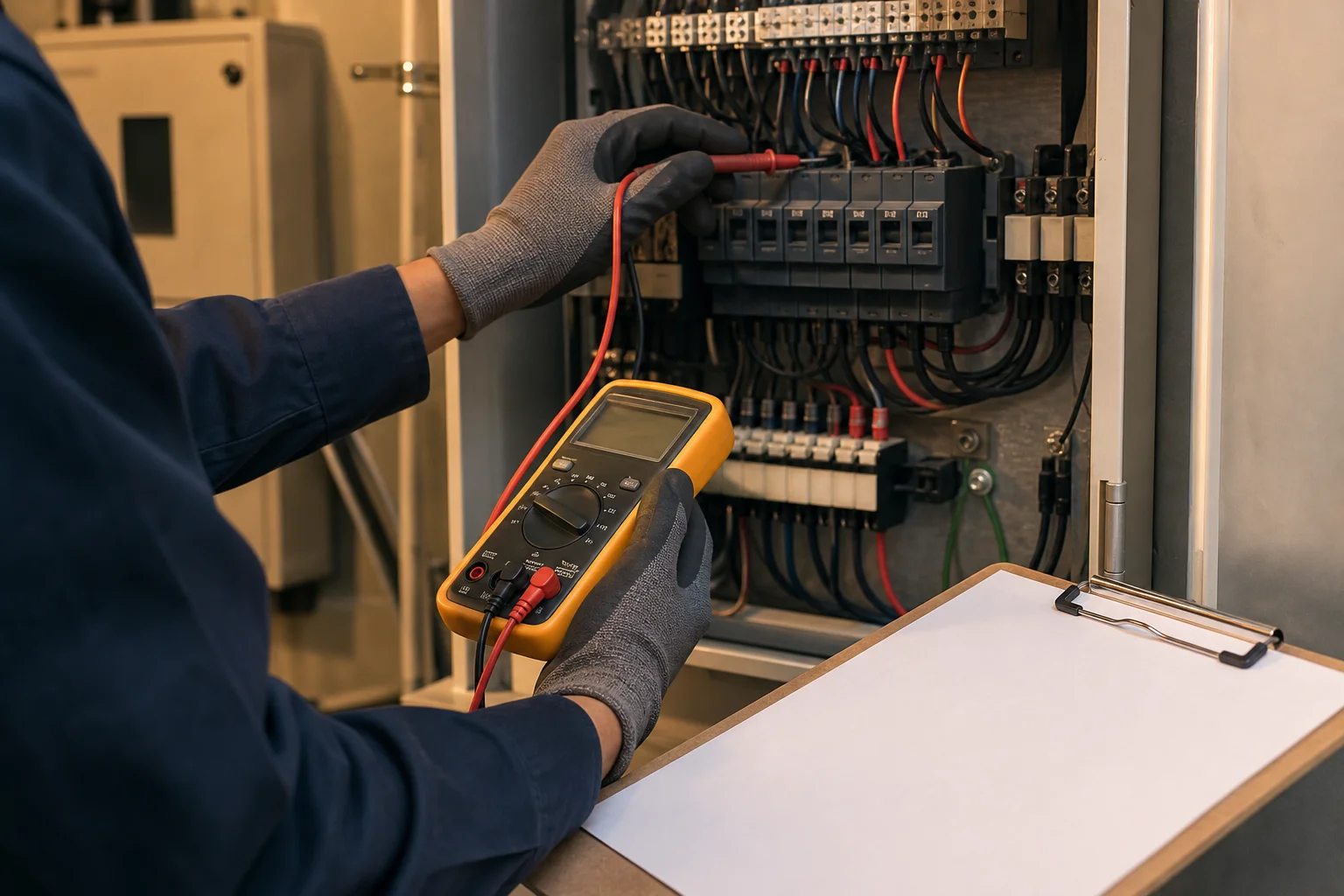
The short version: a fire marshal inspection is about life safety in an occupied building, and a building code inspection is about whether the construction and systems meet code, usually tied to a permit. What a fire marshal and code inspector look for in a small KC commercial space overlaps at the edges, exits and electrical panels both matter to each of them, but their authority is different. A fire marshal can require an unsafe building to close immediately. A code inspector is usually tied to a specific permit or project and signs off on that scope of work.
Small business owners sometimes assume passing one means passing the other. It does not. A space can be fully up to fire code and still fail an electrical inspection tied to a recent buildout, or the reverse.
Why Small Commercial Spaces Fail Their First Electrical Inspection
Most first-inspection failures trace back to work that was never pulled under a permit. A previous tenant added outlets, a sign, or a piece of equipment without an inspection, and the current owner inherits it. Small spaces also tend to accumulate storage in front of panels and disconnects over time, which is an automatic clearance violation even when the wiring itself is fine.
The other common failure is scope creep: a business grows, adds equipment, and never revisits whether the panel and service size still match the load. What passed inspection at buildout does not automatically stay code compliant as a business changes.
What Happens If Your Commercial Space Fails a Fire Marshal Inspection
A failed inspection usually comes with a written list of violations and a deadline to fix them, not an automatic shutdown, though a serious life safety issue such as a blocked exit, a dead alarm system, or missing extinguishers can trigger an immediate closure. For most small commercial spaces, the fix is narrower: correct the flagged items, request a re-inspection, and keep records of what was repaired and when.
This is where getting ahead of what a fire marshal and code inspector look for in a small KC commercial space pays off. A same-day electrical fix through Emergency Electrical Services can turn a list of violations into a passed re-inspection before a deadline puts the business at risk.
Frequently Asked Questions
How often does a fire marshal inspect commercial buildings in Kansas City?
Frequency usually depends on occupancy type and local fire department scheduling, but many commercial spaces see a routine fire marshal inspection about once a year, with additional visits triggered by a complaint, a change in occupancy, or a new certificate of occupancy request. Confirm the exact schedule with the Kansas City fire department serving your address.
Who do I call to fix electrical code violations before an inspection?
A licensed commercial electrician should handle any violation involving panels, wiring, or grounding, since a code inspector is checking for licensed, permitted work, not a quick patch. Choosing between a residential and commercial electrician matters here too, since panel loads, permit requirements, and code cycles differ between a small office and a house.
Do I need a permit for electrical work in a small commercial space in KC?
In most cases, yes. Anything beyond a like-for-like fixture swap, including new circuits, panel upgrades, or added outlets, usually requires an electrical permit in Kansas City before the work starts. Skipping that permit is one of the most common reasons small commercial spaces fail their first inspection, since unpermitted work leaves no record for the inspector to check against.
How much does it cost to fix electrical code violations found during an inspection?
Cost depends entirely on what is flagged. A mounting bracket or missing label costs far less than a panel upgrade or a full rewire of a back room. Rather than guessing, request a written quote after a walkthrough so the fix is scoped to what the inspector actually flagged, not a generic estimate.
Get Your Small Commercial Space Inspection Ready
A fire marshal or code inspector will find whatever is actually wrong with your electrical system, so it pays to find it first. Contact Veteran Electric Team to schedule a pre-inspection walkthrough before your next visit.


