
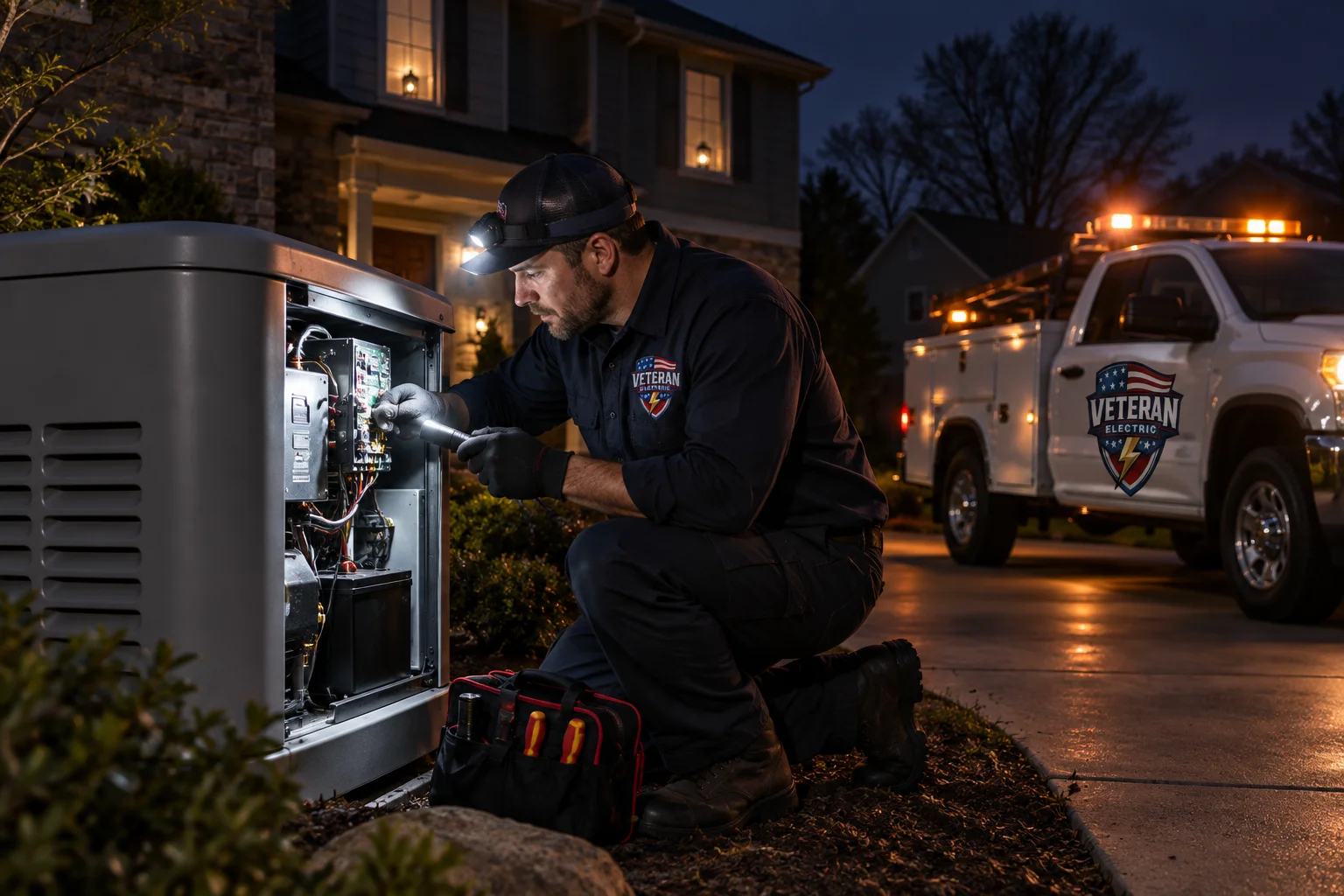
If your standby generator did not start during the outage, the cause is usually mechanical, not mysterious: a dead battery, a failed transfer switch signal, or a low fuel supply reading. Most fixes take under an hour once diagnosed, but a no-start during severe weather calls for Emergency Electrical Services rather than guesswork.
By Veteran Electric Team, KC Licensed Electricians
When your standby generator did not start during the outage, the system failed at one of three checkpoints: the sensor never detected the outage, the engine never got the crank signal, or the engine tried to start and stalled. Veteran Electric technicians see this pattern often, and the fix is usually smaller than the panic of a dark house during a storm.
The Most Common Reasons a Standby Generator Fails to Start
A generator not starting automatically is usually traced to one of five causes: a dead or weak battery, a tripped circuit breaker on the generator itself, a closed fuel valve, a low fuel supply reading on a propane tank, or a fault code sitting unresolved on the control panel since the last exercise cycle. Batteries top the list by a wide margin, since standby generator batteries sit under a trickle charge year-round, and heat cycles through a Kansas City summer wear them down faster than most owners expect.
Is a Few Minutes of Delay Normal?
Not every no-start is actually a no-start. A healthy standby generator takes roughly 10 to 20 seconds to crank and reach stable voltage, then the transfer switch waits a few more seconds to confirm a clean signal before shifting the load. Most Kansas City power outages run short, but their length can range from a five-minute blip to several days during an ice storm, which is why the same delay means panic in one case and nothing in another. If your generator is still silent after two full minutes with no cranking sound, that is a genuine no-start.
Is It Safe to Troubleshoot a Generator That Won't Start Yourself, or Should You Call Now?
Checking the obvious things is safe: confirm the disconnect switch is in the auto position, check that the fuel valve is open, and look at the control panel for a fault light. What is not safe is opening the enclosure, touching battery terminals near the fuel lines, or resetting a fault code you don't understand, since a standby generator carries both high-voltage output and a natural gas or propane line in the same footprint.
When to Call an Electrician Immediately vs. Wait Out the Outage
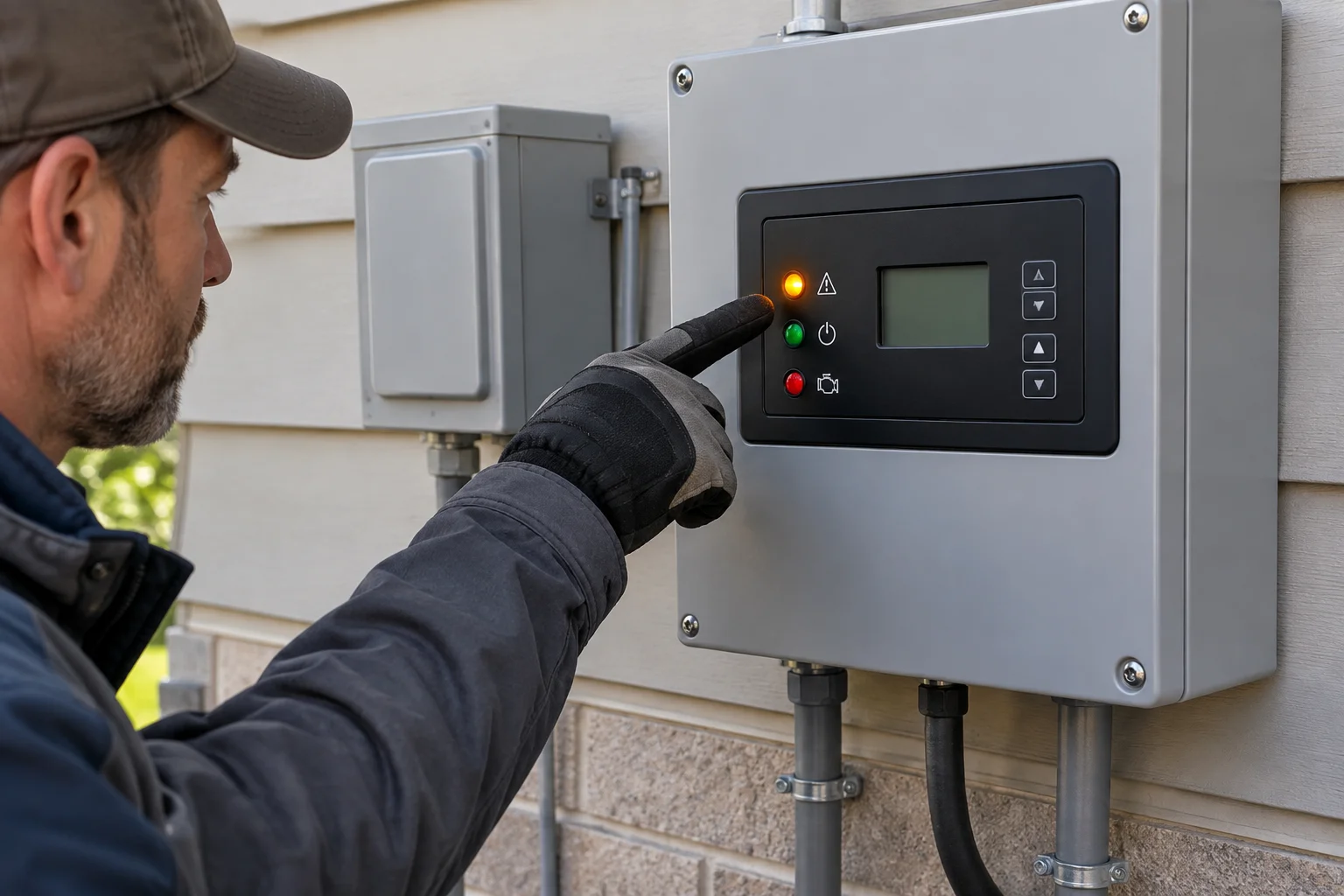
Call now if you smell gas, hear repeated cranking with no start, see smoke, or the fault light is red rather than amber. Wait and monitor if the unit is simply slow to transfer, the outage is expected to clear within the hour, and the panel shows no active alarm. Kansas City weather turns fast, and a storm that knocks out power at 2 a.m. rarely waits for daylight, so triaging backup power problems before the power goes out beats any single repair after the fact.
How to Manually Start Your Generator If the Automatic Transfer Switch Did Not Engage
Most standby generator installations include a manual start and manual transfer position for exactly this scenario. That component, the automatic transfer switch (ATS), sits between your electrical panel and the generator, sensing the utility loss and ordering the engine to crank. With the generator in manual mode, press start and let the engine reach full speed and stable voltage, typically 30 to 60 seconds, before moving the transfer switch to the generator position. Never run a manual transfer with the utility side still live; this is the one step where sequence matters for safety, not just performance.
What a Fault or Alarm Light on the Control Panel Means
An amber light usually flags a maintenance item: low fuel, an overdue exercise cycle, or a battery voltage warning that hasn't caused a failure yet. A red light means the controller stopped the start sequence entirely, most often for overcrank, low oil pressure, high engine temperature, or an overspeed condition. A dead ATS relay is rare, but when the transfer switch fails to click over, the generator can run perfectly and the house still stays dark, which is why the switch and the generator have to be diagnosed as one system.
Can a Dead or Weak Battery Really Stop the Whole System?
Yes, and it's the single most common answer we give on emergency calls. A generator's engine still starts the same way a car does: a battery turns the starter motor over. If that battery reads low voltage or won't hold a charge, the transfer switch never gets a running engine to hand the load to, so the whole system stalls even though every other part is healthy.
How Much Does Emergency Standby Generator Repair Cost in the Kansas City Area?
Emergency standby generator repair costs vary by cause and time of day, since a battery swap or a simple fault reset runs far less than an after-hours transfer switch replacement. Rather than publish a number that doesn't match your specific unit and fault code, Veteran Electric quotes emergency generator repair after a technician confirms the fault on site or over the phone, so you know the cost before any work starts.
How Long Does It Take to Repair a Standby Generator That Won't Start?
Simple fixes, a dead battery, a tripped breaker, a stuck fuel valve, often resolve in under an hour once a technician is on site. A transfer switch replacement or control board fault takes longer, sometimes requiring a part that isn't in truck stock, pushing the repair into a second visit. Most Kansas City households get power restored the same day the fault is diagnosed.
Do You Need a Licensed Electrician, or Can Any Technician Fix a Transfer Switch?
A transfer switch ties directly into your home's main electrical panel and carries the full load of your house, which puts it squarely inside licensed electrical work, not general handyman or HVAC-adjacent repair. If a generator diagnosis turns up wiring or panel-level issues beyond the transfer switch, Veteran Electric's Residential Electrical Services team can fold that repair into the same visit.
How to Prevent Your Generator From Failing to Start During the Next Outage
Most start failures are preventable with a maintenance rhythm most owners skip once the initial excitement wears off. Most standby generators in this market run on natural gas, which removes the fuel-delivery problems of portable units, but the electrical side still needs regular attention. Keep this schedule and a generator not starting becomes the rare exception:
- Let the built-in exercise cycle run uninterrupted every week; it catches a weak battery before an outage does.
- Check battery voltage and terminals twice a year, ideally each spring and fall alongside seasonal HVAC service.
- Confirm the fuel supply, propane tank level or natural gas line pressure, before storm season rather than after the forecast turns bad.
- Clear vegetation and debris from the enclosure so airflow stays unrestricted while the engine runs under load.
- Watch for lingering fault lights after any exercise cycle, and address a small issue before it becomes a full failure.
Frequently Asked Questions
Why won't my generator start automatically when the power goes out?
The transfer switch never received a clean signal that the outage was real, the battery lacked the voltage to crank the engine, or a fault from a previous exercise cycle is blocking the start sequence. Checking the control panel for a fault light is the fastest way to narrow down which of the three it is.
Is a generator not starting during an outage an emergency?
It depends on what you observe. A smell of gas, repeated failed cranking, smoke, or a red alarm light means call now. A quiet unit with no active alarm during a short outage can usually wait for daylight, as long as you're not relying on medical equipment or a sump pump that can't sit idle.
What is an exercise cycle, and how does skipping it cause start failures?
The exercise cycle is a brief weekly self-run that keeps the engine, battery, and transfer switch exercised and catches problems before a real outage does. A generator that skips it for months is far more likely to fail when it actually matters.
What does a flashing fault light on the generator control panel mean?
An amber flashing light is usually a maintenance warning, low fuel, low battery voltage, or a missed exercise cycle, that hasn't stopped the unit yet. A steady red light means the controller halted the start sequence for a safety reason, such as overcrank or low oil pressure, and the unit needs a technician before it will run again.
Get Your Standby Generator Back Online
A generator that stays silent during a Kansas City outage puts your whole house at risk the next time the power fails, and most causes are fixable in a single visit. Contact Veteran Electric's licensed team to get your system diagnosed and running again.


