
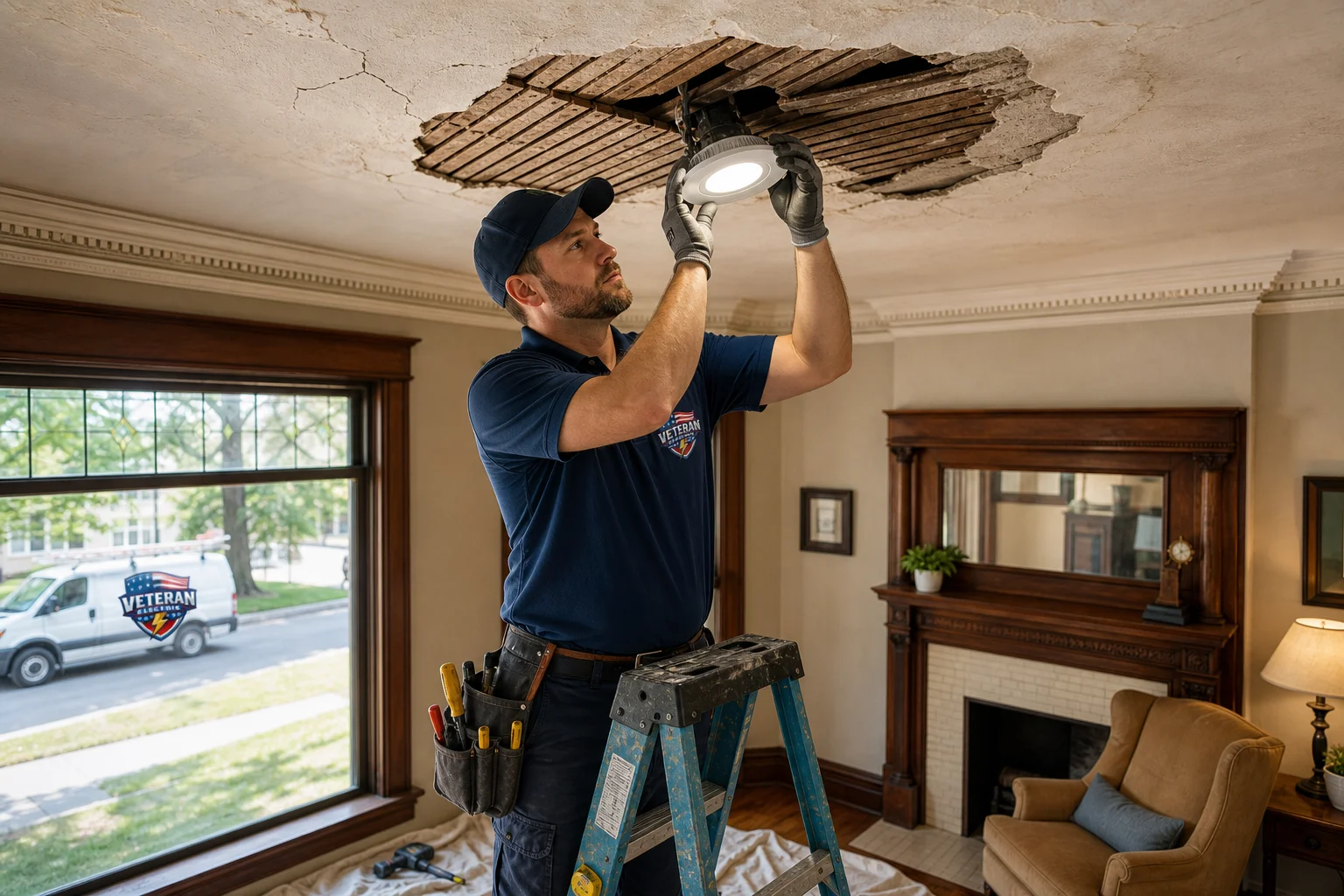
Yes, you can add recessed lighting to a plaster and lath ceiling in an older KC home, but it takes a different approach than a modern drywall job. A licensed electrician working through Residential Electrical Services locates each joist, cuts cleanly through brittle plaster, and ties every new fixture back to a code rated junction box without cracking the surrounding ceiling.
By Veteran Electric Team, KC Licensed Electricians
Plaster and lath ceilings show up constantly in Kansas City's older bungalows, Craftsman homes, and prewar neighborhoods, and yes, you can add recessed lights to one. The construction is different from a modern drywall ceiling: wood or metal lath strips are nailed across the joists, and wet plaster was pressed through the gaps to form small keys that lock the whole ceiling in place. Those keys are what make plaster strong, and also what make it brittle once you start cutting. The same plaster technique built the walls in these homes too, so a cracked wall nearby is often original construction, not a sign the ceiling is failing.
An experienced electrician treats a plaster ceiling like a different material altogether, not a thicker version of drywall. That means slower cuts, more support around each opening, and housings chosen specifically for retrofit work rather than new construction. Done correctly, recessed lighting holds in a plaster and lath ceiling just as securely as it does in drywall, and the finished look is often better suited to an older home's low key trim and plaster walls than surface mounted fixtures.
How Does an Electrician Cut Into a Plaster and Lath Ceiling Without Cracking It?
Cutting into a lath and plaster ceiling is a controlled process, not a hole saw pushed straight through. The electrician starts by locating each joist and existing wiring, then scores the plaster's finish coat with a rotary tool set to a shallow depth so the surrounding surface doesn't fracture. Only after that first score line is cut does the tool go deep enough to remove the plaster and the wood or metal lath underneath.
Because plaster keys can crumble if they're disturbed, the cut opening is usually kept tight to the fixture's retrofit ring, and a support bracket or bar hanger spans between joists to carry the fixture's weight instead of relying on the plaster itself. Each new light gets wired back through the ceiling cavity to a properly sized junction box, spliced and capped to code, before the housing goes in. Dust containment matters too: plaster dust is fine and gets everywhere, so a shop vac attachment or containment bag at the cut site keeps the room, and the rest of the house's air, clean while the work is underway.
How Much Does It Cost to Add Recessed Lighting to a Plaster Ceiling in an Older KC Home?
Recessed lighting in a plaster ceiling generally costs more per fixture than the same install in drywall, mainly because of the extra time spent protecting the surrounding plaster, patching around each opening, and sometimes repairing hairline cracks that were already there before work started. Access matters too: a ceiling with a clear attic above is faster to wire than one that's fully closed in, and older homes often need a bit of knob and tube removal and new circuit capacity before lights can be added at all.
Every plaster ceiling is a little different, which is why an accurate number comes from an in person estimate rather than a flat rate. Typical recessed lighting installation costs in the Kansas City area vary mainly by fixture count and ceiling access, and a plaster ceiling adds a repair line item on top of that baseline to patch each opening once the wiring is finished.
Is Recessed Lighting a Bad Idea for Plaster and Lath Ceilings?
Recessed lighting isn't automatically a bad idea for a plaster and lath ceiling, but there are situations where it's the wrong move until something else gets fixed first. A ceiling with widespread cracking, sagging sections, or plaster that's already separating from the lath is telling you the keys are failing, and cutting new holes into that surface just adds more stress to a ceiling that's already struggling to hold itself up.
Water damage is the other major flag. Plaster that's absorbed moisture from a roof leak, an old plumbing line, or condensation loses its strength even if it looks intact from below, and it can crumble the moment a hole saw touches it. If there's any sign of past water damage near where lights are planned, that area needs to be repaired, and any wiring exposed to that damage checked, before installation moves forward. A home with active water intrusion or damaged wiring is also a reason to call Emergency Electrical Services rather than schedule a routine upgrade.
What Are the Best Recessed Lighting Options for Old Plaster Ceilings?
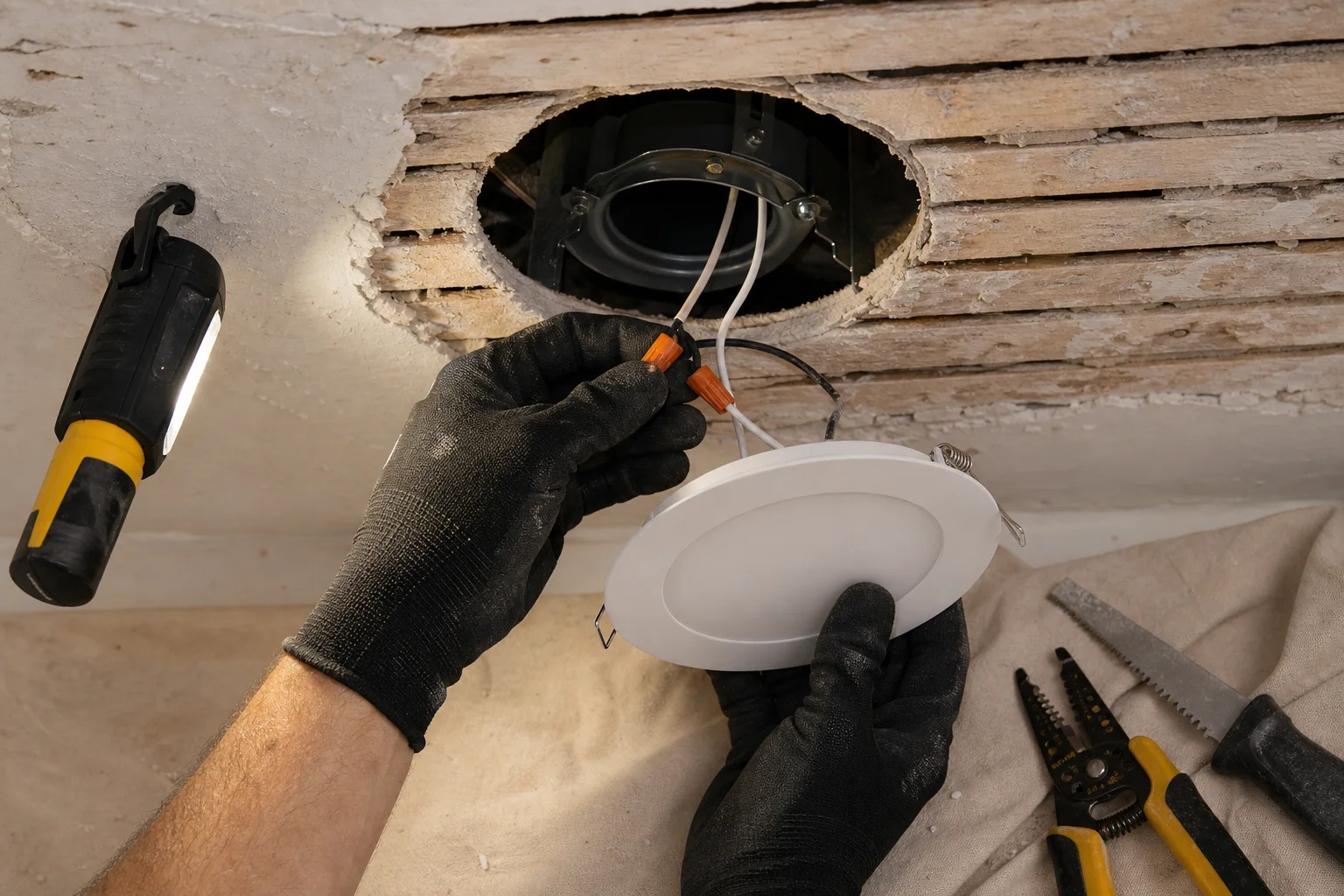
The best recessed lighting options for a plaster ceiling are retrofit, or old work, housings built for existing ceilings rather than new framing, since they clamp to the drywall or plaster itself instead of needing access from above. LED recessed lights are the standard choice now: they run cooler than old incandescent cans, which matters against century old plaster and lath, and IC rated, air tight housings are worth specifying wherever insulation sits directly against the ceiling in an attic above.
Low profile LED wafer lights are a strong fit for plaster ceilings specifically, because their shallow housing needs a smaller, shorter cutout than a traditional recessed can, which means less plaster removed and less strain on the lath around the opening. For a kitchen, hallway, or any room where choosing between recessed, track and flush mount fixtures is still an open question, a plaster ceiling often tips the decision toward whichever style needs the least cutting.
Do You Need a Permit to Add Recessed Lighting in an Older Kansas City Home?
In most Kansas City area jurisdictions, adding new recessed lighting circuits or fixtures requires an electrical permit, since it's new wiring rather than a straight fixture swap on an existing line. Requirements vary by city and can depend on the number of fixtures, whether a new circuit is added, and the age of the home's existing panel, so it's worth confirming with the local building department or letting a licensed electrician pull the permit as part of the job.
Older homes carry their own common problems on top of that: outdated panels, cloth wiring, or knob and tube circuits sometimes need to be addressed before an inspector will sign off on new lighting, even if the recessed lights themselves are straightforward. A licensed electrician who already knows KC's local code can flag that upfront instead of leaving it to surface at inspection.
Frequently Asked Questions
Will cutting recessed lights into plaster and lath cause the ceiling to crack or crumble?
It can, if the cuts are rushed or the wrong tool is used. Scoring the plaster before cutting deep, keeping the opening tight to the fixture, and supporting the area with a bar hanger between joists all reduce that risk. Ceilings that are already cracked, sagging, or water damaged are more likely to crumble during cutting, which is why those issues get repaired first.
Can you use LED wafer lights instead of traditional recessed cans in a plaster ceiling?
Yes, and for plaster ceilings they're often the better choice. LED wafer lights need a smaller, shallower cutout than a traditional recessed can, which means removing less plaster and disturbing less of the lath underneath. They also run cooler and use less power, which matters in an older home where the ceiling cavity may already have limited airflow.
How long does it take to install recessed lighting in a plaster and lath ceiling?
A handful of recessed lights in a plaster ceiling with reasonable attic access usually takes a single day for a licensed electrician, including patching each opening. Homes with no attic access, extensive existing damage, or old wiring that needs updating first can add another day or more, since that work has to happen before the fixtures go in.
Should you hire a licensed electrician for recessed lighting in an older KC home?
Yes. Plaster and lath ceilings hide old wiring, uneven joists, and structural quirks that a licensed electrician knows to check for before cutting, and the work has to meet current code to pass inspection. A DIY cut into a brittle ceiling is far more likely to crack the plaster or damage a hidden circuit than one made by someone who's done it before.
What is the difference between installing recessed lighting in plaster versus drywall ceilings?
Drywall ceilings cut cleanly with a standard hole saw and patch easily with joint compound, so most retrofit housings are designed around that material. A plaster and lath ceiling needs slower, scored cuts, extra support since the plaster itself won't hold a fixture's weight, and plaster specific patching once the wiring is finished, all of which adds time and cost compared to a drywall ceiling job.
Get a Straight Answer About Your Ceiling
If you're ready to add recessed lighting to a plaster and lath ceiling in an older KC home, Veteran Electric can walk the ceiling, confirm what it'll take, and give you a clear plan before any cutting starts. Contact us to schedule a look at your ceiling.


