
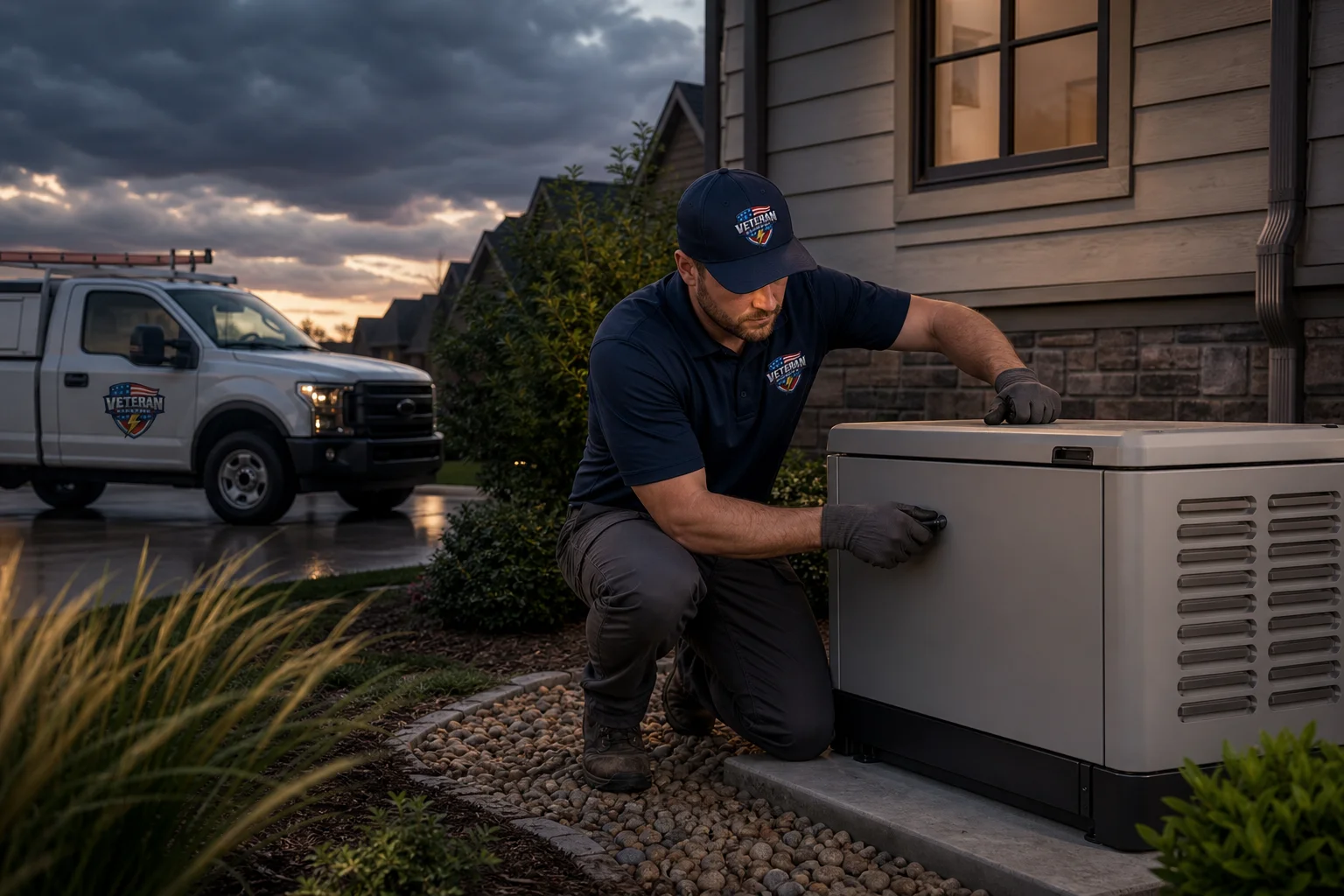
Most Kansas City power outages resolve within a couple of hours, but severe storms can knock the grid out for two or three days. This guide covers how long Kansas City power outages actually last, and what generator size covers them, from essentials-only backup to whole-house power, plus when to call Emergency Electrical Services.
By Veteran Electric Team, KC Licensed Electricians
Most power outages around Kansas City are short. Evergy crews typically restore service within one to four hours after a routine outage caused by a blown transformer, a downed line, or a tree limb on the wires. Severe weather changes that timeline. A major ice storm or derecho-style windstorm can leave entire neighborhoods without power for 24 to 72 hours, and in the worst cases, closer to a week if crews have to rebuild damaged poles. The average outage is brief, but the storms that make news are the ones that justify a backup power plan.
What Causes the Most Power Outages Around Kansas City?
Severe thunderstorms and high straight-line winds cause most outages in the Kansas City area, especially during spring and early summer storm season. Ice accumulation on power lines during winter storms is the second biggest driver, since even a quarter inch of ice adds enough weight to snap branches onto the lines. Evergy serves Kansas City and the surrounding counties on both sides of the state line, including Jackson, Clay, Platte, and Cass counties in Missouri and Johnson and Wyandotte counties in Kansas. Older, tree-lined neighborhoods in these counties tend to see more frequent outages than newer subdivisions with underground utilities.
How Often Do Power Outages Happen in Kansas City Each Year?
Most Kansas City homes see a handful of short outages each year, with the number rising in active storm seasons. A single severe thunderstorm outbreak can knock out power to a large share of customers at once, even if any individual home's outage only lasts a few hours. Homes near overhead lines in wooded areas tend to lose power more often than homes served by underground lines, worth factoring in when deciding how much backup power your household needs.
How Do You Calculate the Generator Size You Need for Your Home?
Once you know how long outages typically last, the sizing math gets a lot less intimidating. Standby generator sizing starts with listing the running watts (what a device draws once it's already on) and the starting watts (the extra surge required the instant a motor kicks on) for everything you want to keep powered. Add the running watts of every item together, then add the single largest starting watts figure on top, since appliances rarely all start at the exact same second. A licensed electrician can run this load calculation for you as part of a Residential Electrical Services visit, which also confirms your panel and transfer switch can handle the generator you choose.
What Size Generator Powers Just the Essentials During an Outage?
A generator in the 5,000 to 8,500 watt range typically covers the essentials: the refrigerator, a sump pump, the furnace blower, some lighting circuits, and a handful of outlets for phones and medical equipment. This size works well as a portable unit or small standby generator for homeowners who mainly want to avoid spoiled food and a flooded basement during a shorter outage.
What Size Generator Do You Need to Run an Entire House?
Running an entire average Kansas City house, including central air conditioning, an electric range, and multiple circuits at once, generally calls for a whole-home standby generator in the 20kW to 26kW range. Larger homes with two AC units or an electric water heater may need to size up further, which is why a proper load calculation matters more than picking a size off a chart.
How Many Watts Does a Generator Need to Run a Refrigerator and Furnace Together?
A standard refrigerator draws roughly 700 to 1,200 running watts with a brief surge when the compressor cycles on. A gas furnace only needs power for the blower motor and control board, since the heat comes from natural gas, which usually adds another 800 to 1,500 running watts. Together, a refrigerator and gas furnace blower typically need around 2,000 to 3,000 watts of generator capacity, plus a margin for the starting surge.
Portable Generator vs Standby Generator: Which Covers KC Outages Better?
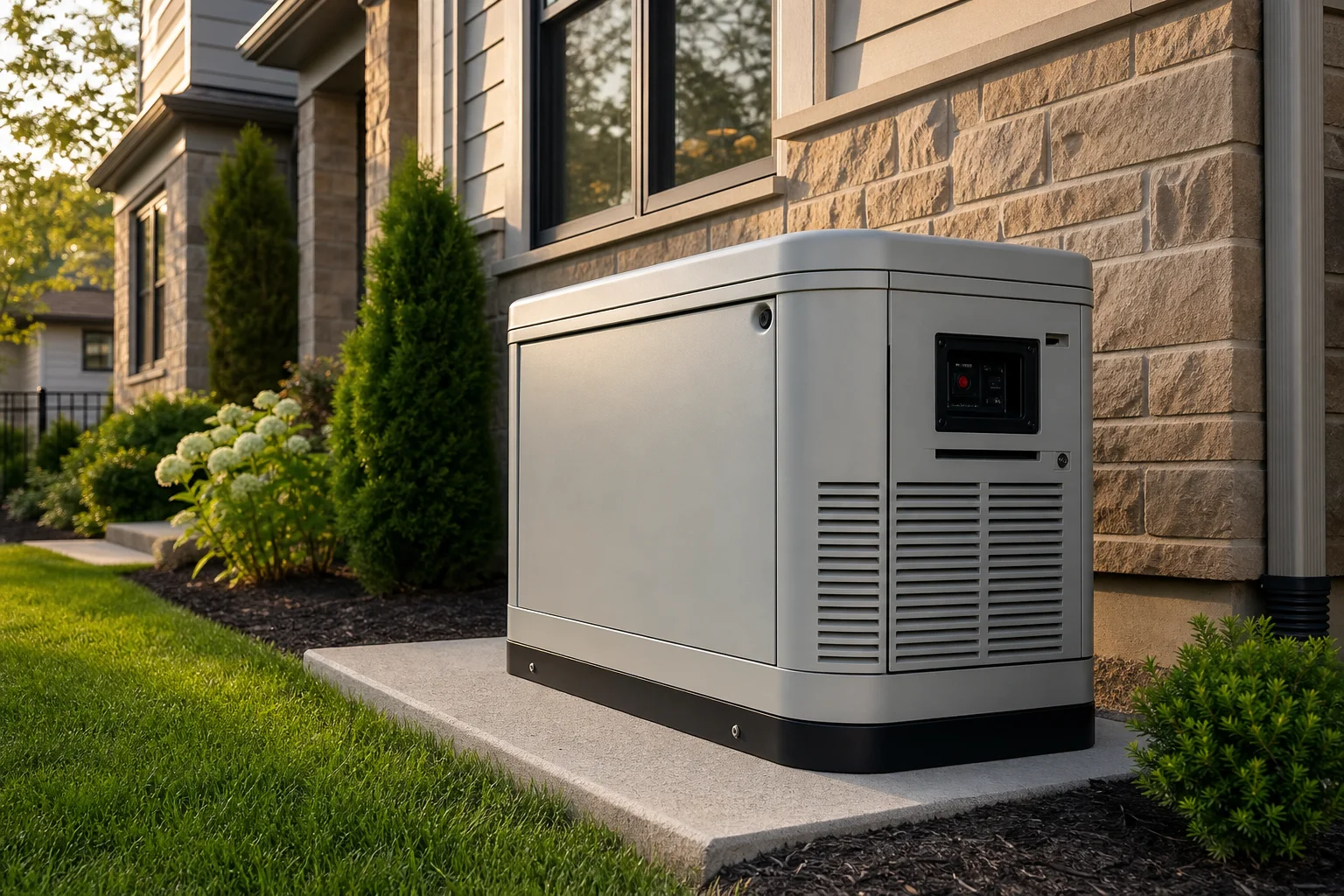
When a power outage in Kansas City stretches past a few hours, the difference between a portable unit and a whole-home standby generator becomes obvious. A portable generator costs less upfront and works fine for shorter, predictable outages, but it has to be rolled out, fueled, and connected by hand every time the power drops, and it needs to run outdoors, away from windows and doors. A home standby generator sits permanently outside the house, runs on natural gas or propane, and switches on automatically within seconds of an outage, whether anyone is home or not. For homeowners who travel, work irregular hours, or have a family member who depends on medical equipment, that automatic switch is usually worth the higher cost. Choosing between a portable or standby generator often comes down to how often outages hit your street and how hands-off you want the backup to be.
How Much Does a Home Generator Cost to Install in Kansas City?
Installed generator cost depends on several factors: generator size, whether you choose natural gas or propane, how much panel or gas line work your home needs, and local permit fees. A small portable setup with a manual transfer switch costs far less than a whole-home standby system sized for central air and an electric range. Because every home's panel, gas service, and load needs differ, the most accurate way to price the right generator home setup is a free consultation and load calculation, not a generic online estimate.
Do You Need a Permit to Install a Home Generator in Kansas City?
Yes. A standby generator installation almost always needs an electrical permit, and often a separate gas line permit if it runs on natural gas or propane, plus a final inspection before use. Skipping the electrical permit process can cause problems later with insurance claims or when you sell the house, since an uninspected generator installation may not be covered.
How Long Can a Standby Generator Run Continuously During an Extended Outage?
A standby generator connected to a natural gas line can run continuously for as long as the outage lasts, since it draws fuel straight from the utility line instead of a tank that needs refilling. A propane-fueled unit is limited by tank size, so a larger tank buys more runtime during an extended outage. Either fuel type still needs scheduled maintenance, including oil changes at manufacturer-recommended hours and a brief weekly self-test cycle the generator runs on its own to stay ready.
Is a 22kW Generator Big Enough for an Average Kansas City House?
For most average-sized Kansas City homes, a 22kW standby generator is enough to run central air conditioning, kitchen appliances, and everyday circuits without shedding any loads. Larger homes with two central air systems, an electric range, and an electric water heater running at once may need a bigger unit, another reason a load calculation beats guessing from square footage alone.
Frequently Asked Questions
How long does it usually take Evergy to restore power after a storm in Kansas City?
Routine outages are typically restored within one to four hours. During major storms with widespread damage, restoration can take 24 to 72 hours or longer, since crews prioritize hospitals, water treatment facilities, and the most heavily affected areas before working through individual neighborhood repairs.
What size generator do I need for a 2,000 square foot house?
Square footage alone doesn't determine generator size. What matters is the actual electrical load: central air conditioning, an electric range, and other major appliances. Most homes that size land somewhere between a large essentials-only portable unit and a 16kW to 22kW whole-home standby generator, confirmed with a load calculation.
Can a standby generator run on propane instead of natural gas?
Yes. Most standby generators are available in dual-fuel or propane-specific models, a good option for homes without a natural gas line. Propane runtime is limited by tank size, so homeowners who choose propane usually size the tank based on how long they want the generator to run without a refill.
How much maintenance does a home standby generator need?
Standby generators need periodic oil and filter changes, similar to a small engine, along with an annual inspection to check the battery, coolant, and transfer switch. Most units also run a short self-test cycle every week automatically, a normal part of keeping the generator ready for the next outage.
Is a portable generator safe to use during a Kansas City ice storm?
It can be, if run outdoors and at a safe distance from the home. CDC guidance on generator safety recommends running portable generators at least 20 feet from windows, doors, and vents to prevent carbon monoxide from entering the house, and never running one in a garage, even with the door open.
Get Your Generator Sized Right Before the Next Outage
The right generator size for your home comes down to your electrical load, not a generic size chart. Contact our team for a load calculation and a straight answer on the standby generator that actually fits your house.


