If your Kansas City home still has Federal Pacific, Zinsco and Challenger panels installed, you're not choosing between two safe options, you're choosing which risk to manage and for how long. This guide breaks down the fire risk, the insurance reality, and where our Residential Electrical Services team draws the line between monitoring and full replacement.
By Veteran Electric Team, KC Licensed Electricians
How Do You Know If You Have a Federal Pacific, Zinsco or Challenger Panel?
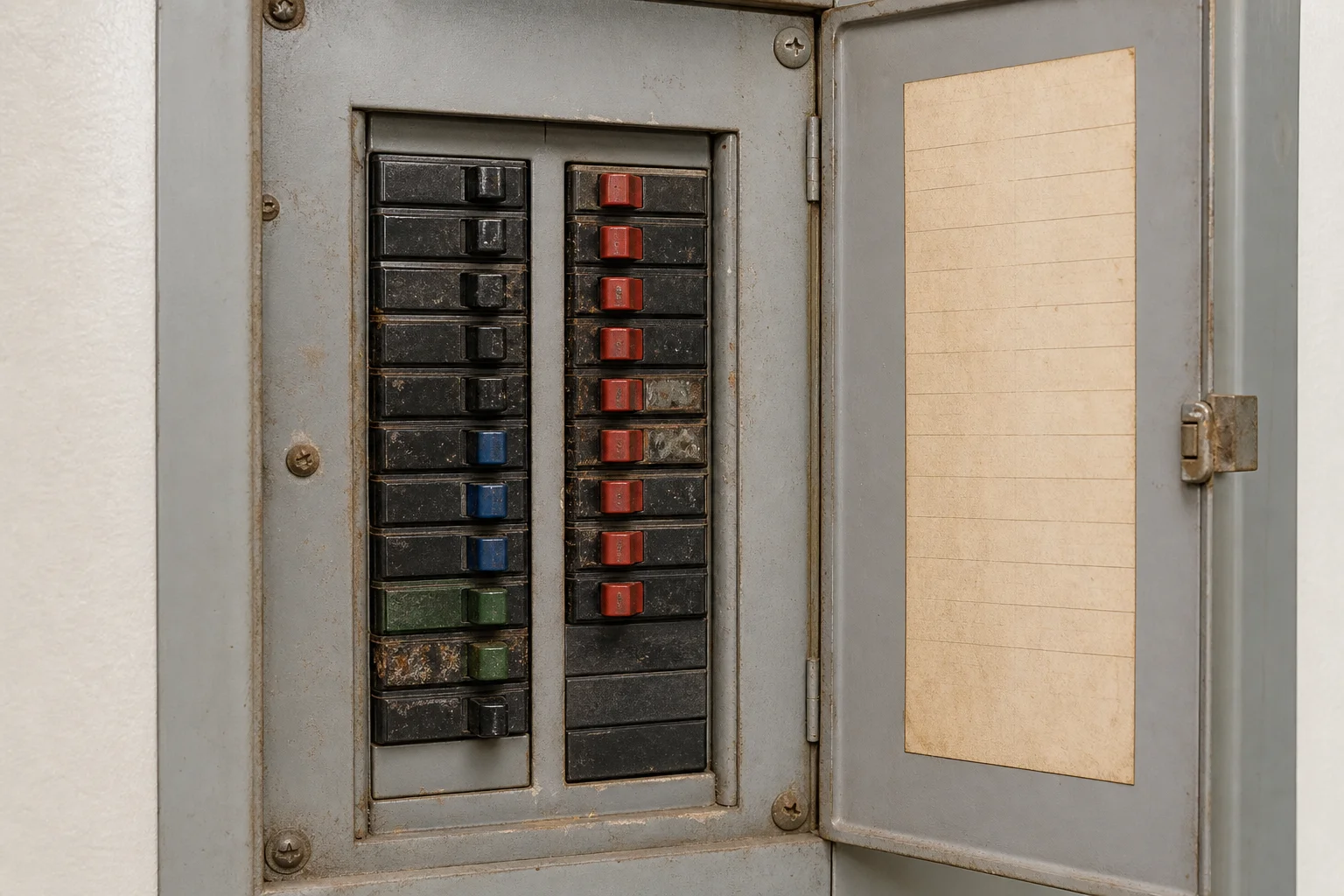
Whether you're checking Federal Pacific, Zinsco and Challenger panels for the first time or confirming what a past inspection flagged, start with the label inside the panel door. Open the cover and look at the printed directory label. Federal Pacific panels are usually stamped "Federal Pacific Electric" or carry the "Stab-Lok" breaker line printed near the breaker rows. Zinsco panels often show colored breaker handles, commonly orange, red, or black, with "Zinsco" or "Sylvania-Zinsco" cast into the interior label. Challenger panels are marked simply "Challenger," or "Eaton Challenger" on panels made after the brand changed ownership. If the label has faded or gone missing, the age of the home is a reasonable clue: most of these electrical panels were installed in Kansas City area homes built or rewired between the 1950s and early 1980s. When the label alone won't confirm the brand, one of our licensed electricians can identify it during a short panel inspection, no guessing required.
Why Are Federal Pacific and Zinsco Panels Considered a Fire Risk?
The concern isn't cosmetic, it's mechanical. Testing dating back to investigations by the U.S. Consumer Product Safety Commission in the 1980s found that a meaningful share of Federal Pacific breakers failed to trip during an overload or short circuit, the exact moment a breaker is supposed to cut power before wires overheat. Zinsco panels carry a related but distinct problem: the breaker connections can fuse directly to the bus bar over time, so the breaker looks like it has tripped while the circuit stays energized. Neither defect announces itself with a smell or a sound before it matters. That pattern is why most Kansas City electricians and many insurers treat these electrical panels as a standing risk rather than a code violation you can simply grandfather in.
Is There an Active Recall on Challenger Circuit Breakers?
Challenger sits in a different category than Federal Pacific and Zinsco. There is no blanket recall covering every panel that carries the Challenger name. What does exist are narrower, model specific recalls and safety notices issued over the years by the Consumer Product Safety Commission, tied mostly to manufacturing defects in particular production runs rather than a design flaw across the whole product line. That distinction matters for how you respond to it.
Are All Challenger Breakers Part of the Recall, or Only Certain Models?
Only certain models. Challenger changed manufacturers and ownership more than once, and breaker quality varies noticeably between production runs. A panel stamped "Challenger" from one era isn't automatically the same product as a "Challenger" panel from another. The most reliable way to know whether your specific breakers were ever subject to a notice is to have an electrician record the exact model and catalog numbers stamped on the breakers, then check them against current recall records, rather than assuming the brand name alone tells the whole story.
Will Homeowners Insurance Cover a House With One of These Panels?
In the Kansas City metro, coverage usually comes down to timing. Many insurers will still renew an existing policy on a home with one of these panels, at least for now, but new applications and some renewals increasingly ask directly about panel brand, and a Federal Pacific, Zinsco, or Challenger panel can trigger a required inspection, a higher premium, or a request to replace the panel within a set window after binding. Coverage rules vary by carrier and change often, so the only reliable answer for your specific policy is a direct conversation with your agent, not a blanket rule repeated online.
Can a House With a Federal Pacific Panel Pass a Home Inspection?
Usually, yes, in the sense that a home inspection isn't a pass or fail test. A general inspector will typically flag a Federal Pacific panel as a safety concern and recommend evaluation by a licensed electrician rather than failing the inspection outright. In practice, that flag often becomes the real issue: it shows up in the report, the buyer's lender or insurer sees it, and it turns into a negotiating point even when the inspection itself didn't block anything.
Can You Sell a Home in the KC Metro With a Federal Pacific or Zinsco Panel Still Installed?
Yes, you can sell a home with either panel still in place, there's no law against it. What you should expect is that a buyer's inspector will note it, the buyer's insurance agent may require replacement before binding a policy, and some buyers will ask for a credit or a completed replacement as a condition of closing. Replacing the panel before listing often removes that friction entirely instead of negotiating it deal by deal.
When Should You Replace Federal Pacific, Zinsco and Challenger Panels Instead of Monitoring Them?
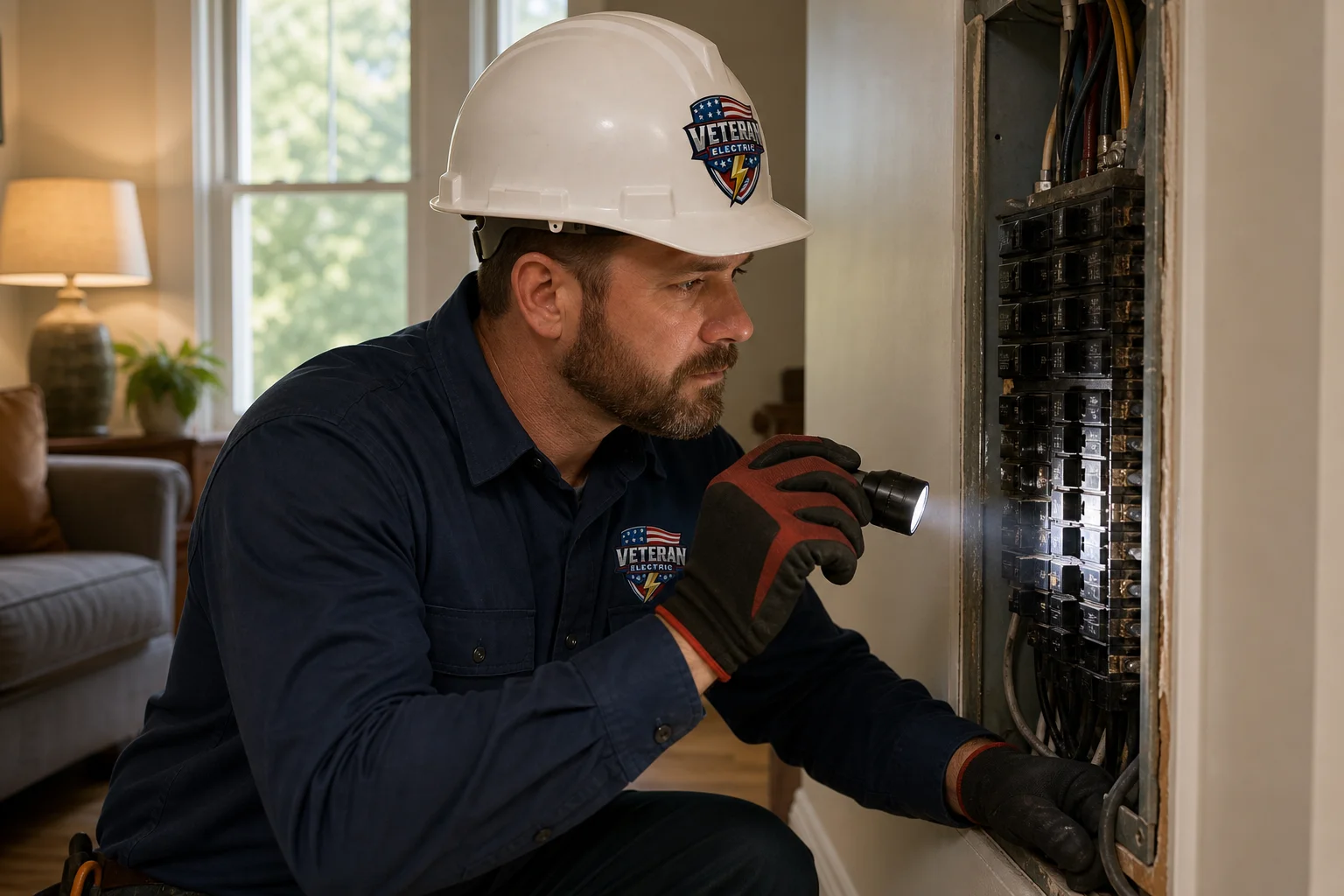
There isn't one universal answer for every home, and be skeptical of anyone who gives you one without looking at your panel first. The honest starting point is a professional evaluation that weighs the panel's age and condition, whether breakers have ever failed to trip or felt warm to the touch, whether you smell anything electrical near the panel, and whether you're planning to sell, refinance, or add major loads like an EV charger in the near term. A panel with no warning signs in a home you're not selling can sometimes be reasonably monitored with periodic professional checks. A panel showing any of those warning signs, or tied to an upcoming sale or insurance renewal, generally moves from a monitor situation to a replace situation.
How Urgent Is It to Replace a Zinsco Panel Right Now?
Of the three brands, many Kansas City electricians treat Zinsco with the most urgency, because the fused breaker failure mode can leave a circuit energized when it looks safe. If your Zinsco panel shows discoloration, a burning smell, breakers that feel hot, or lights that flicker without an obvious cause, treat that as an emergency rather than something to schedule around. Our team handles Emergency Electrical Services for exactly this kind of situation. Absent those signs, it still belongs near the top of your replacement list rather than the bottom.
How Much Does It Cost to Replace One of These Panels in Kansas City?
Panel replacement cost depends on more variables than the panel itself: the amperage you're upgrading to, whether the service entrance and meter base also need work, permit and inspection fees set by your municipality, and how much additional wiring the job touches. A straightforward panel replacement with no complications is a different project than one that also requires a service upgrade or grounding work brought up to current code. Because those variables change the number so much, the only accurate estimate comes from a walkthrough of your specific panel and service, which our team can schedule directly.
How Long Does a Panel Replacement Take and Will the Power Be Off All Day?
For a standard residential swap with no complications, the physical replacement itself is usually completed in a single day. Power to the home does need to be off during the active swap, but that window is typically measured in hours, not a full day, once the utility disconnect is coordinated ahead of time. What can extend the timeline is anything outside the panel itself: permit turnaround, a required municipal inspection before the utility reconnects service, or a service upgrade that involves the meter base and utility connection. Your electrician should walk you through the realistic schedule for your specific job before work starts, not after.
Frequently Asked Questions
Is a Federal Pacific Stab-Lok panel dangerous?
Federal Pacific Stab-Lok panels have a well documented history of breakers failing to trip during overloads, based on testing dating back to the 1980s. That doesn't mean every single panel will fail, but it does mean the panel can't be counted on to protect the circuit the way a modern breaker should. Most licensed electricians recommend evaluation and, in many cases, replacement rather than continued reliance on the original breakers.
Do I need to replace my Zinsco panel before selling my house?
Not legally, but it often makes the sale smoother. Buyers' inspectors commonly flag Zinsco panels, and buyers' insurance agents may require replacement before binding a policy. Replacing it before listing usually removes that back and forth from negotiations. If you'd rather not replace it upfront, expect the topic to resurface during inspection.
What's the difference between Challenger and Federal Pacific panels?
Federal Pacific panels are tied to a documented pattern of breakers failing to trip on overload. Challenger's history is different: rather than one design flaw across the whole line, it has seen narrower, model specific recalls tied to certain production runs. Both brands warrant a professional look, but the reasoning behind each recommendation isn't identical.
Will my homeowners insurance drop me for a Federal Pacific panel?
It depends on your carrier and whether you're renewing an existing policy or applying for a new one. Some insurers continue existing coverage without issue, others require an inspection or panel replacement at renewal, and new applications increasingly ask about panel brand directly. Confirming with your specific agent is more reliable than assuming either outcome.
Get Your Panel Evaluated by Veteran-Licensed Electricians
Federal Pacific, Zinsco and Challenger panels are worth a direct look rather than a guess, and our licensed team can tell you in one visit whether yours needs monitoring or replacement. Contact our team to schedule an evaluation.


