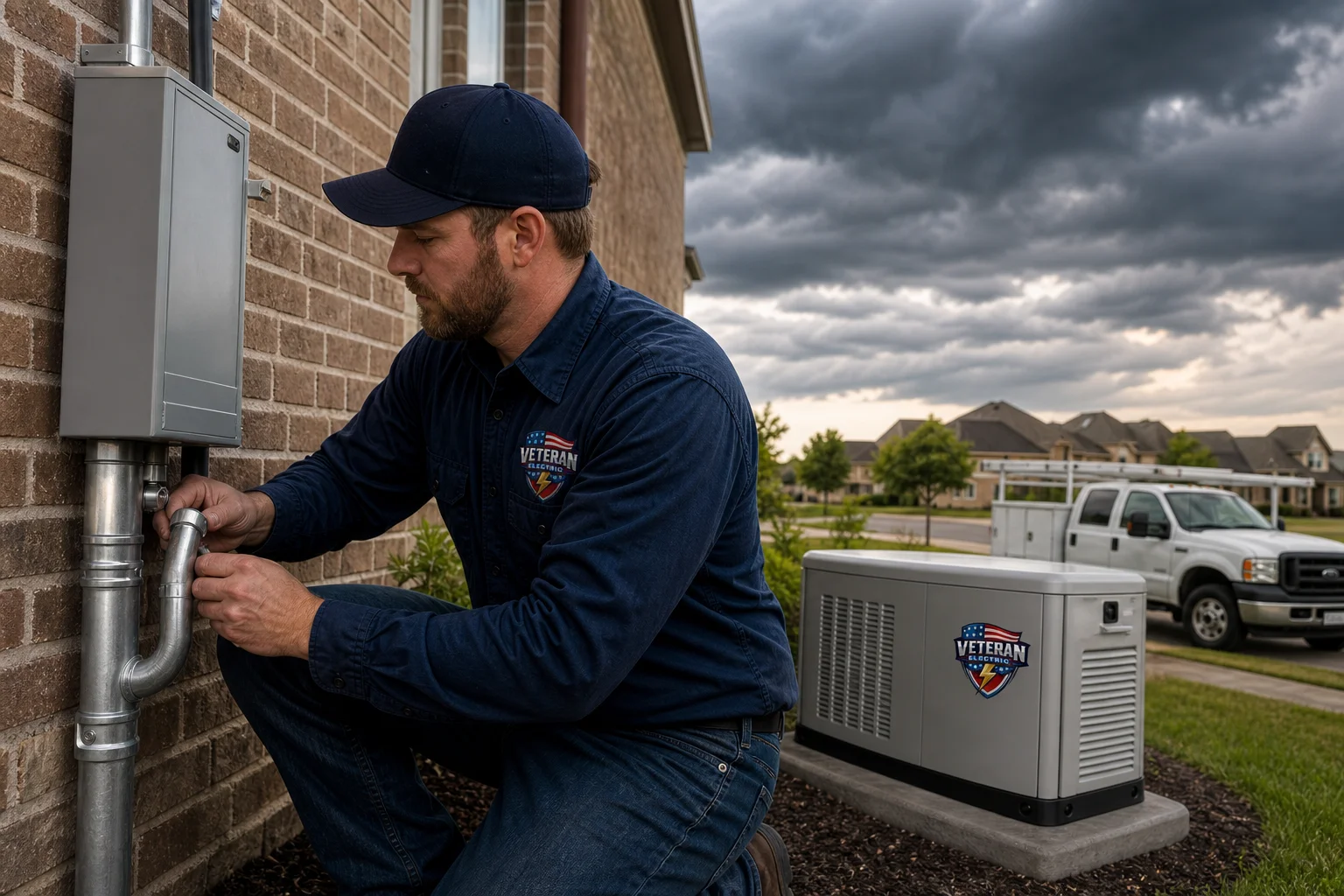
When the lights go out in Kansas City, the choice between a portable generator vs standby generator comes down to three things: how fast you need power restored, how much load you need to cover, and what fits your budget. Our Residential Electrical Services team at Veteran Electric helps homeowners make this call every storm season.
By Veteran Electric Team, KC Licensed Electricians
What a Portable Generator Does and Where It Falls Short
A portable generator runs on gasoline or propane and requires manual startup when the grid goes down. You wheel it outside, fill the tank, pull the cord, and run extension cords from the unit to the appliances you need most. A generator portable enough to store in a standard garage typically produces between 3,000 and 10,000 watts, enough to cover a refrigerator, some lights, and a window air conditioner.
The trade-off is constant hands-on management. Portable generators must run outdoors, at least 20 feet from doors and windows, because they produce carbon monoxide. They consume fuel steadily, which means you need to store gasoline and plan before a storm hits. During extended power outages, finding fuel becomes difficult as stations run out. And every time you need generator power, someone has to go outside and get it running.
Portable generators are a real option for homeowners on a tighter budget who experience only occasional outages. But they are not a set-it-and-forget-it backup power solution.
How a Standby Generator Works and Why It Is Different
A standby generator is permanently installed outside your home, wired into your electrical panel through a transfer switch, and connected to a natural gas or propane supply line. When grid power drops, the unit detects the outage and starts automatically, typically within 10 to 30 seconds. When utility power returns, it shuts off on its own.
Standby generators range from 10 kW units that cover essential appliances to 22 kW units that can power an entire home without interruption. Because they connect directly to natural gas or a propane tank on the property, you never manage a fuel supply during an outage. A standby generator home installation requires a licensed electrician for the transfer switch wiring, a plumber for the gas line, and a permit from the local jurisdiction.
Kansas City summer loads push household electrical demand to its peak, which is worth factoring in before you size a generator: summer AC demand affects what size unit your home actually needs.
Sizing Your Generator: Watts, Loads, and Essential Appliances
Getting the size right is the most common mistake homeowners make. Undersizing means choosing which appliances to run. Oversizing wastes money on a unit you do not need.
Sizing a Portable Generator
Most portable generators are sized for essential appliances only. A refrigerator draws roughly 600 to 800 watts running, with a startup surge near 1,200 watts. A window air conditioner needs 1,000 to 1,500 watts. Add lights, phone chargers, and a sump pump, and you are typically looking at 5,000 to 7,500 watts for basic comfort during outages.
Sizing a Standby Generator
Standby generators are sized to cover essential loads or whole-home demand depending on the unit. A 10 kW to 14 kW unit handles essential appliances, a modest HVAC system, and lighting. A 20 kW to 22 kW unit covers whole-home loads including central air conditioning, a well pump, and large kitchen appliances running simultaneously.
If your home has a larger HVAC system, an electric range, or EV charging, you may need to consider a unit in the 24 kW to 26 kW range. An electrician calculates the exact size from your panel's actual electrical load.
Fuel Options: Natural Gas, Propane, and Gasoline
Fuel type is one of the most practical differences between generator types, and it shapes both cost and convenience.
Gasoline is what most portable generators run on. It is available before a storm but can become scarce during extended outages when stations run out. Gasoline has a shelf life of roughly 30 days without a stabilizer, so storage requires ongoing attention.
Natural gas is the most convenient fuel for standby generators. Because the supply line connects directly to the home's gas service, you never run out during an outage unless the gas utility itself goes down, which is rare in the Kansas City metro. Most standby generators installed in this region run on natural gas.
Propane works for both standby and some portable generators. It stores indefinitely and burns cleaner than gasoline. Standby units running on propane require a large tank on the property, typically 250 to 500 gallons. In rural areas where natural gas lines are not available, propane is the standard fuel choice for standby generators.
Some homeowners also ask about solar battery backup systems. Solar batteries provide generator power from stored electricity rather than combustion and pair well with solar panels, but they are a separate product category with different sizing, costs, and limitations compared to gas-fueled generators.
Transfer Switches: The Component That Makes Generator Power Safe
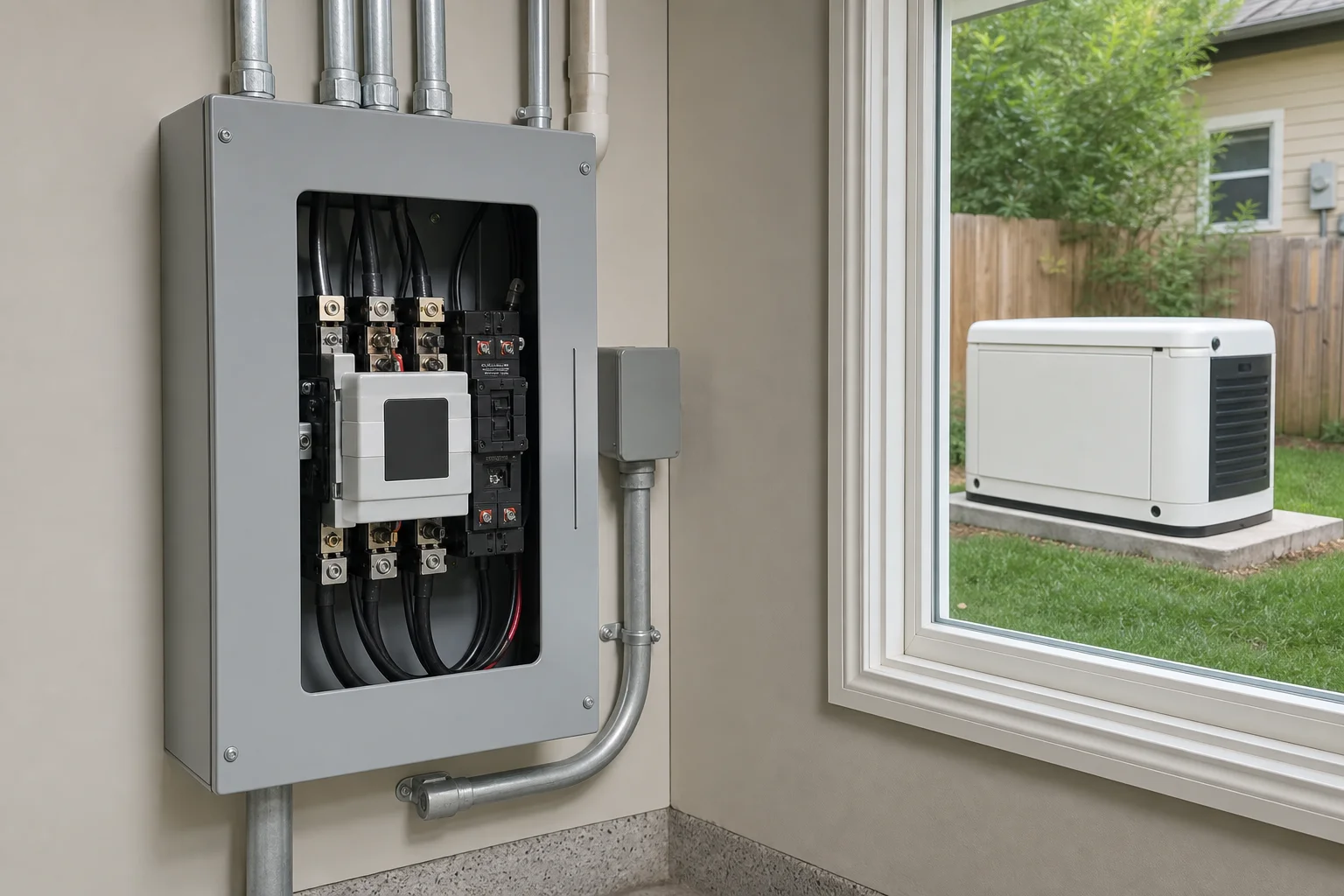
Whether you choose a portable or standby generator, a transfer switch is the critical safety device that prevents electricity from feeding back into the utility grid while linemen are working on downed lines. That back-feed can be fatal.
A manual transfer switch is the minimum safe setup for a portable generator. It disconnects your home from the utility before generator power flows in. Without one, running extension cords directly to appliances is the safer approach, though it limits what you can power and creates hazards throughout the house.
A standby generator comes wired through an automatic transfer switch, which handles the grid-to-generator and generator-to-grid transitions without any manual steps. Automatic transfer switches are required by code for permanent generator installations.
Never use a portable generator indoors or inside a garage. Never connect a generator to your home's outlets without a proper transfer switch installed. Our Emergency Electrical Services team responds regularly to situations where improper generator use caused electrical damage or put people at serious risk.
Portable Generator vs Standby Generator: Making the Right Call for Kansas City
Choosing between a portable generator vs standby generator gets clearer once you line up the key factors side by side.
Response time: Portable generators require manual startup after you realize the power is out. Standby generators activate automatically within seconds, no action required.
Fuel management: Portable generators need gasoline stored on-site. Standby generators run on natural gas or propane without any refueling needed during an outage.
Load capacity: Portable generators typically cover essential appliances. Standby generators can cover the whole home depending on the unit size.
Budget and cost: Portable generators cost less upfront, with installation costs limited to a manual transfer switch. Standby generators carry a higher upfront cost for equipment and licensed installation, but they add measurable home resale value and eliminate manual effort during every outage.
Maintenance: Both require regular maintenance. Portable generators need fuel system care and periodic oil changes. Standby generators self-test weekly and require annual professional service.
If someone in your household depends on medical equipment, a power outage is not an inconvenience, it is a health risk. In that scenario, a standby generator is the only responsible choice. When you hire for this kind of installation, look for a licensed electrician with standby generator experience, confirm they pull the required permits, and get the full scope of work in writing before anything starts.
For homes that experience short, infrequent outages, a portable generator delivers solid value at a lower cost. For homes that want reliable backup power with no manual effort, standby generators are the better investment.
Whole-home surge protection pairs well with both generator types and protects connected equipment when power is restored, so it is worth reviewing surge protector options before any generator installation.
Frequently Asked Questions
Can I install a standby generator myself?
No. Standby generators require a licensed electrician for transfer switch wiring and a licensed plumber for natural gas or propane connections. Most jurisdictions in the Kansas City metro require permits for permanent generator installation. A DIY install voids the equipment warranty and creates serious safety and insurance risks that no homeowner should take on.
How long can a standby generator run during an outage?
Standby generators running on natural gas can run indefinitely as long as the gas utility holds. Units running on propane depend on tank capacity. A 500-gallon propane tank can typically run a 20 kW standby generator for four to seven days at moderate load, depending on how hard the unit is working.
Do portable generators work with a transfer switch?
Yes. A manual transfer switch can be installed for a portable generator, allowing it to power hardwired circuits instead of relying on extension cords throughout the house. This is a significantly safer setup. A licensed electrician installs the interlock kit or manual transfer panel at the breaker box, and the process typically takes a few hours.
What size standby generator does a Kansas City home need?
Most Kansas City homes with central HVAC, standard appliances, and no EV charging land between 14 kW and 20 kW for whole-home coverage. Essential-only coverage can often be handled with a 10 kW to 13 kW unit. The exact size depends on your electrical load, which an electrician calculates directly from your panel.
Are standby generators worth the investment for Kansas City homeowners?
For homeowners who experience frequent outages, have medical equipment in the home, or want to protect food, sump pumps, and HVAC systems automatically, standby generators are worth the investment. A permanently installed unit also adds to home resale value, which partially offsets the upfront cost and licensed installation fees.
Get Your Generator Installation Done Right in Kansas City
The portable generator vs standby generator decision has a clear answer once you know your load, your budget, and how much manual effort you are willing to put in during a storm. Veteran Electric handles transfer switch installations for portable generators and full standby generator installations across the Kansas City area, all by the code with permits pulled. Contact us to schedule a generator assessment and get a straight answer on what your home actually needs.


