When your small Kansas City business needs electrical work, understanding the difference between a residential vs commercial electrician is the first step toward hiring correctly. Commercial Electrical Services at the commercial level means different licensing, different electrical systems, and different power distribution requirements that shape every project from day one.
By Veteran Electric Team, KC Licensed Electricians
What the Residential vs Commercial Electrician Difference Actually Means
The phrase residential vs commercial electrician describes more than a preference for work environment. It refers to distinct training tracks, separate licensing categories, and fundamentally different electrical systems.
A residential electrician is trained to wire single-family homes, townhomes, and small multi-family dwellings. Their scope covers 120/240-volt single-phase systems, residential panel upgrades, outlet and switch installation, and home wiring projects that fall under the residential chapters of the National Electrical Code (NEC), published by the National Fire Protection Association.
Commercial electricians, by contrast, spend their careers in business environments: offices, restaurants, warehouses, retail spaces, and commercial buildings of many sizes. The electrical work they manage is more complex, from three-phase power systems and large panel configurations to emergency lighting, dedicated circuit planning, and wiring that runs through metal conduit per commercial building code.
Residential electricians and commercial electricians often complete their apprenticeships through similar programs affiliated with the International Brotherhood of Electrical Workers (IBEW) or the Independent Electrical Contractors (IEC), but they are licensed differently. In Missouri, those licenses are not interchangeable. Before any electrician sets foot in your Kansas City business, confirm exactly which license they hold.
Training and Licensing: Where the Two Paths Separate
Both types of electricians complete multi-year apprenticeships. The difference is in what those apprenticeships cover.
Residential electricians learn the code sections governing single-family and multi-family residential construction, including GFCI protection, arc-fault breakers, and service entrance sizing for homes. Their licensing exam reflects that scope.
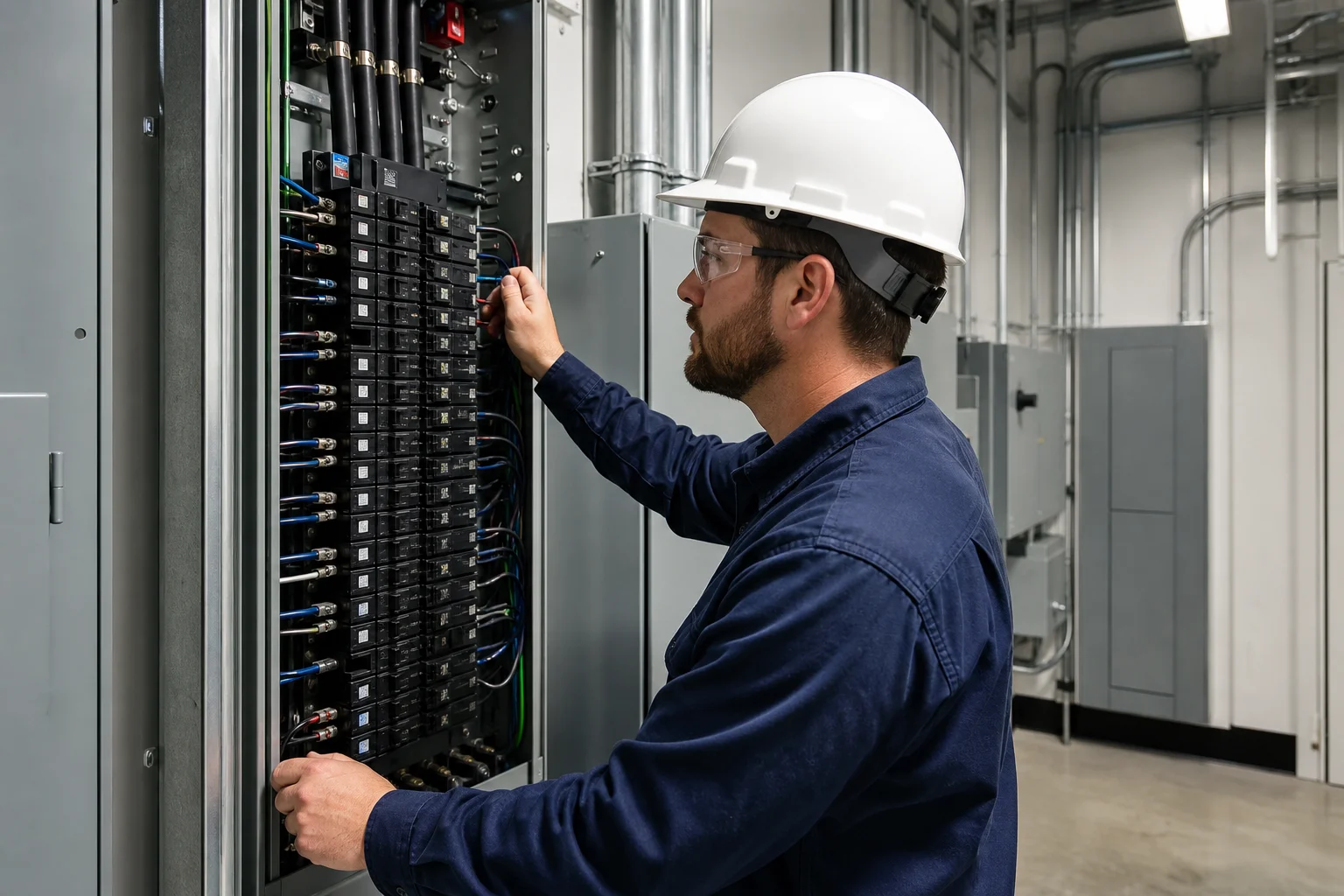
Commercial electricians complete additional training in three-phase wiring, industrial-grade equipment, conduit bending and installation, load calculations for larger facilities, and commercial building code compliance. A journeyman or master electrician license with commercial endorsement allows them to pull commercial permits.
Electricians often specialize early in their careers. Asking to see a contractor's license and confirming the endorsement type is standard due diligence. In Kansas City, pulling a commercial permit with a residential-only license is illegal, and inspectors verify this on every commercial project.
Beyond the license number, ask whether the contractor can produce proof of insurance and a recent permit history for similar commercial jobs. Those vetting steps are covered in choosing the right electrician.
The Electrical Systems Inside Your Business Space
Power Distribution in Commercial Buildings
Commercial buildings run on three-phase power systems, which allow heavier and more varied equipment to operate simultaneously without overloading the panel. Power distribution in a commercial setting must account for HVAC units, commercial kitchen equipment, large compressors, server rooms, and multiple workstations drawing current at the same time.
A residential electrician trained exclusively on single-phase systems is not equipped to design, install, or troubleshoot three-phase electrical systems. If your business depends on commercial-grade equipment, that residential commercial licensing gap is not a technicality you can overlook.
Wiring and Code Requirements for Business Environments
Commercial wiring follows different rules than residential wiring. In many Kansas City commercial buildings, all wiring must run through metal conduit rather than through wall cavities. Electrical systems in commercial buildings must include dedicated circuits for specific equipment, emergency lighting with battery backup, and service entrance configurations that residential code does not address.
Electricians work across both residential and commercial settings but cannot simply transfer residential knowledge to a commercial job. The code requirements, the materials, and the inspection expectations differ enough that a residential electrician working without the correct commercial license puts your business at risk.
If you are unsure about the age or condition of your building's wiring, watch for the same warning signs that show up in older homes: discolored outlets or switch plates, breakers that trip more often than they used to, flickering lights under normal load, or a persistent burning smell near the panel. Any of those signs point to wiring that predates current commercial code and should be evaluated before it becomes a liability.
Why Your Small Business Cannot Default to a Residential Electrician
Some small business owners assume that a small office or retail space is close enough to residential that any licensed electrician can handle it. Understanding the residential vs commercial electrician distinction before you hire prevents that costly mistake.
Permits and legal compliance. Commercial electrical work in Kansas City requires commercial permits. An electrician without a commercial license cannot pull those permits. Work completed without the correct permits can result in fines, mandated tear-outs, and complications when you sell or lease the property.
Insurance and liability. When a fire or electrical failure occurs in a commercial space, the insurance carrier investigates whether the electrical work was licensed and permitted correctly. Unpermitted or improperly licensed electrical work can void your claim entirely.
Code requirements specific to commercial buildings. The NEC has commercial-specific chapters governing service entrance sizing, emergency disconnects, panel labeling, and load calculations for commercial buildings. Residential electricians work from different sections of the code and may not recognize where their residential training ends and commercial requirements begin.
For small businesses, high-demand seasons push electrical systems harder than usual, and that strain hits commercial spaces harder than homes, especially during Kansas City summers when heavy AC loads run alongside business equipment. We cover how those overloaded systems tend to behave in summer electrical safety.
The bottom line: the size of your operation does not change the licensing requirement. A 600-square-foot retail space and a large commercial facility both need a commercially licensed electrician for any permitted electrical work.
Signs Your Kansas City Business Needs a Commercial Electrician
Breakers trip regularly under normal operations. If circuit breakers trip during standard business use, your panel may be undersized for the actual load. Commercial electricians perform load calculations and recommend panel upgrades that meet commercial code requirements.
You need more outlets or circuits. Offices and retail spaces often require more circuits than a previous tenant needed. Commercial electricians plan and install additional circuits correctly and to code, with all required permits in place.
Your space has older wiring. Many Kansas City commercial buildings still carry outdated wiring that does not meet current commercial code. A licensed commercial electrician can assess the system and identify what needs updating before it becomes a safety issue or a failed inspection.
You are planning a renovation or buildout. Any commercial renovation involving moved walls, added equipment, or reconfigured space requires a commercially licensed electrician for the electrical portion. Starting without one puts your permit approval at risk and can stall a project at a costly stage.
Your utility bills seem disproportionately high. Inefficient electrical systems and poorly balanced loads raise your bill without adding output. Commercial electricians frequently identify efficiency improvements during an initial site assessment.
For situations that cannot wait, Emergency Electrical Services are available when your business cannot afford downtime from an unexpected electrical failure.
Frequently Asked Questions
Can a residential electrician legally do commercial work in Kansas City?
Not without a commercial license endorsement. Missouri licensing separates residential and commercial scopes. A contractor with only a residential license cannot legally pull commercial permits in Kansas City. Inspectors verify this during review, and unpermitted work creates direct liability for the property owner, not just the contractor.
What is three-phase power and why does my business need it?
Three-phase power distributes electricity across three conductors, allowing commercial buildings to run heavy equipment, multiple circuits, and large HVAC systems simultaneously without overloading the panel. Homes use single-phase power. Commercial electricians are trained to install and maintain three-phase systems. Residential electricians are not, and the gap shows up immediately on a commercial job.
Does the size of my business affect which type of electrician I need?
No. The licensing requirement is set by the classification of the space, not its square footage. Any commercially zoned location requires a commercially licensed electrician for permitted electrical work, whether it is a small retail studio or a multi-floor office building in Kansas City.
How do I verify an electrician's commercial license before hiring?
Request the license number and confirm what endorsements it includes. Missouri electrical licenses are verifiable through the Missouri Division of Professional Registration. A legitimate contractor provides this without hesitation and can also share insurance certificates covering general liability and workers compensation.
What should I ask before hiring an electrician for my Kansas City business?
Ask whether they hold a commercial license endorsement, whether they will pull the required commercial permits, and whether they carry general liability and workers compensation insurance. All three are required for any legitimate commercial electrical project. A contractor who hesitates on any of these is a signal to keep looking.
Hire a Licensed Commercial Electrician Who Knows Kansas City Business Standards
Your business deserves the same precision a veteran brings to any mission: the right credentials, the right training, and the right tools for the exact job at hand. Whether you need a panel upgrade, new circuits, or a full commercial buildout, Contact Veteran Electric today and work with Kansas City electricians who hold the commercial license your project requires.


