
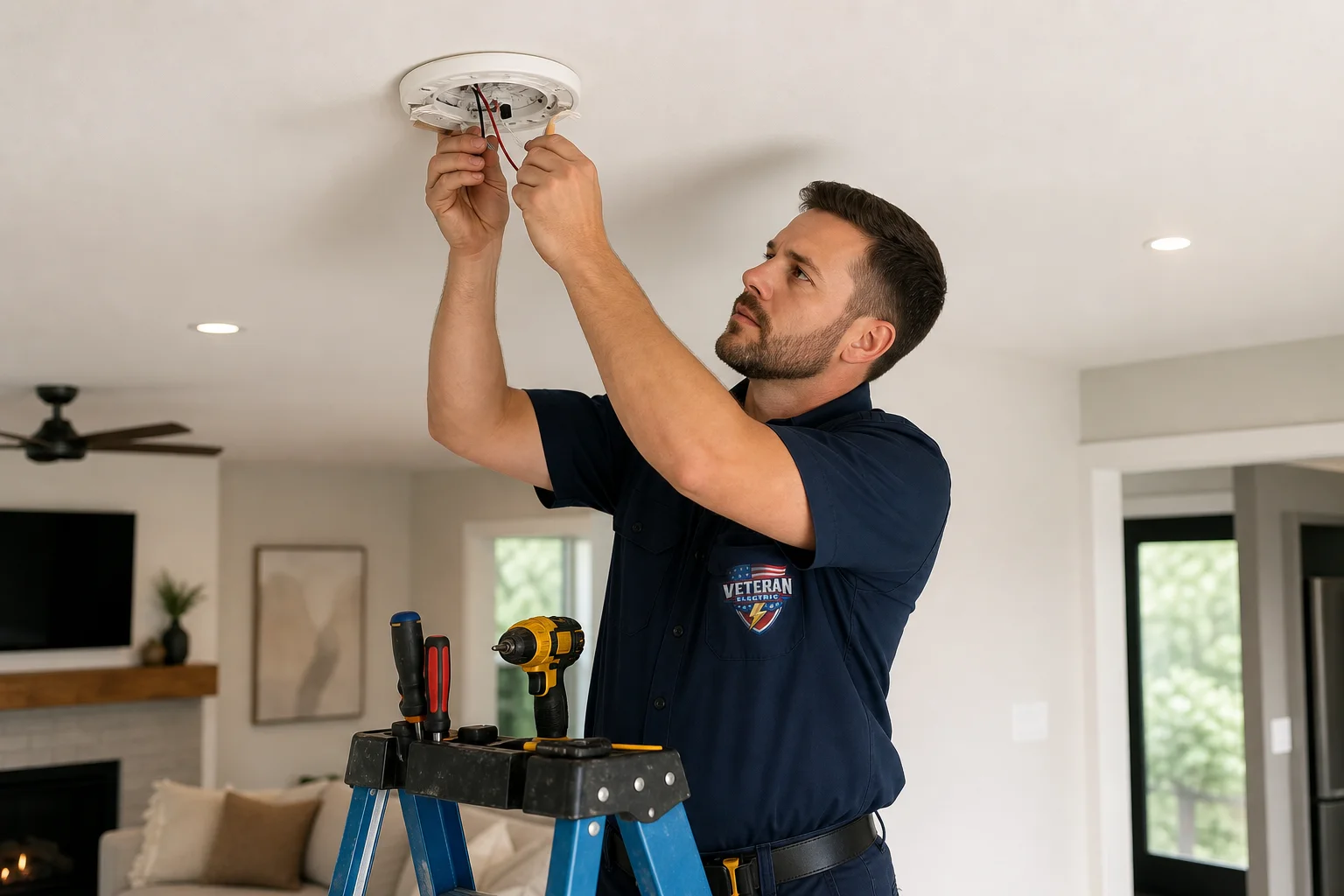
Choosing between hardwired vs battery smoke and CO detectors comes down to your home's wiring, Kansas City building code requirements, and the level of reliability you need. Both types protect families from fire and carbon monoxide threats, but they differ in power source, interconnectivity, and maintenance. Our Residential Electrical Services covers installation and inspection of both.
By Veteran Electric Team, KC Licensed Electricians
Hardwired vs Battery Smoke and CO Detectors: Understanding the Key Differences
Kansas City homes built before the mid-1990s often have only standalone battery-powered smoke alarms scattered through the hallways. Homes built or substantially renovated since Missouri adopted stricter building codes must have hardwired smoke detectors with backup battery protection. Understanding what separates these two types is the starting point for knowing whether your home is adequately protected.
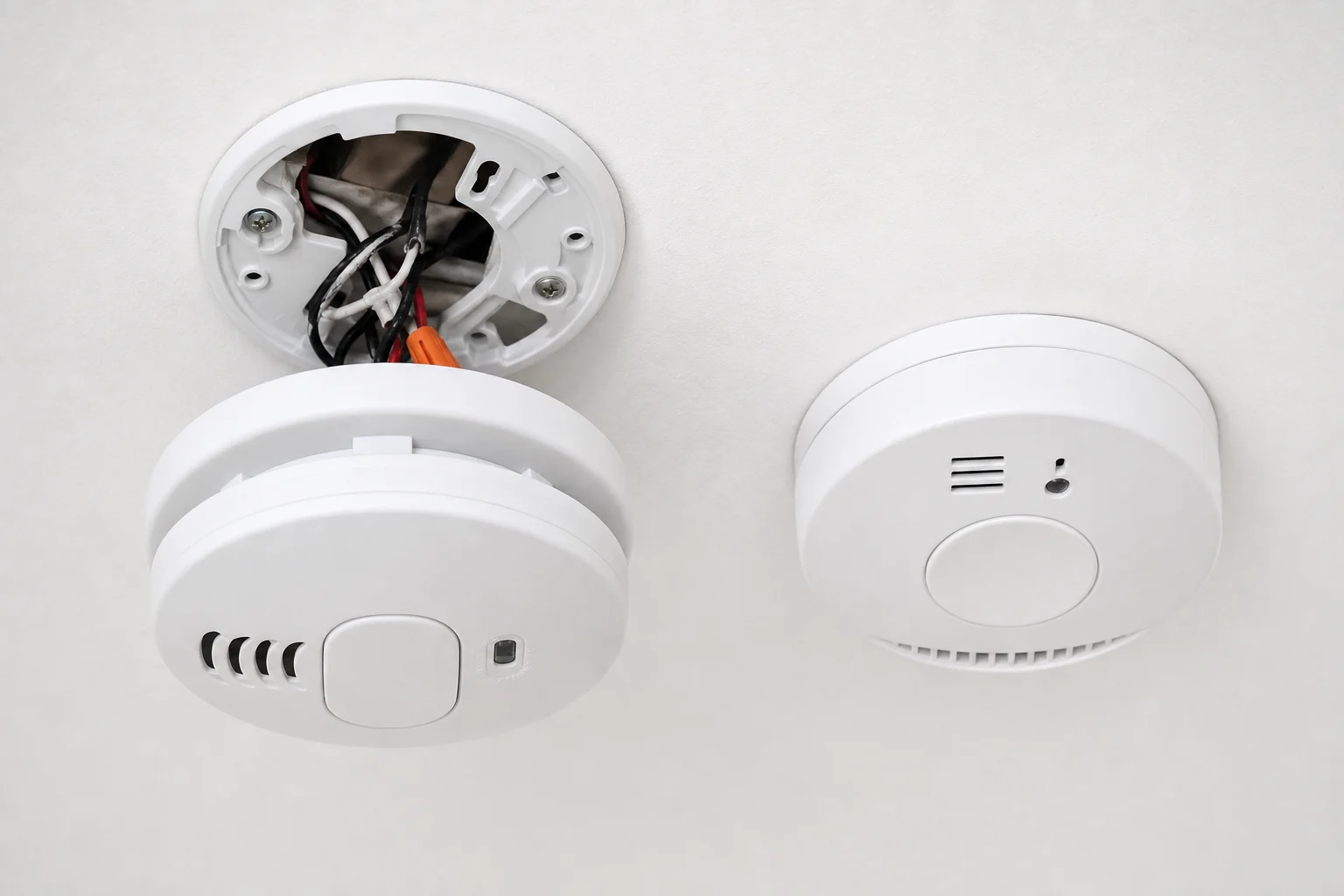
Hardwired detectors connect directly to your home's electrical circuit and draw power continuously from the home electrical system. They use a backup battery only when grid power is lost. Battery-powered units depend entirely on their batteries, with no connection to house wiring. That single difference in power source affects reliability, interconnect capability, and what happens when power outages occur while your household is asleep.
How Hardwired Smoke Detectors Work
Hardwired smoke detectors are connected directly to a dedicated circuit in your home and run on continuous house current. Their primary advantage is that they never need a battery swap for normal operation. Most hardwired models include a backup battery so the unit stays functional during power outages, which are common during Kansas City storms.
The interconnect feature is what sets hardwired units apart from standalone battery models. When one smoke alarm or carbon monoxide alarm in a hardwired network triggers, every detector in the home sounds simultaneously. For a two-story house, that means a smoke detector in the basement can wake someone sleeping on the second floor, giving the entire household time to respond.
The National Fire Protection Association (NFPA) standard 72 requires hardwired smoke detectors in all new residential construction. Missouri follows this standard, and Kansas City inspectors enforce it for new builds, room additions, and major renovation permits. The National Institute of Standards and Technology (NIST) has published findings showing that interconnected smoke alarms provide meaningful additional escape time in residential fires compared to standalone units, which is the reasoning behind this requirement.
How Battery-Powered Detectors Work
Battery-powered smoke detectors and carbon monoxide alarms use batteries as their sole power source, with no connection to the home electrical system. Standard alkaline batteries typically last about a year in most models, while sealed ten-year lithium units are designed to last for the full rated life of the device.
The appeal of battery-powered units is simple installation. No electrician is required, and these detectors work in detached garages, older rental units, or any space where running new wire is not practical. Many homeowners also add battery-powered units as supplemental alarms home protection in areas not covered by the hardwired network.
The real drawback is maintenance. Batteries die, chirping low-battery alerts get silenced without replacement, and units occasionally get removed and never reinstalled. A smoke alarm with dead batteries provides no fire safety protection. Battery-powered detectors also do not interconnect with hardwired units in standard configurations, meaning a smoke alarm in the kitchen may not be audible from a bedroom at the back of the house.
What Kansas City Building Code Requires for Smoke and Carbon Monoxide Detectors
Missouri residential building code follows NFPA 72, which requires hardwired smoke detectors with backup battery capability in new and substantially renovated residential construction. Every sleeping area must have a smoke detector, every level of the home must have at least one, and one must be installed just outside each sleeping area.
Carbon monoxide protection has separate requirements. Missouri statute RSMo 386.1300 requires carbon monoxide alarms in newly built and substantially renovated homes. Alarms must be installed on each level and near sleeping areas. Combination units that detect both smoke carbon monoxide threats simultaneously satisfy both requirements in a single device, which is what most licensed electricians install in Kansas City today.
If your home predates these requirements, you may not be legally required to upgrade, but the U.S. Fire Administration recommends replacing all smoke alarms and carbon monoxide alarms home-wide every ten years from the manufacture date. Many Kansas City homes still running units from the late 1990s or early 2000s are well past that window.
Before hiring anyone for electrical or detector work, confirm they hold a current Missouri electrical license and carry proper insurance. Our tips on choosing the right electrician cover what else to check before signing a contract.
The Case for Hardwired Battery Combination Units
When evaluating hardwired vs battery smoke and CO detectors, combination units with hardwired power and a built-in backup battery deliver the strongest protection for most Kansas City homes. These combination models handle both smoke detection and carbon monoxide monitoring in a single device, reducing the total number of units to install and the number of batteries to track.
Hardwired battery combination units interconnect across the home. When any detector in the network senses smoke or elevated carbon monoxide levels, every alarm in the house sounds at once. This interconnected alert is the core advantage of hardwired detectors over battery-only units and the reason interconnection is required in new residential construction.
The combination format also simplifies code compliance. Rather than installing separate smoke alarms and monoxide alarms on each level and outside every bedroom, one combination unit in each required location covers both requirements at once. A licensed electrician runs the circuit, interconnects the units, and verifies the installation meets current building codes.
For older homes running original wiring, adding hardwired detectors may call for new circuits or a broader rewire first, which adds time and cost to the project. Our post on house rewiring timelines covers what to expect start to finish. Heavy electrical loads from summer air conditioning can also stress an older panel, and a hardwired detector network draws power from that same panel. If your AC equipment already pushes your panel close to capacity, an electrician can confirm the detector circuit has enough headroom before you add hardwired units.
Frequently Asked Questions
Do hardwired smoke detectors work when the power goes out?
Yes. Hardwired smoke detectors include a backup battery that keeps the unit active during power outages. When grid power returns, the detector automatically switches back to house current. Test your backup battery every six months and replace it on the manufacturer's recommended schedule to make sure it functions when your home actually needs it.
Can I install hardwired smoke and CO detectors myself?
Connecting hardwired detectors to your home's electrical system means working inside the wiring, and Kansas City requires a licensed electrician for this type of home electrical work. A professional installs and interconnects all units, verifies the installation meets current building codes, and tests every detector before leaving. Improper wiring connections can create hazards that a home inspector or insurance adjuster may flag during future reviews.
What is the difference between smoke alarms and carbon monoxide alarms?
Smoke detectors use ionization or photoelectric sensors to detect combustion particles in the air. Carbon monoxide alarms measure CO gas concentration and trigger when levels reach a threshold dangerous to human health. Combination units include sensors for both threats. Smoke carbon monoxide combination models are now standard in most new Kansas City residential installations because they satisfy both fire safety and CO protection requirements in one device.
How long do hardwired smoke detectors last?
The recommended replacement interval for all smoke detectors and carbon monoxide alarms is ten years from the manufacture date stamped on the back of each unit. Sensors degrade over time even when the alarm appears to function normally. Replacing aging units is part of maintaining reliable fire safety protection and keeping your home current with building code standards for detector reliability.
What should I do if my hardwired smoke alarm keeps chirping?
A consistent chirp from a hardwired smoke alarm usually signals a low backup battery. Replace the battery first. If chirping continues after a fresh battery is installed, the unit may be at the end of its ten-year service life or there may be a wiring fault. For urgent help, Emergency Electrical Services from a licensed Kansas City electrician can diagnose and fix the problem without delay.
Get Your Kansas City Home's Smoke and CO Detectors Inspected
Veteran Electric KC installs and inspects hardwired smoke and carbon monoxide detectors throughout the Kansas City metro with the precision and integrity every job deserves. Whether you need a full upgrade from standalone battery units to interconnected combination detectors or a quick inspection to confirm your alarms meet code, Contact our team today to schedule your appointment.


